
Ever had a coyote quietly tail you on a walk? Yeah, it’s kind of unnerving. There’s actually a name for this—people call it “escorting.” When a coyote follows you, it’s usually trying to nudge you out of its territory or away from its pups. It’s not really stalking you to attack.
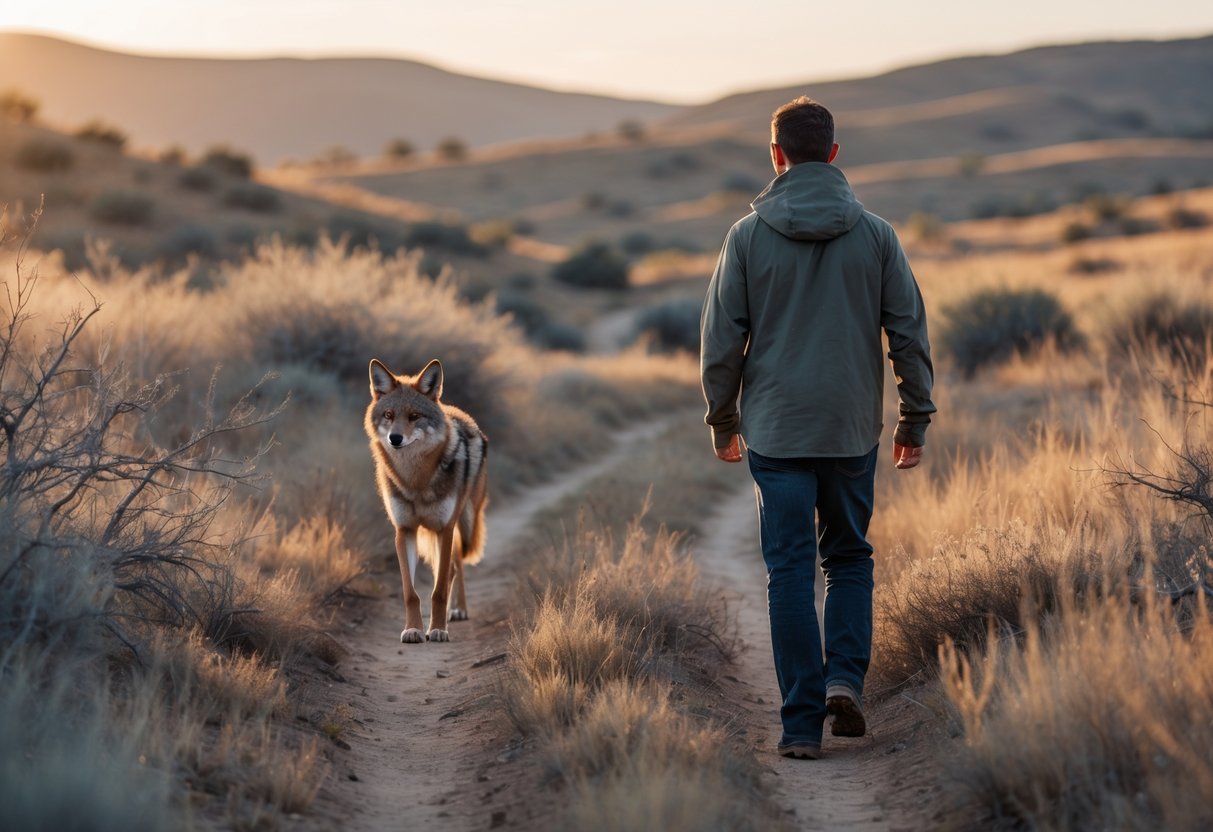
Coyotes act curious but stay pretty cautious. They’ll keep tabs on you, especially if you’re walking a dog.
If you understand what’s up with this behavior, you can stay calm and make smarter choices outside.
Learning why coyotes escort people can honestly help you relax the next time you spot one. They’re just doing what wild animals do—protecting themselves and their homes, not looking for trouble.
If you want tips on what to do when a coyote follows you, stick around.
Understanding Why Coyotes Follow People

Coyotes follow people for a few instinctive reasons. If you know what motivates them, it’s easier to keep your cool during an encounter.
Watch their body language to figure out if they’re just curious, defending their turf, or maybe looking for food.
Coyote Escorting and Stalking Explained
When a coyote follows you, it’s often “escorting” you. Basically, it wants you out of its space.
This happens a lot in spring, when they’re protecting pups. Coyotes will walk behind you, usually at a safe distance, making it clear you’re near their den.
Sometimes, a coyote might get a little bolder and stalk closer. That’s not typical, but it can happen.
Usually, this happens when coyotes get too used to people or start looking for easy snacks. Cities with frequent coyote sightings see this more often.
Common Motivations for Following
Coyotes usually follow people for three main reasons:
- Curiosity: They’re just checking you out, trying to figure out what you’re up to.
- Territorial defense: Coyotes want to keep you away from their home or pups.
- Food conditioning: If they’ve found food near people’s homes, they might follow hoping for more.
You might spot a coyote hanging back 10 to 30 feet, just kind of watching. They don’t want a fight, but they’ll keep an eye on you.
Leaving pet food outside or feeding coyotes makes this behavior more likely.
Signs and Behaviors to Watch For
Here’s what to look for if you think a coyote’s following you:
- Walking behind you, but not rushing up.
- Keeping some distance and stopping to watch.
- Moving slowly and acting pretty wary.
- Looking nervous—tail down, ears back.
If a coyote acts bold, comes closer, or stalks your pet, make noise to scare it off.
Knowing how coyotes behave helps you avoid surprises. You’ll see them more at dawn or dusk, especially in cities.
How to Respond When a Coyote Follows You

If a coyote starts tailing you, try to stay calm and act clearly. Protect your pets and kids, and use noise-makers if you have them.
If you see a coyote acting weird or aggressive, let animal control or local authorities know.
Staying Calm and Standing Your Ground
Don’t run if a coyote follows you. Running can make it think you’re prey and might trigger a chase.
Instead, stand up tall. Raise your arms or spread your jacket to look bigger.
Keep eye contact, but don’t stare it down aggressively. Back away slowly, talking loudly and firmly.
If the coyote snarls, lunges, or just won’t leave, call for help or get animal control involved.
Never turn your back on the coyote.
Keeping Pets and Children Safe
Keep pets on a leash when you’re walking where coyotes might show up. Small dogs and cats are especially at risk.
Hold your kids close. Don’t let them run or try to approach coyotes.
Teach children to stand still and make loud noises if they see a coyote nearby.
Don’t leave pet food outside. Feeding coyotes just encourages them to come closer.
Keep pets indoors or at least supervised, especially early in the morning or at dusk.
Effective Deterrents and Prevention
Use loud noises—air horns, whistles, even clapping—to scare coyotes away.
Wave something like an umbrella or flashlight to make yourself look bigger and more intimidating.
Never feed coyotes or leave food scraps out. Lock up trash bins tightly and take down bird feeders if needed.
If a coyote keeps coming around, try hazing: shout, wave your arms, and toss small things near (not at) it. That helps remind them to stay wary of humans.
Reporting and Managing Coyote Encounters
If you spot a coyote acting aggressively or trailing people for too long, let your local wildlife or animal control folks know. They’ll keep an eye on things and step in if it gets out of hand.
Should a coyote actually attack or injure someone, just call 9-1-1 right away. These attacks almost never happen, but when they do, it’s a big deal.
Ask your neighbors and friends not to feed coyotes, and remind them to keep pets safe. Working together, everyone can reduce risks and help keep these wild animals from getting too comfortable around people.
For more tips on how to handle coyote encounters, check out What Does It Mean If a Coyote Follows You?


