
So, you’re out for a walk and suddenly notice a coyote quietly trailing behind. That can feel pretty unnerving, right?
But here’s the thing: when a coyote follows you, it’s almost always “escorting” you away from its territory or pups—not stalking you to attack. The coyote just wants you to keep your distance, especially if you’ve got a dog tagging along.
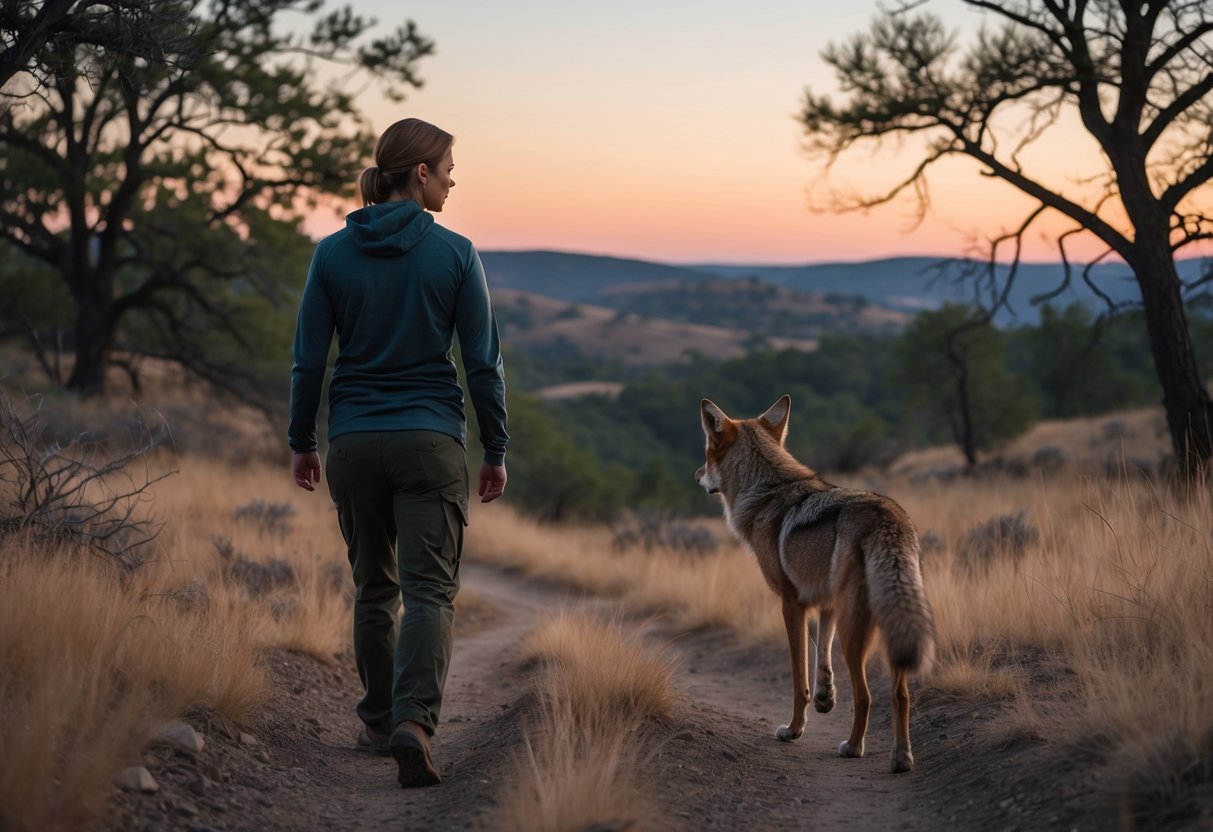
Coyotes act curious, but they’re also super cautious. They usually hang back and keep an eye on you to figure out if you’re a threat.
If you understand this, you’ll probably feel a bit more relaxed when you spot one.
Knowing why coyotes might follow people can take some of the stress out of your next hike.
Let’s dig into what’s really going on and how you can keep yourself (and your pup) safe while still respecting wildlife.
Coyote Behavior When Following Humans

Having a coyote follow you definitely feels weird, sometimes even scary. But honestly, there’s usually a good reason for it.
Coyotes might just want to protect their space or figure out what you’re up to.
If you get why they do this, it’s easier to stay calm and safe.
Escort vs. Stalking: Decoding Coyote Intentions
A coyote that follows you isn’t usually acting like a predator. Nine times out of ten, it’s just trying to escort you out of its territory.
It’s a warning—please keep your distance, especially if you brought a dog.
Coyotes use this “escort” move to defend their home without picking a fight.
Actual stalking? That’s rare. If it happens, the coyote watches you from a distance, sizing things up.
But most of the time, it’s just about keeping you moving away. If the coyote follows you slowly and calmly, it’s basically saying, “Can you go now?”
Territorial Protection and Pup Safety
Coyotes get extra protective when they have pups nearby. If you’re out in spring or early summer, keep in mind the parents may follow you or watch you more closely.
Their pups can’t really see or hear at first, so they’re on high alert for threats—especially dogs.
The parents do whatever it takes to keep those pups safe. That might mean escorting you away, making noise, or even acting a little aggressive.
They’re not looking for trouble, just trying to keep you away from their den.
It’s smart to keep your dog leashed and calmly leave if you see a coyote hanging around.
Reasons Coyotes Might Follow You
Coyotes might follow you for a few reasons. Sometimes, they’re just curious about you or your dog.
Coyotes are clever and like to check out anything new in their neighborhood.
If you’ve ever left food out or fed them, they might tag along hoping for a snack.
Another reason? Habit. When coyotes get used to people, they stop running away.
This usually happens when folks feed them or leave trash out. Coyotes that lose their fear of people can cause problems.
So, never feed them or encourage them to come close.
Understanding Coyote Sightings and Encounters
Spotting a coyote up close means the animal is adapting to your area. As cities grow, coyotes find themselves living closer to people, so these encounters are happening more often.
They learn when it’s safe to wander and usually try to steer clear of humans.
If you bump into one, stay calm. Don’t run.
Make some noise, wave your arms, or use a noise maker to scare it off if you need to.
Small dogs face more risk, so always keep them leashed on walks.
Knowing a bit about coyote behavior helps you enjoy the outdoors without too much worry.
For more info, check out Coyotes on patrol: What it really means when you’re ‘followed’.
How to Respond If a Coyote Follows You

If a coyote starts following you, staying calm is honestly your best move.
Show the coyote you’re not prey by keeping your distance and using clear body language.
Tools help too—sometimes a little noise goes a long way.
Safety Steps During Coyote Encounters
Don’t run if a coyote follows you. Running can spark their hunting instincts.
Instead, stand tall and make yourself look bigger by raising your arms or opening your jacket.
Watch the coyote, but don’t turn your back. Back away slowly and talk loudly and firmly to scare it off.
If you’ve got kids or pets, pull them close. Keep pets leashed and don’t let them approach the coyote.
If the coyote snarls, lunges, or sticks around too long, call for help or use your phone to contact authorities if you can.
Effective Deterrents and Tools (Including Air Horns)
Loud noises are great for scaring coyotes off. Air horns work because they make a sharp, startling sound.
Whistles, bells, or banging sticks together can help too.
If a coyote comes closer, shine a bright flashlight or wave an umbrella or other big object to look more threatening.
You can spray water or use pet deterrent sprays if it gets really close.
If you walk in areas where coyotes hang out, keep these tools handy just in case.
Preventing Coyote Habituation and Future Encounters
Don’t ever feed coyotes or leave food outside. Giving them food just teaches them it’s okay to come close, and they lose that natural fear of people.
Make sure your trash cans have tight lids. If coyotes hang around your neighborhood, it’s probably best to take down bird feeders too.
When you spot a coyote showing up more than once, try hazing. Shout, clap, or toss small objects near it—never directly at the animal—and make some noise to scare it off.
Let your neighbors know how important it is not to feed coyotes. Remind them to keep pets indoors or on a leash whenever possible.
If you stay consistent, coyotes start to realize humans aren’t a source of food. That goes a long way in cutting down the risk of aggressive run-ins.
Want more tips about coyote encounters? Check out What to Do if a Coyote Chases You? Key Steps for Staying Safe.


