
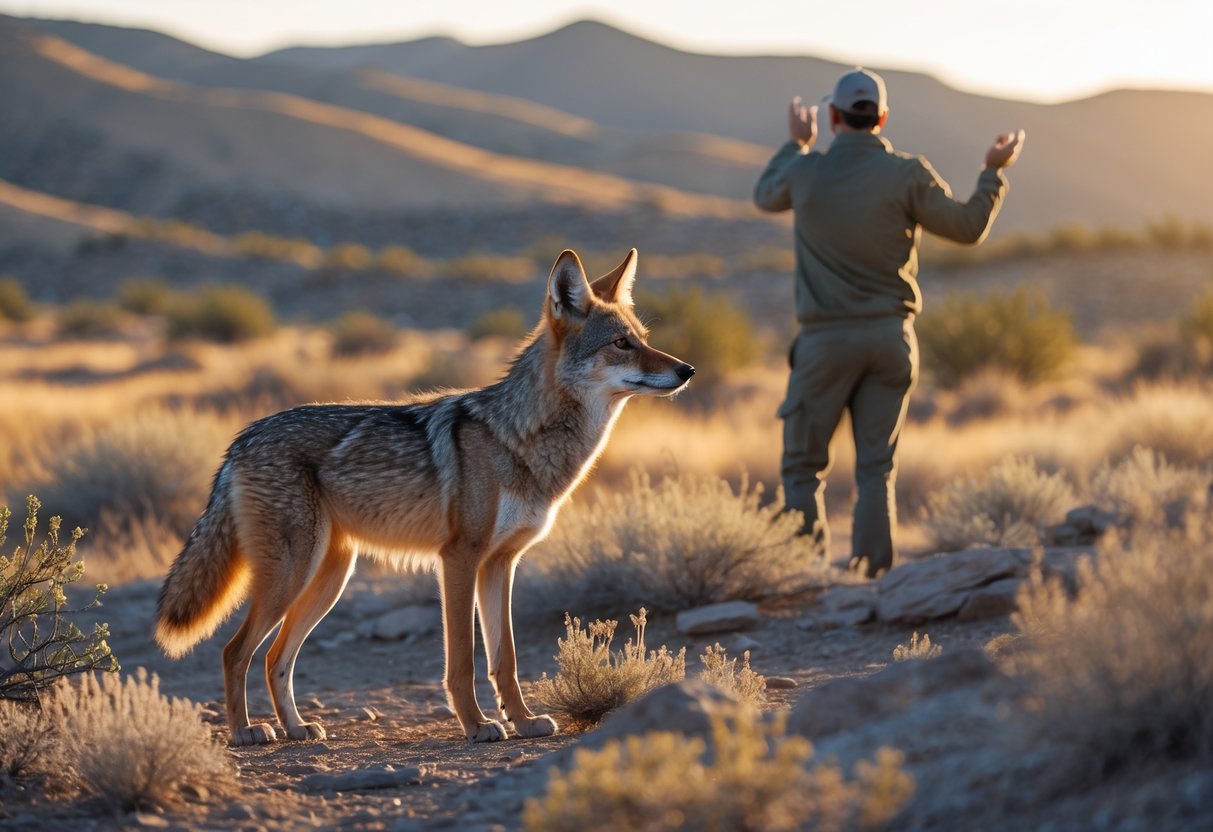
Ever wondered if making coyote-like sounds, or just calling out as a human, actually gets a coyote’s attention? Coyotes often react to certain human-made calls, especially if those sounds mimic their own howls or distress cries. They’ve got a whole range of vocalizations, and some calls can definitely spark their curiosity enough to answer—or at least get a little closer.
If you want to interact with or hunt coyotes, figuring out which calls work best makes a big difference. Using howls, yips, or pup distress sounds usually works better than just yelling or making random noise.
Timing and technique matter a lot too. Coyotes don’t just react to any old sound.
How Coyotes React to Human Calls

Coyotes hear and notice human sounds, but their reactions really depend on the situation and where they are. They mainly use vocalizations to talk to other coyotes—not so much to copy or answer people.
Your calls might grab their attention, but what happens next? That depends on a bunch of factors.
Typical Responses to Human Vocalizations
When you make noises that sound like animal or prey distress calls, coyotes or even wolves might pause, look your way, or sometimes answer back with their own howls or yips. Try calling out with a regular human voice, though, and you’ll probably get nothing—they don’t mimic or really understand human speech.
Occasionally, a coyote might howl back, but that’s more about them marking territory than actually answering you. Coyotes use sounds to claim space or check on family.
They might come closer or just leave, depending on how safe or curious they feel. Loud or weird noises make them alert, but not always brave.
If a coyote does respond, it’s usually because your call sounds like something they’d naturally say. If you want more details on their vocal behavior, check out coyote vocalization.
Coyote Behavior When Approached by People
Coyotes usually steer clear of people when you get too close. If you call out and then approach, most coyotes will bolt to keep their distance.
Only in rare cases—like when they’re used to people—do they hang around. This happens if someone’s fed them or if they’re feeling bold in a people-heavy spot.
Coyotes almost never attack people. Most problems happen when pets are around or if a coyote’s guarding its den during breeding season.
Human-like calls won’t lure them in, but leaving food out or letting pets roam can bring trouble. If you want to keep them away, stay calm and make loud noises—they’ll usually get the message.
Differences in Rural versus Urban Coyote Responses
Rural coyotes act warier around people since they don’t see us much. If you make noise out there, they’ll probably leave fast.
Urban coyotes, though, get used to people and city sounds. They might be less scared or even a bit curious about human noises.
In cities, you might spot them closer to homes or parks, especially after dark. Still, most urban coyotes avoid direct contact.
They’ll usually just watch from a distance or drift away slowly. Feeding them or making them feel safe around people can make them bold, which nobody really wants.
If you’re interested in urban coyote behavior, check urban coyote research.
Understanding Coyote Vocalizations and Communication

Coyotes use lots of different sounds to talk to each other. Their calls have specific jobs, like marking territory, checking in with family, or warning about danger.
If you know what to listen for, you can get a sense of what a coyote’s up to.
Howls, Yips, and Other Coyote Sounds
Howling is the classic coyote sound. You’ll hear it echoing from far away, announcing their presence and staking out territory.
You might also catch some barks, which usually warn others or show aggression. Yips are higher-pitched and often come with howls.
These quick, sharp calls help them keep in touch or show excitement. Coyotes also make whines and growls.
Each sound means something different, helping them share feelings or warnings. If you pay attention to the mix, you can learn a lot about their mood.
Territorial and Social Behavior Linked to Coyote Calls
When coyotes howl loudly, they’re often marking or defending their territory. Their calls warn other coyotes or packs to stay back.
This helps them avoid fights and keep their space safe. Social calls like yips or group howls happen when pack members want to stay connected.
These sounds help them find each other across long distances, especially at night. Barks can serve as a challenge to intruders.
The mix of these calls shows the social structure within a coyote group. If you listen closely, you might even figure out how many coyotes are around and what they’re up to.
The Role of Yips in Coyote Packs
Yips really matter in how coyotes talk to each other. You’ll hear them a lot when pups call out to adults, or just during those moments of social bonding.
These sounds help the pack feel connected. When coyotes hang out together, they mix yips and howls, which keeps everyone in sync.
Yip-howls can mean excitement, or maybe they’re just warning the group about something close by. If you’re trying to attract coyotes, yip sounds might actually get their attention.
They probably hear yips and think it’s a friend or a family member calling. Once you notice this, you’ll start to get a better feel for how coyotes interact and what they’re up to.
If you’re curious for more, you can check out coyote howls and yips for extra details.


