
If you hear a coyote howling nearby, you might wonder if you should howl back. Howling at coyotes can grab their attention and sometimes makes them curious enough to respond.
It’s a way to communicate with them, but you’ve got to think about what it means for your safety and for the animals around you.
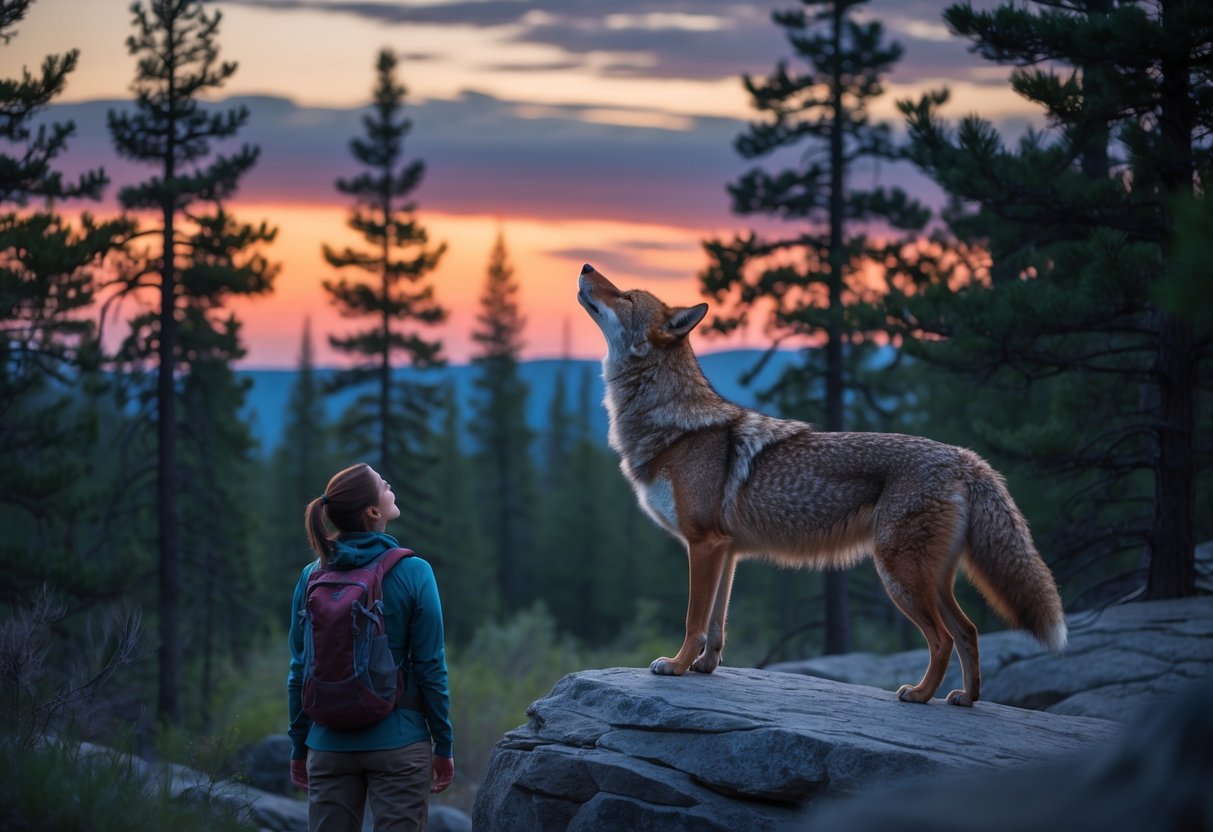
Coyotes howl to talk to each other and mark their territory, not to threaten people. If you howl back, you’re basically jumping into their conversation.
You might not always get a howl in return, and sometimes you could even attract more coyotes to your area. That’s not always ideal, right?
If you decide to howl back, pay attention to how the coyotes react. If they seem calm, it might be a fun way to experience wildlife sounds.
But if they act aggressive or start coming closer, it’s definitely time to be cautious and give them space.
Should You Howl Back at Coyotes?

Howling back at coyotes can trigger different reactions depending on the situation. You really need to think about safety and know how coyotes usually behave.
People sometimes mimic coyote howls for fun or to study them. But honestly, coyotes don’t always answer.
Is It Safe to Howl Back at Coyotes?
Howling back at coyotes is mostly safe if you keep your distance. You don’t want to risk a close encounter, especially in places where coyotes are bold or used to people.
Coyotes usually avoid humans and won’t attack unless they feel cornered or threatened.
If you do howl back, make sure you’re outside in a safe spot and keep your pets on a leash. Coyotes might get curious and come closer, but they rarely act aggressive if you don’t encourage it.
If a coyote acts bold or doesn’t seem scared, it’s smarter to scare it away instead of howling.
How Coyotes Respond to Human Howling
Sometimes, coyotes howl back. It might mean they’re curious or just communicating territory.
But don’t expect a reply every time—if there’s no pack nearby or they’re not interested, you’ll get silence.
No answer doesn’t mean there aren’t any coyotes around. They could just be quiet or hiding.
In some places, coyotes behave differently or don’t respond as much. Using a FoxPro call or device could boost your chances of hearing a response.
Coyotes howl to reunite their group or mark territory. They’re not just saying hi to people.
Reasons People Imitate Coyote Howls
Why do people howl back at coyotes? Some just want to enjoy the wild sounds or feel closer to nature.
Others imitate howls to study coyote behavior or attract them for observation or hunting.
Some folks use howling to figure out where coyotes are or how many are in a pack.
But be careful—people often think they hear more coyotes than there really are. One or two can sound like a whole crowd.
You really shouldn’t try to lure coyotes close to your home or pets. That just leads to problems down the line.
Understanding Coyote Howling and Communication

Coyotes use a bunch of sounds to communicate and mark their territory. Their howling keeps them connected, warns off rivals, and helps strengthen family ties.
If you listen carefully, you’ll start to notice the different meanings behind all those noises.
Different Types of Coyote Vocalizations
Coyotes don’t just howl. They bark, yip, whine, and growl too.
Each sound means something different.
- Howls work for long-distance communication.
- Yips are short, high-pitched, and usually signal excitement or social bonding.
- Barks warn others, especially when defending a den or a meal.
These sounds help coyotes share information and keep track of each other, even when they can’t see one another.
If you start to recognize their sounds, you’ll get a better sense of what’s going on nearby.
What Lone and Pack Howls Mean
Sometimes you’ll hear a single coyote let out a lone howl. That coyote is probably trying to find others or signal its location.
It’s a way to call family or keep strangers away.
When several coyotes howl together, it’s a pack howl or group yip-howl. This helps them stick together and show family bonds.
It also warns other coyotes to stay out of their territory.
Both howls carry messages—sometimes it’s about calling friends, sometimes it’s about claiming space.
How Coyote Howls Travel and Sound to Humans
Coyote howls travel for miles, especially at night. Their voices are loud and can sound a bit eerie, honestly.
Since coyotes often howl in groups, you might think you’re hearing a big pack when it’s really just a couple.
Studies show people almost always overestimate the number of coyotes they hear.
Yips and barks mix in with the howls, making the chorus sound even bigger. If you understand these sounds, you’ll know more about what coyotes are actually doing out there—not just how many you think are around.
Coyote Howling in Urban and Suburban Areas
Coyotes have figured out how to live in cities and suburbs, tweaking how often they howl and what those howls mean. In urban spots, you’ll usually find smaller groups.
They tend to howl less, probably because they don’t want to draw too much attention. Still, their calls sometimes echo through the night.
These howls help them reconnect with family or claim their turf, even with all the noise and lights around.
Ever wondered why you hear coyotes near your home? Understanding their reasons might actually make those calls feel a little less eerie.
If you’re curious, check out Understanding Coyote Sounds and Communication for more details.


