
So, you’re curious if coyotes and cats can get along? Honestly, no—they really can’t. Coyotes see cats as prey, not pals.
Coyotes usually hunt smaller wild animals, but if your cat’s outside, they won’t hesitate to go after it. Coyotes pose a real threat to outdoor cats and can easily harm or kill them.
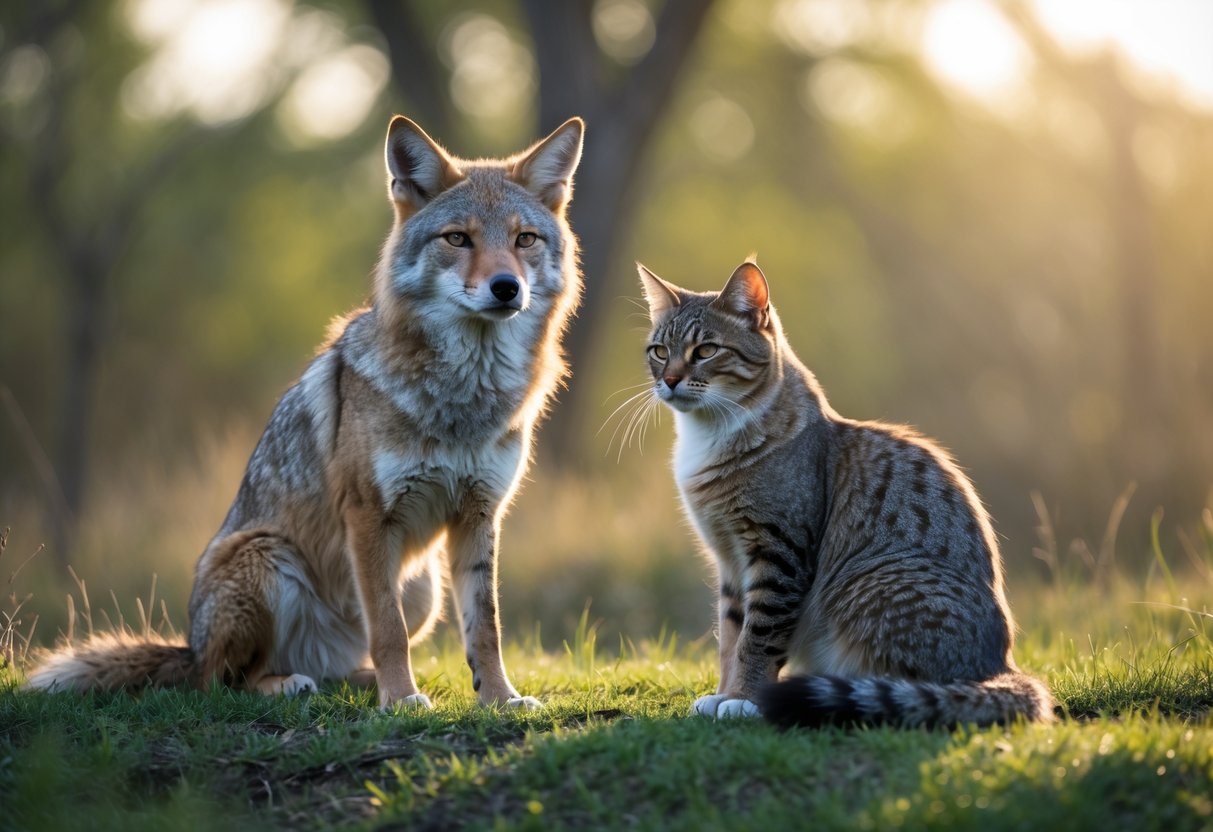
Your cat will try to avoid coyotes, but that’s no guarantee of safety. This is especially true in neighborhoods where coyotes wander close to homes.
If you know how coyotes behave and what your cat might do, you can protect your feline buddy a bit better. Maybe that means keeping your cat inside at night or making your yard less coyote-friendly.
If you care about keeping your cat safe from coyotes, stick around—there’s more you’ll want to know.
How Coyotes and Cats Interact

Coyotes and cats cross paths a lot, especially in cities where parks and neighborhoods blend together. Their interactions depend on things like food, behavior, and where they live.
If you get how these factors work, you’ll have an easier time protecting outdoor cats.
Why Coyotes and Cats Are Often in Conflict
Coyotes see cats as easy prey. So, outdoor cats are vulnerable.
In lots of urban areas, coyotes live near parks and green spaces where pet cats wander. This overlap leads to more run-ins.
Coyotes adapt to whatever’s around. When their preferred food—like rabbits or rodents—is scarce, they might hunt cats instead.
Cats hanging out in these green spaces are at higher risk. They end up sharing the same turf with coyotes.
Sometimes coyotes also see cats as competition, since both go after small mammals and birds.
Typical Cat and Coyote Behaviors in Urban Areas
Urban coyotes like to hunt or scavenge at night. Outdoor cats might be out during the day or at night, depending on their habits.
Some cats figure out it’s safer to be active during daylight to avoid coyotes. They’re pretty sharp and can sense predators nearby.
Cats might hide or dash for cover if they feel threatened. Still, free-roaming cats love to explore green spaces—unfortunately, so do coyotes.
Coyotes usually stick to quiet, green areas, while cats wander through yards and parks. This overlap means more chances for them to meet.
Coyotes avoid people for the most part, but if there’s food around, they might get closer than you’d like.
Do Coyotes Hunt or Eat Cats?
Coyotes do hunt and eat cats. How often? It depends on where you live and what else is available to eat.
Studies in some cities found that cats make up a small but real part of coyote diets. Coyotes are opportunists.
If they can’t find rabbits or small mammals, they’ll go after cats. In some parts of Southern California, up to 20% of coyote diet samples had cat remains in them.
If your cat roams outside a lot—especially at night when coyotes are out—the risk jumps up. Not every coyote hunts cats, but in certain areas, it’s a genuine concern.
What Influences Coyote Attacks on Cats
Several things affect whether coyotes go after cats. The main one? How many rabbits and other natural prey are around.
If rabbits are plentiful, coyotes usually stick to them. But if not, cats become more tempting.
The layout of your neighborhood matters too. Coyotes love big, connected green spaces for hunting and resting.
Cats using these same areas are more likely to get too close. Your cat’s habits play a part as well.
If your cat roams at night and doesn’t hide much, it’s in more danger. Coyotes often target cats that show weakness or can’t get away quickly.
Leaving food or trash outside can attract coyotes. When they get used to humans, they lose their fear and start coming closer to pets.
You can find more details about how coyotes interact with cats in places like Culver City, California at urban coyote research.
Coexistence and Conflict in Urban Environments

In cities, coyotes and cats share space, but they use it differently to dodge each other. The way they move and pick spots to hang out shapes how often they clash.
Your local green spaces can either help protect your cat or put it at risk. People and communities really influence these interactions by managing spaces and dealing with conflicts.
Spatiotemporal Relationships Between Cats and Coyotes
Coyotes and cats mostly avoid each other in time and space. Coyotes get more active at night, especially in places like Los Angeles and Culver City.
Cats often roam during the day or early evening. This pattern—called spatiotemporal separation—helps cut down on run-ins.
Motion-sensor cameras have caught cats changing their routes or sticking closer to homes when coyotes are around. Coyotes pick green spaces or quieter spots with fewer people.
If you understand this separation, you can keep your pets safer.
Impact of Urban Green Spaces on Cat Safety
Urban green spaces serve as prime coyote territory. They use these areas as travel corridors and hunting grounds.
If your cat goes outside near a park or trail, the danger goes up. Green spaces also attract coyotes by supporting prey like birds and small mammals.
To keep your cat safer:
- Keep cats indoors or watch them closely when they’re outside near green spaces.
- Don’t let cats roam freely near parks or open trails.
Green spaces aren’t always bad news. If managed well, they can buffer wildlife from homes and reduce surprise encounters.
Knowing how coyotes use these areas helps you protect your pet.
Human-Wildlife Conflict and Management
Problems happen when coyotes lose their fear of people or link urban areas with easy food—including pets. Feeding coyotes, even by accident, makes them bolder.
Cities like Los Angeles have laws against feeding wildlife and push people to leash their dogs. Some community programs teach hazing techniques to scare off coyotes.
To help manage conflict:
- Bring garbage and pet food indoors.
- Use noise or movement to scare off coyotes if you see them.
- Report aggressive coyotes to local wildlife agencies.
These steps help keep everyone—pets, people, and coyotes—a bit safer. And maybe, just maybe, we can all share the city with fewer problems.
Research and Local Studies on Cat Mortality
Researchers in Los Angeles and Culver City have found that cats make up a surprising chunk of what urban coyotes eat. Rebecca Davenport, along with her team, uses motion-sensor cameras to watch coyotes and figure out how often they go after cats.
Here’s what they’ve noticed:
- Cats face higher risks when they hang out near green spaces.
- Coyotes seem to hunt more domestic cats in crowded city spots where wild prey is scarce.
- If you keep your cat indoors, you’ll seriously lower its chances of getting hurt.
Local studies push for better public education about how to keep cats safe from coyotes. Maybe it’s time we all paid a little more attention to what’s going on in our neighborhoods.


