
Wolves and coyotes usually stick with their own kind, but sometimes they cross paths and mate.
This mostly happens when wolf populations drop or their territories overlap, making it tough for wolves to find mates from their own species. That’s when hybridization kicks in, and the two species end up producing offspring together.
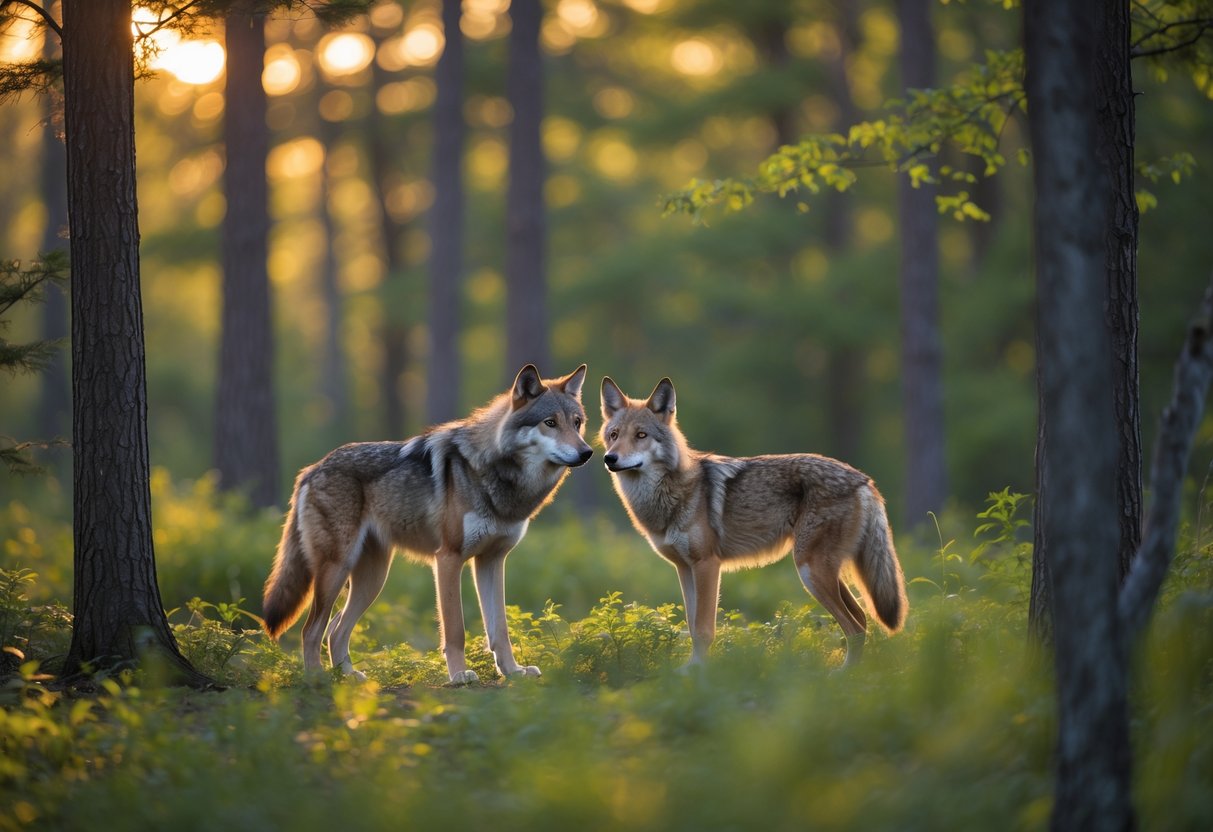
You might find yourself wondering why this happens at all, since wolves and coyotes have different habits and often live in separate areas.
The reality is, changes in the environment and human actions—like hunting or habitat loss—push these animals into closer contact.
If a female wolf can’t find a wolf mate nearby, she might pair up with a coyote instead.
This pairing creates hybrids, often called coywolves, which show a mix of traits from both parents.
If you look closer, understanding why wolves mate with coyotes reveals how nature adapts to tough situations, even if these relationships don’t come easy for the animals.
Let’s dig into what drives these unusual pairings and how they affect both species.
The Science Behind Wolf and Coyote Mating

Wolves and coyotes can mate because their genetics line up closely enough to produce hybrids that survive—and sometimes go on to have their own pups.
Where these animals meet shapes how often hybridization happens.
When hybrids are born, they tend to show traits from both parents, which helps them adapt to a variety of environments.
Genetic Compatibility and Hybrid Viability
Wolves (Canis lupus) and coyotes (Canis latrans) both have the same number of chromosomes, so they can successfully mate.
This genetic match lets them produce hybrids, or coywolves.
These hybrids usually survive and often end up fertile, so they can have their own young.
Researchers have found that hybrids between western wolves and coyotes have lived in captivity for years, even breeding back with wolves.
Their genes blend and build up a mixed population.
Eastern wolves and red wolves (Canis rufus) also carry coyote genes, which means hybridization doesn’t just happen by accident—it’s part of a bigger, natural process that shifting environments make more likely.
Key Regions of Hybridization in North America
Most wolf-coyote hybrids pop up in eastern North America.
In places like Ontario, Quebec, and parts of the eastern U.S., eastern wolves and eastern coyotes often mix.
Scientists think wolf populations shrank in these areas, so wolves started mating with coyotes more often.
In the West, like Alaska, hybridization barely happens.
Western wolves usually kill western coyotes instead of mating with them, so hybrids are rare there.
Hybrid zones in the East seem tied to things like deforestation and hunting, which cut down wolf numbers and opened the door to interbreeding.
Physical and Behavioral Traits of Hybrids
Coywolves show a mix of both wolf and coyote features.
They’re bigger than coyotes but smaller than gray wolves.
Their bodies blend wolf strength with coyote agility and smarts.
You might notice hybrids with wolf-like heads but slender, coyote-like bodies.
Behavior-wise, hybrids act flexibly.
They might hunt solo or in small groups, depending on what’s around to eat.
This adaptability lets them thrive near cities and in rural spots.
With these mixed traits, hybrids do well in all sorts of places, showing how hybridization shapes wildlife survival and evolution in North America.
Ecological, Evolutionary, and Conservation Impacts

When wolves and coyotes mate, their hybrids shake up how animals live and survive in the wild.
These mixed animals bring together different genetics, which can shift ecosystem balance, help some animals adapt, and create new challenges for conservation.
Why Hybridization Happens and Environmental Drivers
Hybridization mostly happens where wolf and coyote populations overlap, like in the Great Lakes and eastern forests.
You see more of it when wolves lose ground or their numbers drop, pushing them closer to coyotes.
Human stuff—urban sprawl, hunting—also shoves animals into shared territory, so hybrid mating gets more common.
Usually, wolves and coyotes breed at different times, but sometimes their mating seasons match up.
When this happens, plus with habitat loss or climate changes, breeding between the two becomes more likely.
The mixed offspring often manage to survive in places where pure wolves or coyotes might have a tough time.
Adaptability and Hybrid Vigor
Hybrids, or “coywolves,” blend traits from both parents.
They’re usually bigger than coyotes, smaller than wolves.
This size lets them hunt a wider variety of prey.
They also seem to mix the wolf’s teamwork with the coyote’s knack for living near people.
This combo leads to what scientists call hybrid vigor.
With genes from both sides, hybrids adapt more easily to new food, city life, or shifting climate.
The extra genetic diversity even helps them fight off disease or handle environmental changes better than pure wolves or coyotes.
Ecological Impact on Predator-Prey Dynamics
Coywolf hybrids play new roles as predators.
They change how they hunt based on their size and behavior, which shifts the numbers of prey like deer, rabbits, or smaller mammals.
You might notice certain prey species growing or shrinking in areas with hybrids.
This affects plants and other animals that depend on those prey, too.
Predators and prey constantly influence each other, so hybrids can set off ripple effects that change entire habitats and how wildlife behaves.
Conservation and Wildlife Management Challenges
When you look at conservation, hybrids really complicate how we protect pure wolf and coyote populations. Figuring out what to do with these animals? Honestly, it’s not straightforward.
Some programs actually remove or sterilize hybrids because they want to keep endangered species like the red wolf safe. It’s never as simple as it sounds.
Species classification gets tricky too, since hybrids blur the lines between wolves and coyotes. And let’s be real—when humans break up habitats, hybridization just happens faster.
A lot of management efforts try to slow this down. Balancing the presence of hybrids with the need to protect pure species takes real planning, plus a lot of cooperation between scientists and local communities.


