
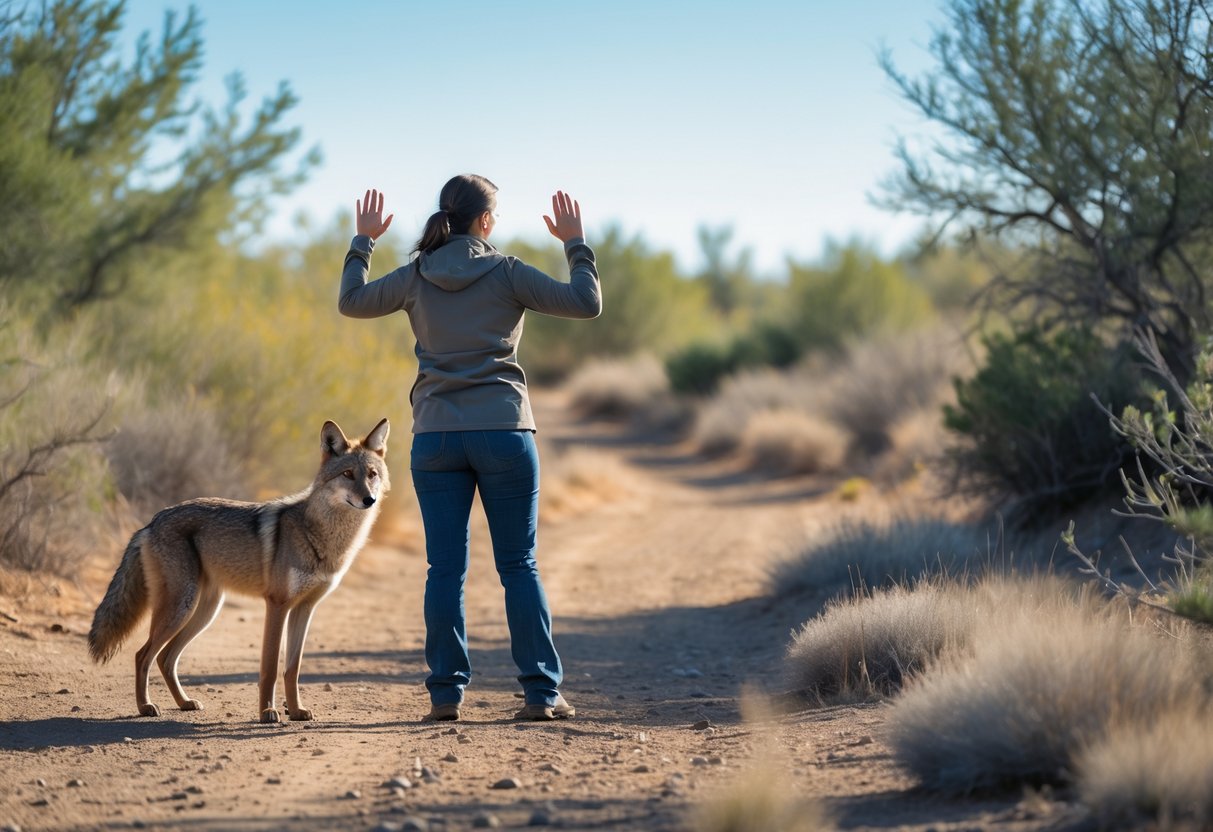
If a coyote comes near you, try to stay calm. Make yourself look big and loud.
Yell, wave your arms, and make noise to scare the coyote away. Don’t turn your back or run. These actions show the coyote you’re not an easy target, and it’ll likely move on.
Keep your pets close. Never feed wildlife, since that just draws coyotes to your yard.
Coyotes usually keep their distance from people. Still, they’ll come closer if they think they can find food or if they’ve lost their fear.
If you know how to react, you can protect yourself and your pets. It’s all about keeping coyotes wild and wary.
Immediate Steps to Take When a Coyote Approaches

When a coyote comes near, what you do really matters. Your actions can keep you safe and remind the animal to stay wary of people.
Stay calm, look big, make noise, and move away carefully. These steps help you avoid trouble without hurting the coyote.
Stay Calm and Avoid Running
If you spot a coyote nearby, try not to panic. Running only makes things worse.
Coyotes notice fear, and if you bolt, they might give chase. That’s just how they’re wired.
Stand still and keep your eyes on the animal. Don’t turn your back or make quick moves.
Being calm shows you’re not easy prey. Wildlife biologists often point out that running invites a chase.
Make Yourself Appear Larger
Coyotes avoid bigger animals most of the time. So, raise your arms slowly and spread them out.
If you’ve got a jacket or backpack, lift it over your head. Stand tall and keep eye contact if you can.
You want the coyote to think twice about coming closer. Sometimes, just looking big is enough to send it packing.
Use Loud Noises and Hazing Techniques
If the coyote sticks around, get loud. Shout, clap, or stomp your feet.
Blow a whistle if you have one handy. Hazing—making the coyote feel unwelcome—is something wildlife experts recommend.
Toss sticks or small rocks near the coyote, but don’t aim at it. You just want to make it uncomfortable.
Spray water from a hose or bottle if you can. These tricks remind coyotes to keep their distance.
Backing Away Safely
When the coyote starts to leave, back away slowly. Keep facing it as you move.
Don’t run—just give it space. Calm movements help prevent startling the animal.
Watch what the coyote does. If it comes closer, repeat the loud noises and big gestures.
By backing off carefully, you lower the risk and help keep coyotes wild. If you want more tips, check out this wildlife biologist’s advice.
Protecting People and Pets Around Coyotes

When coyotes show up, your best bet is to pay close attention. Keep pets and kids close, and know when to get help.
Staying alert and acting calmly can make a big difference.
Keeping Pets on Leash and Supervised
Always walk your dog on a short leash, especially at dawn, dusk, or night. Coyotes see small or loose pets as easy targets.
Don’t use retractable leashes—they give pets too much space. Never leave pets outside alone or tied up.
Coyotes move quietly and fast. Bring pet food and water inside so you don’t attract them.
Put up a fence at least six feet tall, with extensions or “coyote rollers” on top. That’ll make it harder for coyotes to get in.
Supervising Children Outdoors
Keep young kids close when you’re outside, especially near woods or open spaces. Coyotes usually steer clear, but they might act bold if they’re surprised or have pups nearby.
Teach kids to stand tall and stay calm if they see a coyote. Running isn’t a good idea—it can make the animal chase.
Instead, kids should make loud noises, wave their arms, or toss small objects to scare the coyote off.
Don’t let children play in areas where you’ve seen coyotes or noticed signs of them. Regular supervision is a must.
Reporting Aggressive Coyote Behavior
If you spot a coyote acting aggressively or just not caring that people are around, let your local animal control agency know right away.
That kind of behavior could mean the coyote’s gotten too comfortable with humans, or maybe it’s sick.
Sometimes, when a coyote bites someone or just won’t stop following people, animal control really needs to step in. They’ll figure out if the animal should be removed or checked for something serious, like rabies.
Don’t try to deal with a pushy coyote by yourself. Keep your distance and use hazing tricks to scare it off if you run into one.
Need tips? There are plenty of coyote hazing methods online you can check out.


