
Ever wondered if wolves are scared of coyotes? People ask this a lot, probably because these two animals cross paths pretty often. Here’s the thing—wolves don’t fear coyotes. Wolves are bigger, stronger, and usually the boss in any encounter.
Coyotes definitely keep their distance. Wolves, on the other hand, mostly ignore coyotes unless there’s a reason not to.
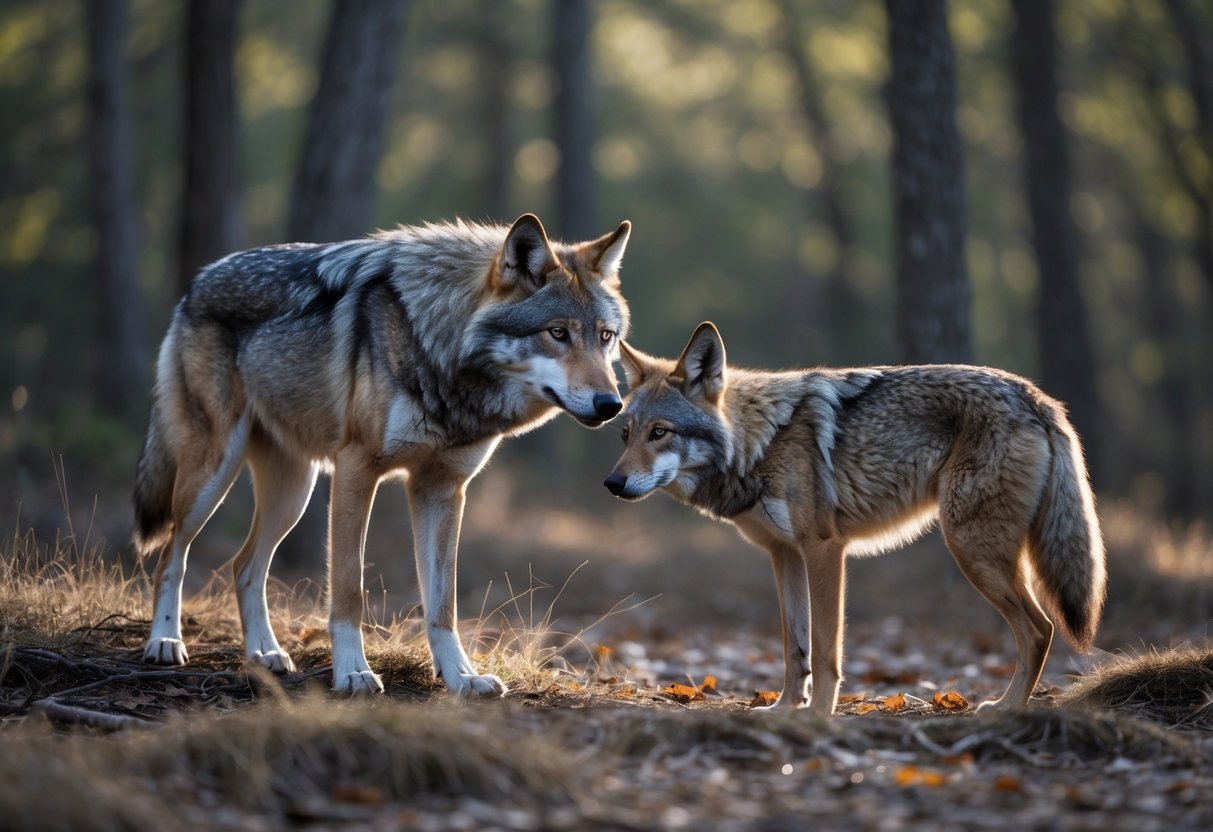
Coyotes try to avoid wolves for their own safety. Wolves just see coyotes as a minor nuisance, not a real threat.
If you pay attention to how these two interact, the dynamic is pretty interesting. It’s wild (pun intended) how they manage to share space without constant drama.
Do Wolves Fear Coyotes?
Wolves usually act like the confident ones when they bump into coyotes. You’ll notice wolves don’t hesitate, while coyotes seem a lot more on edge.
Their meetings revolve around territory, survival, and food. It’s not really about fear, but more about who’s in charge.
Typical Interactions Between Wolves and Coyotes
When wolves and coyotes cross paths, wolves call the shots. Their size and strength mean they can push coyotes away from food or territory pretty easily.
Coyotes don’t pick fights with wolf packs. They’d rather change their hunting spots or times to dodge trouble.
Sometimes, coyotes live close to wolves but stick to the edges of wolf territory. That way, they avoid direct conflict.
Occasionally, a group of coyotes might act bold, but wolves still don’t worry about them. Wolves might tolerate coyotes as long as they stay out of the way.
Territorial Behavior and Aggression
Wolves guard their land fiercely. They mark territory with scent and loud calls, letting everyone—including coyotes—know they’re around.
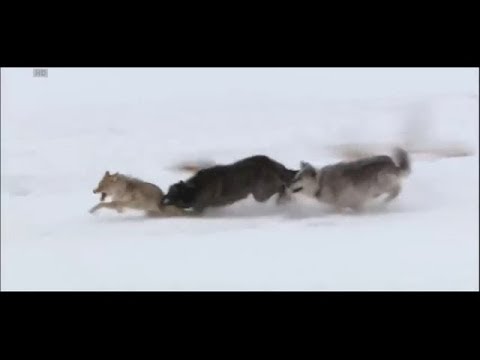
If a coyote wanders into a wolf pack’s area, wolves might chase or attack to drive it out. Coyotes pick up on these warnings and usually steer clear.
Wolves use aggression to keep control over their hunting grounds. Coyotes, especially if alone, rarely push their luck.
Think of wolves as the top dogs keeping things in order. Coyotes act more like opportunists, only getting bold if they have backup or if wolves aren’t around.
Impact of Wolf Presence on Coyote Populations
Wolves lower coyote numbers where they live together. Researchers found that coyote populations can drop by about 30% in areas with lots of wolves.
Coyotes also face threats from humans, but wolves force them to be extra cautious. Lone coyotes have it the hardest and often leave wolf-heavy areas to stay safe.
Coyotes with packs stick together and have a better shot at survival. Still, most coyote deaths come from humans, not wolves.
Wolves don’t wipe out coyotes, but their presence changes how coyotes act. Coyotes become more careful and spread out. Here’s a wildlife study if you want more details.
Key Differences and Relationships Between Wolves and Coyotes
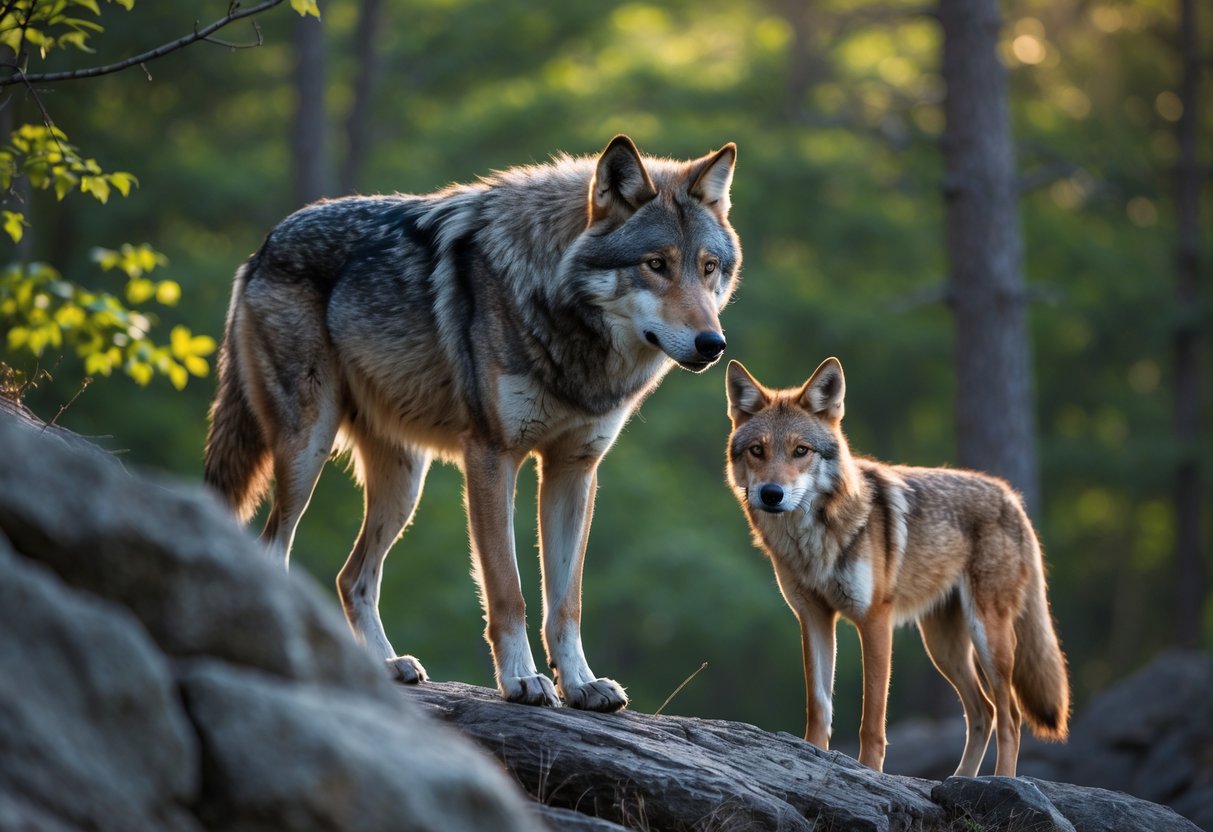
Wolves and coyotes belong to the same family, but they’re pretty different when you look closer. Size, behavior, and social lives set them apart.
Sometimes, their worlds overlap. Every now and then, they even mate and create hybrids, which is wild to think about.
Physical and Behavioral Differences
Wolves, especially gray wolves, are way bigger than coyotes. A gray wolf can weigh up to 175 pounds and stand about 30 inches tall.
Coyotes (Canis latrans) are smaller, lighter, and more agile. This lets wolves hunt big prey like deer, while coyotes usually chase after smaller animals.
Wolves stick with their packs and hunt together. Coyotes get by alone or in pairs, but can team up if they need to.
Coyotes are more adaptable—they show up in cities, suburbs, and open country. Wolves usually avoid those places.
Social Structure and Communication
Wolves live in close-knit packs with clear roles. There’s a leader, hunters, and others who help out. This teamwork helps them hunt and defend their territory.
Wolves use howls, body language, and scent to communicate. That keeps everyone on the same page.
Coyotes have a looser social life. Sometimes they’re alone, sometimes in pairs, and occasionally in small packs.
Their calls sound different—higher pitched and more varied than wolves. You’ll hear coyotes yipping or barking, especially at night.
Coywolves: Hybrid Offspring and Interactions
Wolves and coyotes can actually interbreed, even if it doesn’t happen all that often. Their offspring, known as coywolves or eastern coyotes, show a surprising mix of traits from both parents.
You’ll notice coywolves are usually bigger than a typical coyote, though they’re still smaller than a wolf. They’ve managed to adapt pretty well to places where people live.
Coywolves tend to act more like coyotes in how they behave, but thanks to their size, they can go after larger prey. It’s fascinating how these hybrids blur the line between wolves and coyotes.
Curious about the differences between wolves and coyotes or what makes a coywolf unique? There’s plenty more to discover.


