
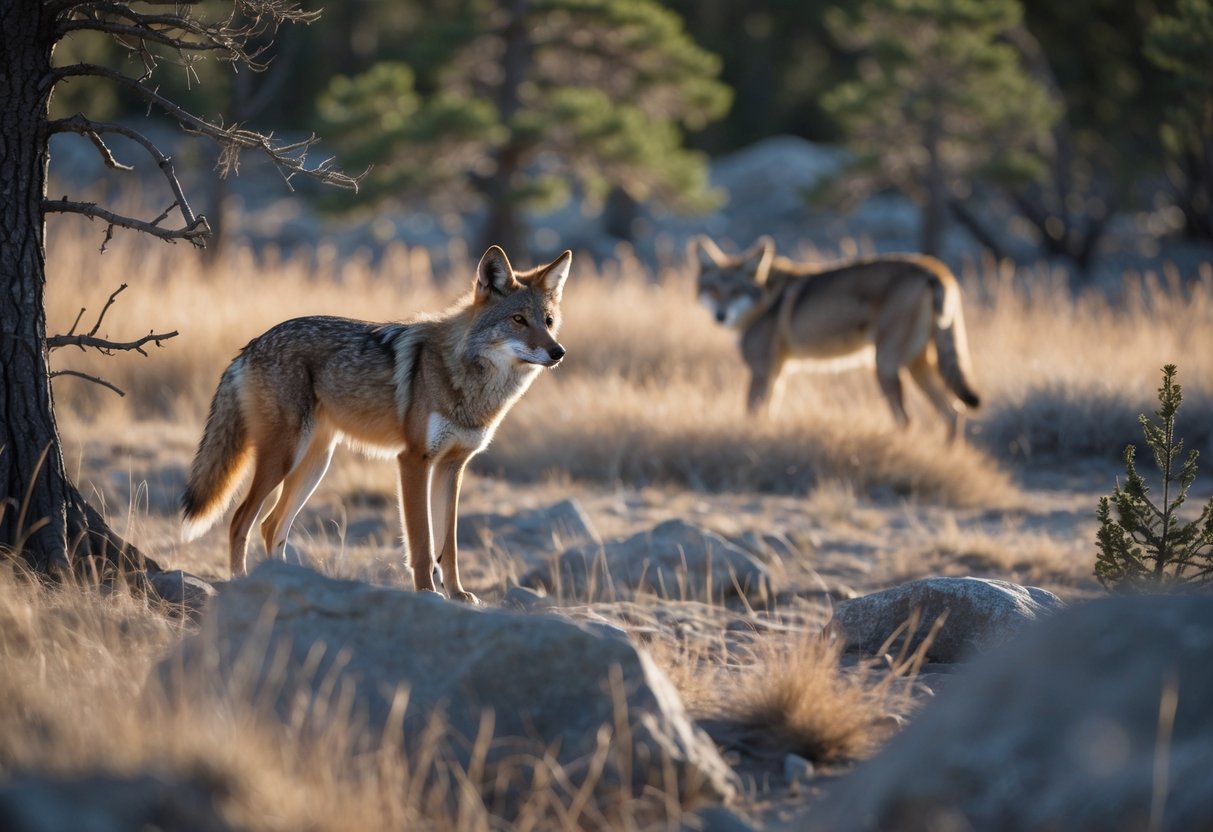
Coyotes are clever and incredibly adaptable, but they’re not at the very top of the food chain. If you’re wondering who keeps coyote numbers in check, the answer might surprise you. Wolves, mountain lions, bears, and some big birds of prey are the main threats out there.
Humans also play a huge part in controlling coyote populations. Through hunting and changing their habitats, people shape where and how coyotes survive. When you look at these threats, you start to see how coyotes fit into the wild and why they act the way they do.
Who Is the Coyote’s Biggest Predator?

Coyotes have to deal with a handful of tough predators and, of course, humans. Each one brings different problems for their survival.
Some animals hunt coyotes for food or to keep them out of their territory. At the same time, humans change coyote lives through hunting and by altering the land.
Human Impacts on Coyote Populations
Humans threaten coyotes more than almost anything else right now. You might not notice it every day, but habitat loss pushes coyotes out of their homes.
As cities and farms keep growing, coyotes lose space to live and hunt. They end up squeezed into smaller areas with less food.
People also hunt coyotes for sport, fur, or just to keep their numbers down. Cars hit a lot of coyotes, too.
Altogether, these human actions lower coyote survival rates more than most wild predators ever could.
Wolves: The Most Formidable Natural Predator
Wolves (Canis lupus) stand out as some of the strongest enemies coyotes face. Since wolves hunt in packs, they can easily overpower a lone coyote.
Wolves don’t usually hunt coyotes for food first, but if food runs low or coyotes get in their way, wolves will attack. Coyotes just aren’t as big or as strong as wolves.
Both wolves and coyotes share forests and grasslands. When wolves see coyotes as rivals, they chase or kill them to protect their territory or food.
Mountain Lions and Big Cats as Coyote Hunters
Mountain lions—also called cougars or Puma concolor—are skilled hunters that sometimes go after coyotes. These big cats rely on stealth and strength to ambush coyotes, especially the young or those wandering alone.
You’ll find mountain lions in rocky or mountainous regions. They hunt all sorts of animals, and coyotes are sometimes on the list.
Mountain lions don’t target coyotes as their main meal, but if they’re hungry or other prey is scarce, they’ll go for it. This makes mountain lions a real danger for coyotes in some places.
For more about coyote predators, you can check out extra details on their natural enemies.
Other Major Predators and Threats to Coyotes

Coyotes run into danger from all sorts of animals, not just one. Some hunt them, and others compete for the same food or space.
You might wonder which animals threaten coyotes the most or where these risks pop up.
Bears: Black Bears and Grizzly Bears
Bears—especially American black bears and grizzly bears—can be a problem for coyotes. Grizzlies, found in western Canada and some U.S. states, are strong and always looking for a meal.
They don’t usually put coyotes at the top of their menu, but if a chance comes up or they feel threatened, they’ll attack. Black bears show up all over North America, in forests and mountains.
They mostly eat plants but won’t say no to meat if they find it. Both types of bears can kill coyotes, especially if the coyote is sick or weak.
Bears use their size and strength to overpower prey. Coyotes have to stay sharp around bear country if they want to avoid trouble.
Bears also eat dead animals, including coyote carcasses, which actually helps clean up the environment.
Golden Eagles and Other Birds of Prey
Golden eagles are the biggest birds of prey in North America, and they sometimes hunt coyotes—especially pups or smaller ones. Their huge wings let them swoop down fast and hit hard.
Golden eagles live in open spaces like mountains and deserts, where they can spot prey from far away. Other birds, like bald eagles and vultures, also cross paths with coyotes.
Bald eagles might attack young coyotes if the mother isn’t around. Vultures don’t hunt live coyotes but will eat the remains.
These birds rely on sharp talons and great eyesight to catch prey. If you see a big eagle circling overhead, it could be searching for small animals, maybe even a young coyote.
Alligators and Wetland Danger
Down in the southern U.S., American alligators pose a real threat to coyotes near water. Alligators hang out in swamps, slow rivers, and wetlands, waiting to strike if a coyote gets close.
They use a strong bite and a nasty death roll to take down prey. Coyotes that come to drink or cross near alligator habitats—think Florida or Texas—risk getting caught.
Alligators mostly eat fish and smaller mammals, but coyotes are fair game if they wander too close. Coyotes have to be careful around wetlands if they want to stay safe.
Wild Cats and Canine Competitors
Several big cats and canines go head-to-head with coyotes or hunt them down. Mountain lions—people also call them cougars or panthers—roam across many U.S. states.
They stalk coyotes and sometimes ambush them, mostly to cut down on competition. Other wild cats, like bobcats and lynx, might go after young or weaker coyotes.
Wolves, who are actually bigger cousins of coyotes, often battle them for food and space. Sometimes wolves hunt coyotes if food gets scarce or just to keep their numbers in check.
Other coyotes can be a threat too, especially during fights over territory or mates. In cities and suburbs, domestic dogs sometimes attack or chase coyotes if they run into each other.
All these rivals make life pretty complicated for coyotes out there.


