
If a coyote gets too close, try to stay calm. Stand your ground.
Raise your arms to look bigger and use loud noises to scare the coyote away. If you run or turn your back, you might trigger the coyote’s prey drive, which could get dangerous.
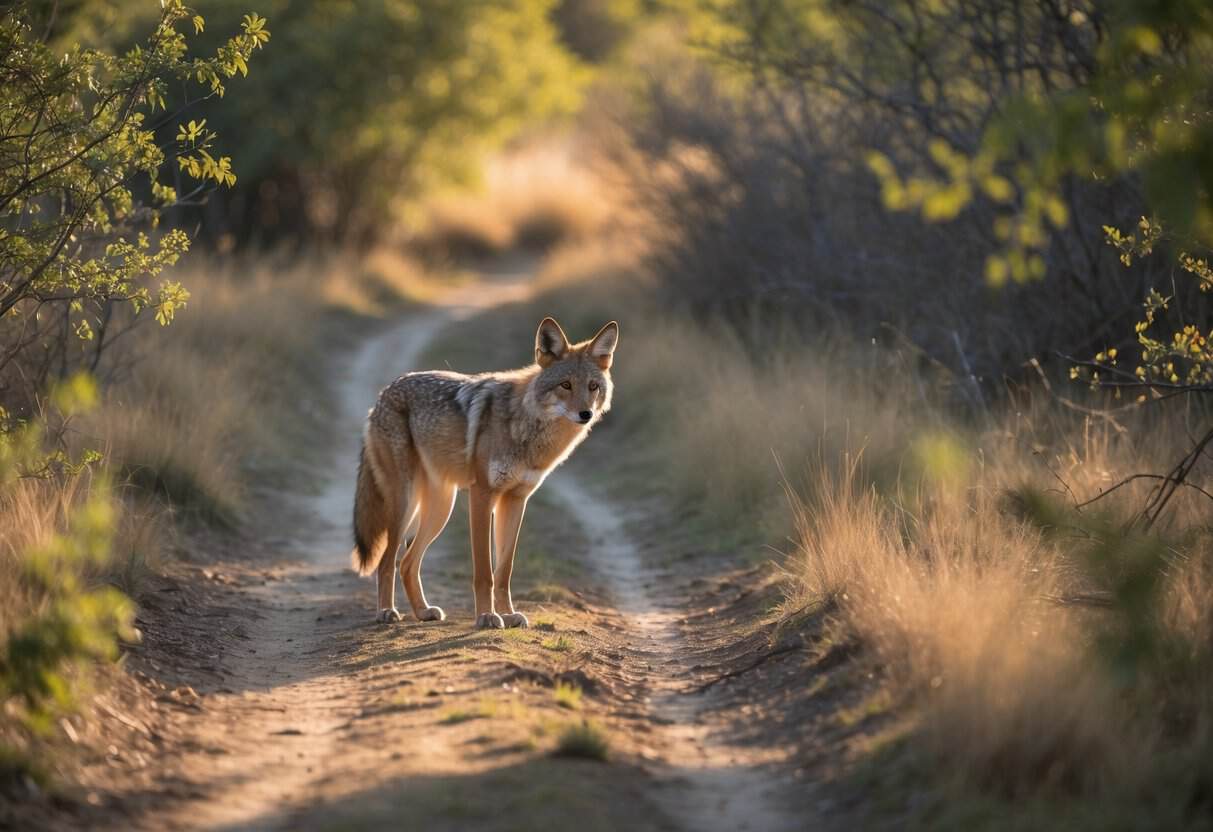
Keep your pets close and never feed coyotes. Feeding them just makes them bolder around people.
If you know how to react with confidence, you’re more likely to stay safe if you ever run into one.
Immediate Steps to Take If a Coyote Approaches
When a coyote comes near, your reaction matters. Stay calm, make yourself look bigger, make noise, and keep eye contact.
These actions show the coyote you’re not prey. Most of the time, it’ll back off.
Stay Calm and Avoid Sudden Movements
First things first: keep calm. Coyotes notice fear and quick movements.
If you run, you might look like prey. Move slowly and keep control over your actions.
Don’t turn your back or drop your guard. Stand still for a moment and see what the coyote does next.
If it sticks around, don’t panic. Be ready to step up your response.
Staying calm gives you the best shot at handling things safely.
Make Yourself Look Larger
Coyotes usually respect bigger animals. Try stretching your arms over your head or open your jacket wide.
If you’re with kids or pets, pick them up right away. That way, the coyote won’t see them as easy targets.
Stomp your feet on the ground if you need to. Anything that makes you seem larger and more confident can help.
Coyotes often avoid bigger threats, so this might convince it to turn around.
Use a Firm, Loud Voice and Create Noise
Speak up—use a loud, steady voice. Say something like, “Go away!” or “Back off!” Don’t scream, but don’t be shy about volume either.
If you’ve got a whistle, air horn, or even a pot to bang, use it. If not, clap your hands or shake a can with coins.
Those noises can make a coyote think twice. Most of them don’t want to stick around for that.
Maintain Eye Contact and Do Not Turn Your Back
Keep your eyes on the coyote at all times. If you look away or turn your back, you might invite it to come closer.
If you need more space, back away slowly. Don’t run or make sudden moves.
Eye contact shows you’re paying attention. If the coyote won’t leave, stay loud, look big, and keep watching it.
If it gets aggressive, look for a safe spot or call wildlife experts for help.
Protecting Yourself, Pets, and Reporting the Encounter

When a coyote shows up, staying calm and acting clearly helps keep everyone safe. Take charge of your pets, use deterrents, and know when to call for help.
Keep Pets Close and Controlled
Always leash your pets outside. Don’t let small pets wander, especially near woods or open fields.
If a coyote appears, pick up small pets right away. Don’t let your dog run off-leash or get too far ahead on trails.
Coyotes might see loose pets as prey. Keeping them close gives you more control if something happens.
Supervise pets when they’re outside. Fencing your yard helps keep coyotes out.
If you spot a coyote, bring your pets inside as soon as you can.
Do Not Run or Feed Coyotes
Never run away from a coyote. Stand tall and face it, making yourself look bigger.
Don’t ever feed coyotes or leave food out where they can reach it. Feeding them just encourages them to come closer and lose their natural fear.
Remove all food sources from your yard or patio. That makes it less likely you’ll have future visits.
Teach kids not to approach or feed coyotes. Remind them to stay close to adults and watch wild animals from a safe distance.
Use Deterrents and Defensive Tools
If a coyote won’t leave, use noisemakers, air horns, or whistles to scare it off. Wave your arms, shout, or throw small things like sticks or tennis balls.
Carry a squirt gun with water or pepper spray for extra safety. If a coyote goes after your pet or child, pick them up, make noise, and back away slowly.
The goal is to scare the coyote, not hurt it. If you haze them often, they’ll stay wary of people and avoid getting too bold.
Contact Animal Control or Wildlife Authorities
If you run into an aggressive coyote, reach out to local animal control or wildlife authorities as soon as you can. Maybe the coyote attacks, keeps coming after pets or kids, or just looks sick or hurt—any of that is worth reporting.
When you contact them, share details like where and when it happened, and what the coyote did. If anyone gets bitten or injured, don’t hesitate—get medical help right away.
A lot of places set up hotlines or websites just for reporting coyotes. This kind of reporting can really help keep your neighborhood safer.
If you want more tips on what to do during a close encounter, check out these resources: what to do if a coyote approaches you.


