
Spotting a coyote quietly trailing behind you can feel unsettling. But honestly, most of the time, a coyote follows you just to escort you out of its territory or away from its pups—not because it wants to attack.
Coyotes work hard to keep their space safe, especially if you’ve got a dog tagging along.
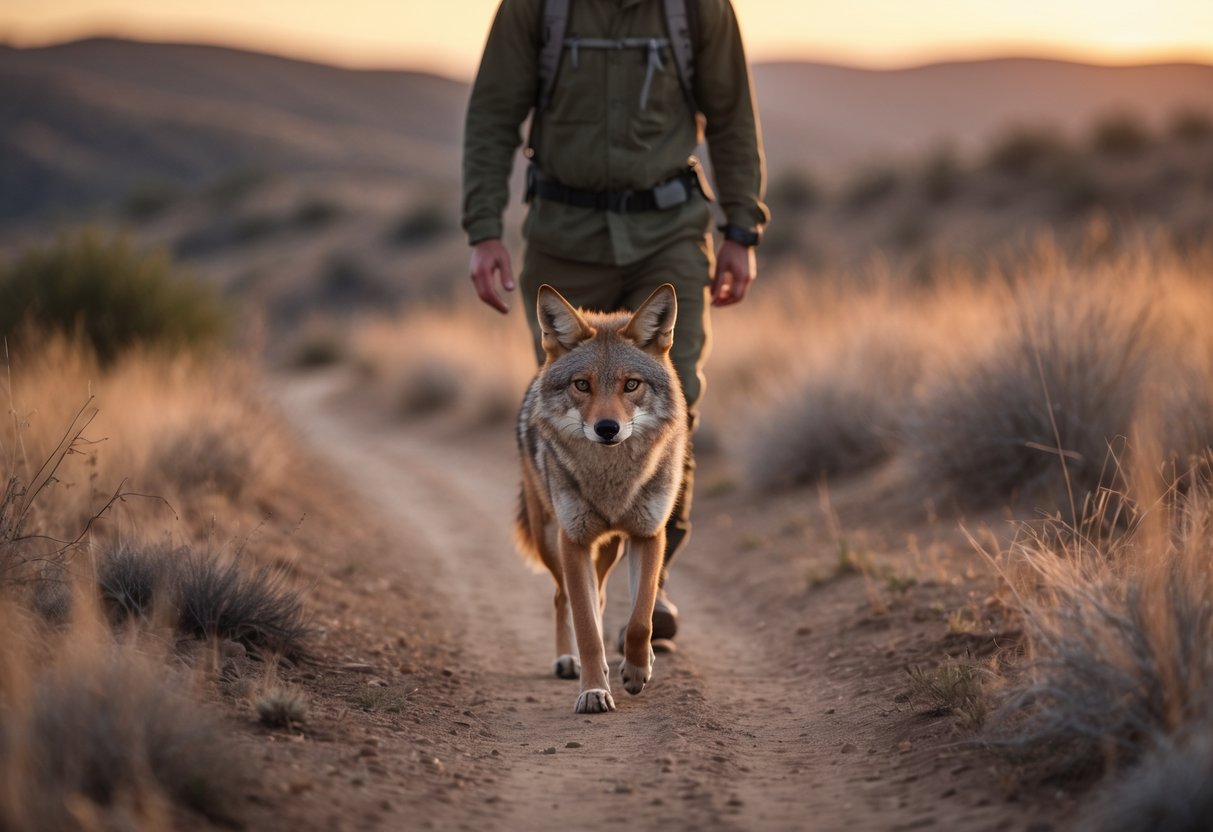
Coyotes act curious, but they’re also pretty cautious. Usually, they hang back and watch to figure out if you’re a threat.
If you understand this behavior, it’s easier to stay calm and respond without panicking.
Knowing why coyotes follow people can help you feel more comfortable outdoors. You should respect their space, but keep yourself and your pets safe, too.
Why a Coyote Might Follow You

Coyotes follow people for a handful of reasons. Most often, they’re just trying to protect their territory or pups.
Sometimes, they act curious and cautious, sizing you up to see if you’re a threat.
If you get what’s going on, you can keep yourself safe and avoid freaking out during an encounter.
Territorial Escorting and Protection of Young
When a coyote follows you, it’s usually trying to escort you away from its turf.
Coyotes get especially protective in spring and early summer when they’ve got pups nearby.
Coyote parents want you far from their den and young ones. They’ll shadow you quietly, watching to make sure you keep moving.
If you’re walking a dog, the coyote might seem more intense, since dogs can look like a major threat to their pups.
Understanding Coyote Behavior and Intentions
Coyotes act curious, but they’re usually not planning to attack. If one follows you, it’s probably just checking you out.
They tend to keep their distance, watching how you react.
Coyotes sometimes get used to humans, especially when people leave food or trash out. That kind of thing can make them bolder, but honestly, feeding them or letting them hang around isn’t good for anyone.
Coyotes want to avoid trouble. They care way more about protecting their home than about hunting people.
When a Coyote Approaches: What It Means
If a coyote starts coming closer or follows you slowly, it’s probably telling you, “You’re too close,” especially if there are pups or food around.
Don’t panic if you spot a coyote approaching. Stand tall, look it in the eye, and back away slowly.
Try making loud noises or waving your arms—these moves show you’re not prey.
Always keep pets on a leash. Coyotes might see small animals as food or threats, so keeping your dog close is just smart.
For more details on coyote behavior, check out what does it mean if a coyote follows you.
How to Respond to a Coyote Encounter

If you see a coyote, try to keep your cool and know what to do next.
Your response can protect you and your pets. You can also take steps to avoid running into coyotes in the future.
Staying Calm and Acting Safely
If a coyote follows you or stands nearby, don’t run. Running just triggers their chase instinct.
Stand tall and make yourself look bigger by raising your arms or opening your jacket.
Keep eye contact, but don’t stare it down aggressively. Back away slowly.
Use a loud, firm voice to tell the coyote to leave.
If the coyote comes too close, throw small objects near it (not directly at it), or make loud noises—clap your hands or use an air horn if you’ve got one.
These actions show you’re not prey and encourage the coyote to leave you alone.
If you feel threatened, call local animal control or wildlife authorities right away.
Staying calm and sticking to these steps gives you the best shot at staying safe during a coyote sighting.
Protecting Pets During Coyote Sightings
If you’re walking a dog, keep it on a short leash. That way, your dog can’t run up to a coyote.
Small dogs face extra risk, since coyotes might see them as prey.
Don’t let your pet approach a coyote or sniff around spots where coyotes could hide, like thick bushes or under decks.
If a coyote acts aggressive or follows your pet, pick up small dogs if you can or move your pet away quickly but calmly.
At home, keep pets inside or in a yard with a tall fence to limit coyote contact. Always supervise pets outside, especially at dawn or dusk when coyotes get more active.
Minimizing Future Coyote Sightings
Coyotes usually show up near homes when they find food without much effort. So, don’t feed coyotes or leave pet food outside—once they get a taste, they’ll probably come back.
Lock down your garbage cans with tight lids. If coyotes keep popping up, you might want to take down bird feeders for a while.
When you spot a coyote, try “hazing” by making loud noises, clapping, or tossing small objects nearby. That’ll remind them to stay wary of people.
Chat with your neighbors about not feeding wildlife and keeping pets indoors or on a leash. Working together, you’ll have a better shot at keeping coyotes away and making your neighborhood safer.
For more tips, check out how to stay safe during coyote encounters.


