
Ever wondered just how strong a coyote’s bite is? You’re definitely not alone. These clever wild dogs use their sharp teeth and tough jaws to catch and eat all sorts of prey. A coyote’s bite force usually falls somewhere between 300 and 400 pounds per square inch (PSI), with the average around 350 PSI. That’s strong enough to break bones or scare off bigger animals.
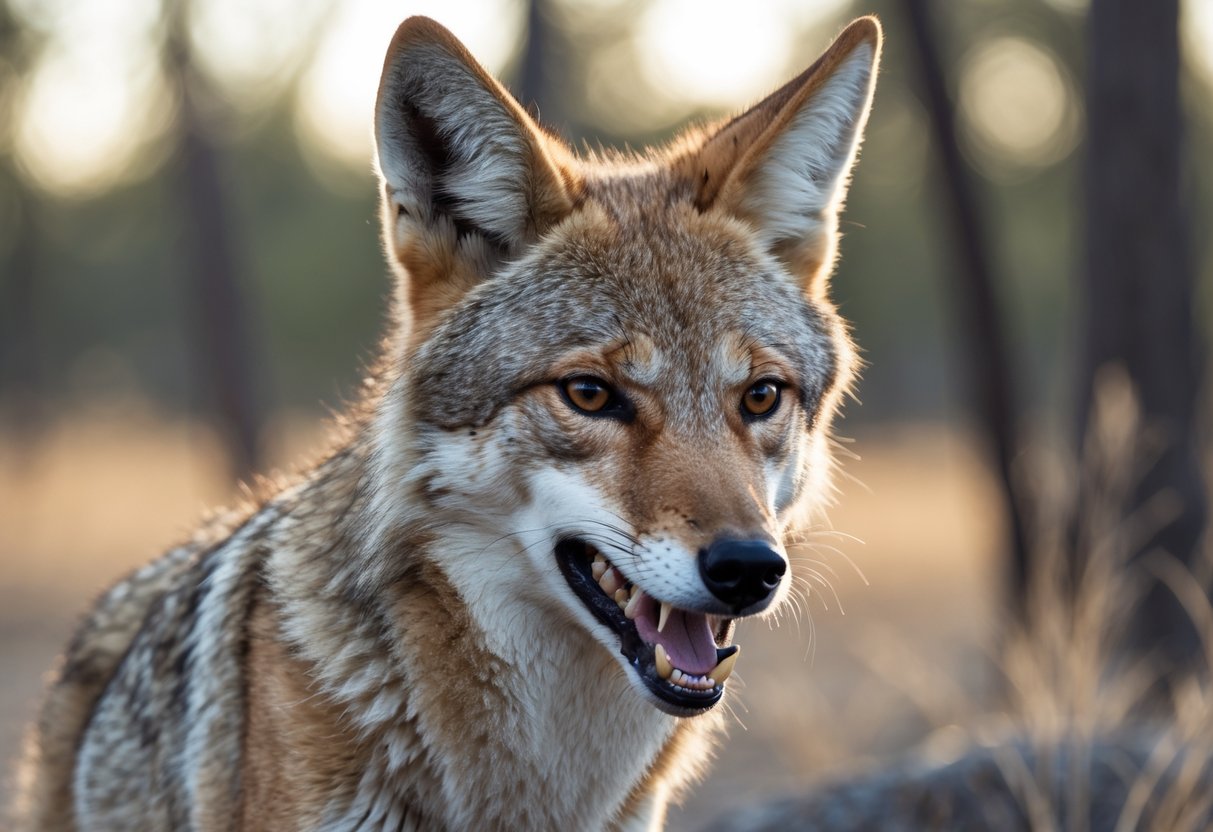
Knowing about coyote bite force matters, especially if you spend time outdoors or have pets. Coyotes rarely attack humans, but understanding their strength makes it easier to stay aware and safe around them.
You’ll find out how their jaws stack up against other animals and why their bite matters in the wild.
Coyote Bite Force Explained
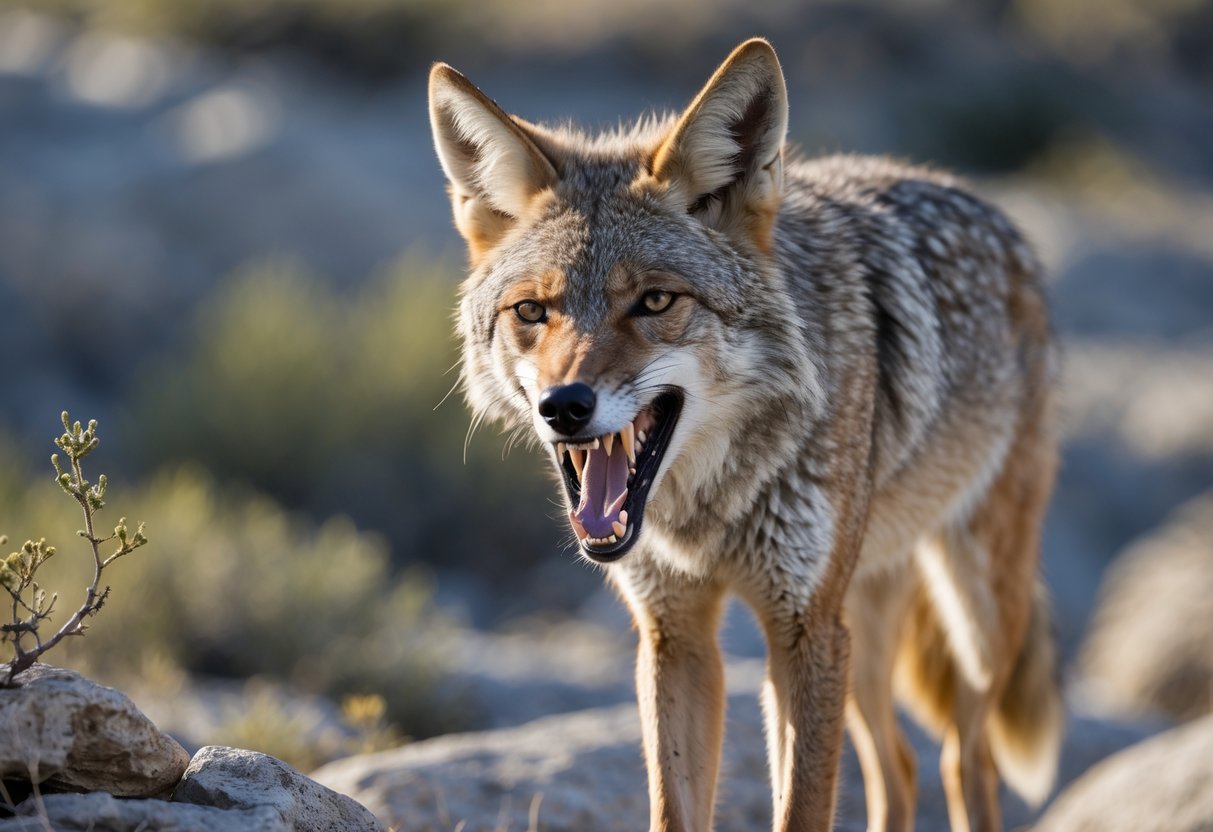
Coyotes need a strong bite to catch and kill small animals, but their bite strength can change depending on different things. If you know how their jaws work and what risks their bites bring, you’ll have a better idea of how to stay safe and understand these animals.
Bite Force PSI: How Strong Is a Coyote’s Bite?
A coyote’s bite force usually ranges from about 88 to 150 pounds per square inch (PSI), though some reports push it up to 350 PSI. That’s enough to snap small bones and hold onto prey like rabbits or rodents.
For comparison:
- Humans bite at around 162 PSI.
- Coyotes bite a bit less than many domestic dogs, which average about 320 PSI.
- Coyotes have a stronger bite than smaller wild canines, like foxes.
Even with a moderate bite force, coyotes combine sharp teeth and fast jaws to become effective hunters in their environment.
Factors Influencing Coyote Bite Force
A coyote’s bite power isn’t always the same. Age, size, and diet all play a part.
Older and bigger coyotes usually bite harder. If they eat tougher food or bones, their jaw muscles get stronger.
Genetics matter too—some coyotes just have bigger skulls or more muscle. Their jaws strike a balance between speed and strength, which helps them catch quick animals like rodents.
This mix of traits turns their bite into a handy tool for hunting and defense.
Risks and Dangers of Coyote Bites
Coyotes don’t go after humans much, but bites do happen—especially to pets. Their bite can spread infections and diseases like rabies, which is no joke.
If a coyote bites you or your pet, get medical help right away. Watch for redness, swelling, or a rash around the wound—those could mean infection.
Coyotes target pets more than people, so keep small animals supervised outside. If you live near coyotes, don’t leave food out, since that attracts them.
For more about coyote bite force and its effects, see coyote bite force explained in detail.
Coyote Teeth Structure and Bite Mechanics
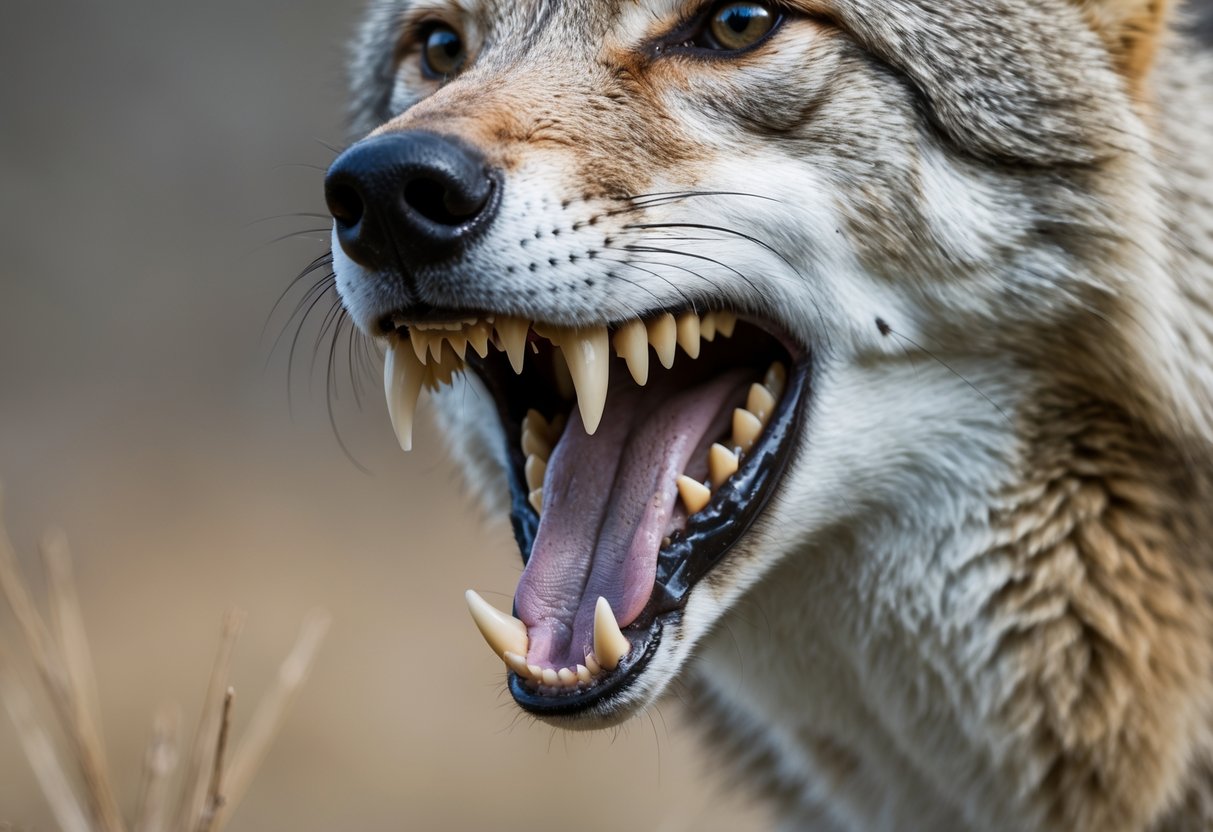
Coyotes have a special set of teeth that help them catch, hold, and eat their food. Their jaws work almost like a well-oiled machine, gripping prey and crushing bones.
If you look at their teeth and bite, you’ll see why they’re such skilled hunters.
Types of Coyote Teeth and Their Functions
Coyotes, like other members of the Canidae family, have 42 teeth, each with its own job.
- Incisors: Small, sharp teeth at the front for biting and cutting.
- Canines: Long, pointed teeth that grab and hold prey tight.
- Premolars and Molars: These sit at the back and crush or grind food.
The canines in particular are strong and great for stabbing, while their cheek teeth act like blades that slice meat and break bones. Together, these teeth let them eat meat, insects, and even some plants pretty efficiently.
Role of Carnassial Teeth in Bite Force
Carnassial teeth play a huge part in how a coyote bites. These special premolars and molars act like scissors.
When a coyote bites down, these teeth slide past each other and slice flesh quickly. They help apply pressure that can easily crush bones.
Those sharp edges make breaking down tough food a lot faster. The force from these teeth is a big reason why a coyote bite can hurt so much and do real damage.
How Coyotes Use Their Jaws for Hunting
Coyotes rely on a mix of strong jaws and sharp teeth when they hunt. Their lower jaw packs a real punch and lets them deliver a seriously strong bite.
When they go after prey, they clamp down with their canines and hang on tight. Then, those carnassial teeth get to work, tearing through flesh and even breaking bones.
Coyotes use their narrow snouts to get in close and deliver really precise bites. Honestly, this combo of jaw strength and smart dental design turns them into surprisingly skilled hunters—even when they’re up against animals bigger than themselves.
Want to dig deeper? Here are more details on coyote teeth and jaws.


