
Ever been outside at night and heard that wild, haunting coyote cry? It’s kind of spooky, right? Coyotes cry to talk to each other—howls, yips, and barks all send messages about where they are, warnings, or sometimes just excitement or distress.
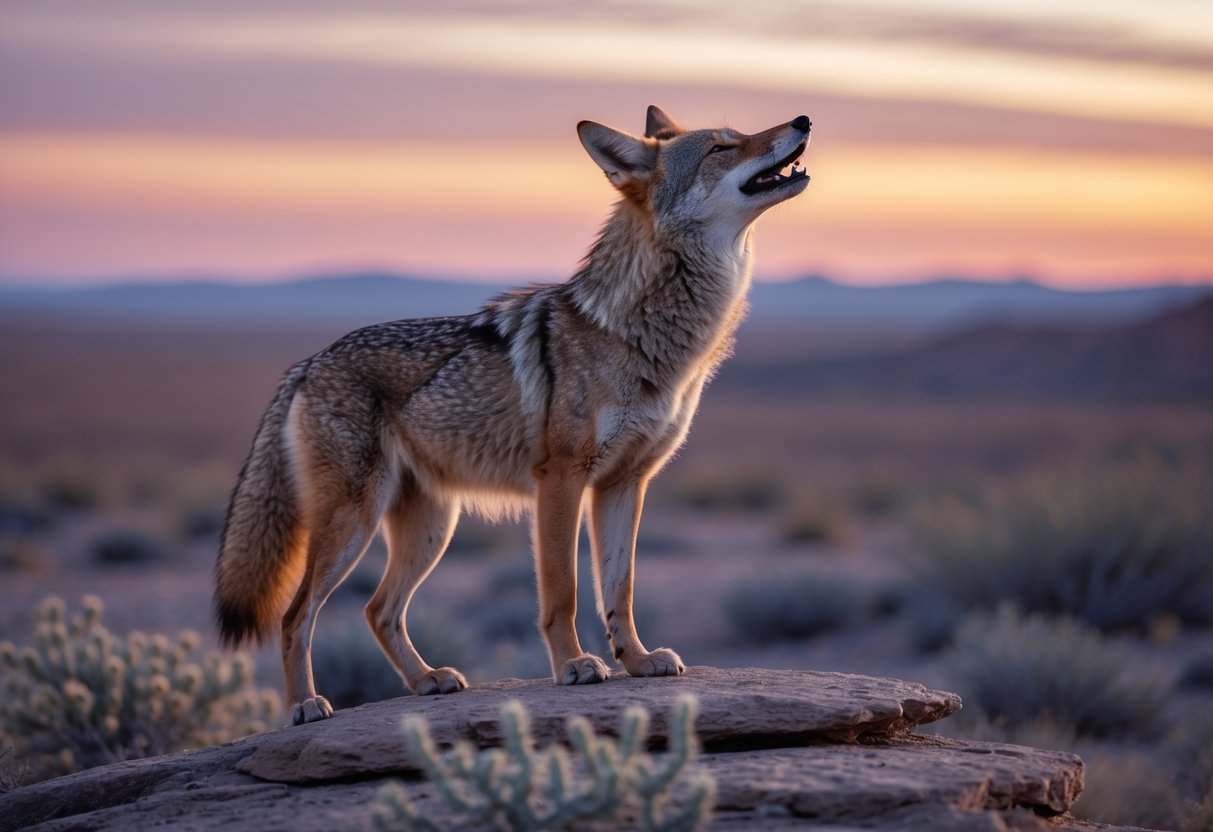
These sounds help coyotes stay close with their pack and protect their turf.
Sometimes you’ll hear a lone coyote howling, trying to find its family.
Other times, a bunch of coyotes howl together to warn strangers.
If you pay attention, you’ll start to get a sense of what’s happening out there.
Coyotes actually make a whole range of noises.
Each one means something different.
So, next time you hear a coyote, remember: it’s not just random noise—it’s real communication.
If you’re curious, you can dig deeper into how coyote sounds work and what they mean for these clever creatures.
Reasons Coyotes Cry and Howl

Coyotes use their howls and cries to send messages.
They mark territory, stay in touch with family, and find mates with these sounds.
Each howl or yip has its own meaning that helps coyotes survive.
Territorial Communication
When a coyote howls, it’s often staking its claim.
That’s its way of saying, “Hey, this is my spot—back off.”
Howls can get loud and sharp, sometimes mixed with barks.
This kind of noise warns others to keep their distance.
Sometimes, you’ll hear a group howling together to sound tough.
Coyotes use these calls to let everyone know they’re around, hoping to avoid a fight.
One coyote can even trick others into thinking there’s a whole pack by changing up its howl.
People call this the Beau Geste effect, and it makes the area seem crowded, even if it’s not.
Family Group Reunification
Coyotes stick together in family groups, or packs.
Howling helps them find each other, especially if they get separated.
A lone coyote might call out, and the rest of the pack answers with yips and howls.
This back-and-forth acts like a roll call, so everyone knows who’s around.
Family howls usually sound softer or have more yipping.
These calls show excitement or signal that things are safe.
If you hear these, you’ll know coyotes are nearby, but it doesn’t mean they’re being aggressive.
Mating Calls
When breeding season hits, coyotes howl more often.
Their cries get louder and more intense as they search for a mate.
Usually, the male starts with a big, bold howl to get the attention of females.
Females answer with yips or softer howls to show they’re interested.
These calls help them find each other, even across big distances.
Mating howls also warn off other coyotes, saying, “This one’s taken.”
It’s all part of making sure pups are raised safely in the pack.
If you want to dig in further, check out this coyote howling explanation page.
Coyote Sounds, Group Size, and Regional Differences

Coyotes have a whole library of sounds, and these noises change depending on how many are together and where they live.
If you listen closely, you’ll notice their calls shift when they’re alone or in a group.
Eastern coyotes even sound a bit different from their western cousins.
Types of Coyote Vocalizations
Coyotes use howls, barks, yips, and whines to talk.
Each one means something.
-
Howls are long and help mark territory or find pack members.
-
Barks are sharp, warning others about danger.
-
Yips are high-pitched and usually show excitement or help with social bonding.
-
Whines are softer, mostly from pups asking for attention.
If you pay attention, you can start to guess what a coyote wants just by listening.
Perceptions of Coyote Group Size
Sometimes a loud chorus of howls and yips makes it sound like there’s a huge pack.
But honestly, a single coyote can fake it and sound like a crowd.
That’s the Beau Geste effect again.
When packs howl together, it keeps the group close and shows outsiders they mean business.
Bigger groups usually make more complex sounds.
So, if you hear a lot of noise, there’s a good chance a larger pack is nearby.
Eastern Coyotes Compared to Other Coyotes
Eastern coyotes mostly hang out in the northeastern U.S. and parts of eastern Canada. They’re usually bigger than their western cousins—probably because they’ve interbred with wolves and, surprisingly, even dogs.
Their howls and calls? Those can sound a bit off from what you’d hear out west. You’ll likely notice more barking, too, which honestly makes sense given their busier, more urban neighborhoods.
Eastern coyotes tweak their calls to handle all the people and city noise. They often end up sounding more on edge or defensive than coyotes that stick to wild places.
Curious about their weird calls and habits? You can check out more details on coyote vocalizations.


