
When a coyote chases you, it’s usually because its hunting instincts kick in. Coyotes see running as an invitation to chase, so if you bolt, you kind of become prey in their eyes.
Sometimes, they’re just curious or startled by you. But running away makes them act on impulse.
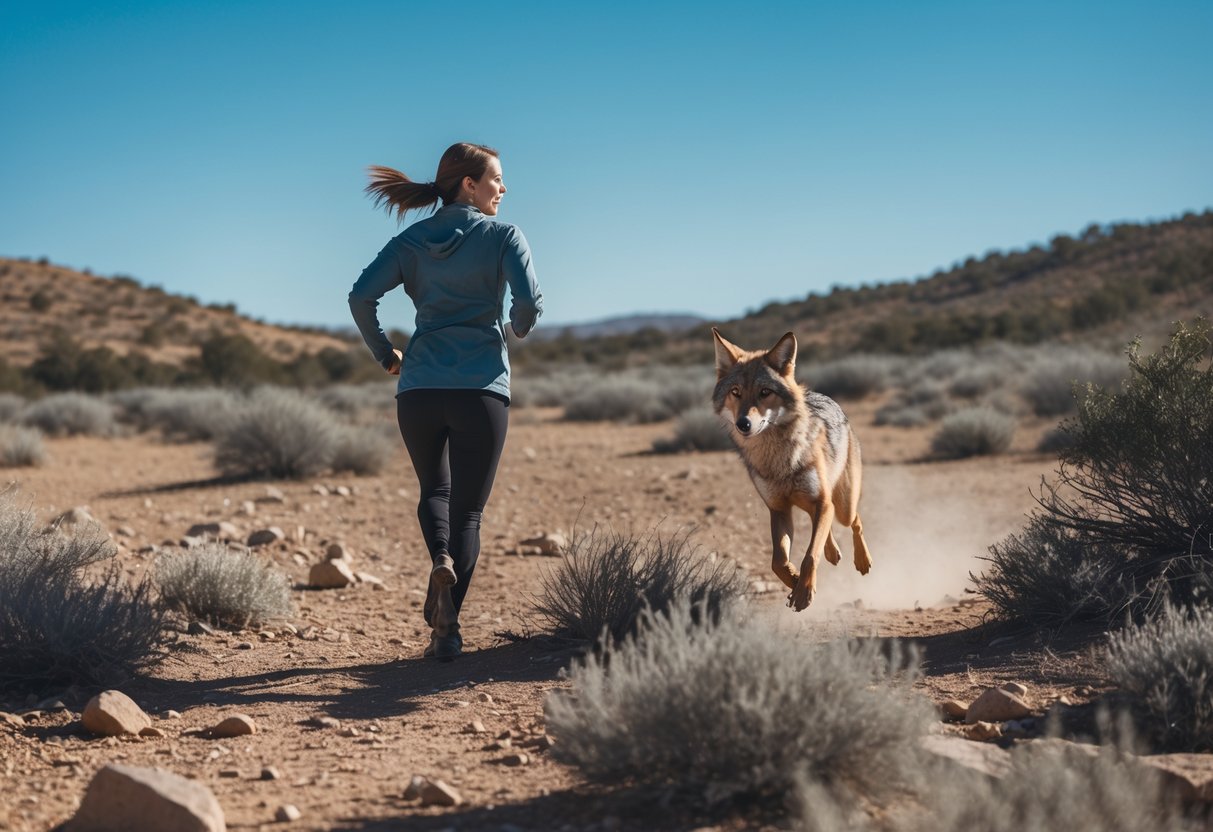
Your best move? Stand still and face the coyote calmly. Coyotes don’t actually want to attack people.
If you panic and run, though, their chase instinct takes over. Knowing how to react can help you stay safe and might even stop the chase before it starts.
Understanding why coyotes act this way can help you avoid those scary moments. It’s about protecting yourself if you ever spot one tailing you.
Why Coyotes Chase or Follow Humans

Coyotes follow or chase people for a handful of reasons. Sometimes, they’re just defending their space or pups.
Other times, they might be hungry or sizing you up because they think you’re a threat. Their behavior changes a lot in cities, too, where they see people all the time.
Territorial Behavior and Offspring Protection
Coyotes often chase or follow people to protect their territory, especially during breeding season. When they’ve got pups—usually March through April—parents get super protective.
They might “escort” you away just to keep you far from their young. If you notice a coyote following you quietly, it’s usually a warning, not an attack.
The animal wants you gone, not hurt. Staying calm and moving away slowly usually puts an end to it.
Mistaking Humans for Threats or Prey
Coyotes might chase or follow you if they think you’re a threat to their safety or territory. Sometimes, they even mistake small children or pets for prey.
Usually, coyotes avoid people. But if they get used to humans or feel cornered, their fear can turn into curiosity or even defensive actions.
If a coyote seems aggressive, it might just be scared or confused. It’s not always easy to know what’s going through their heads.
Seeking Food and Association with Feeding
Feeding coyotes—even by accident—teaches them to lose their fear of people. If they get used to finding food near humans, they might start following you, hoping for a snack.
Don’t feed them or leave garbage where they can get to it. Coyotes that link people to food get bolder, and that’s when trouble starts.
They might show up more during the day and stop acting scared. That’s not great for anyone.
Changes in Coyote Behavior in Urban Areas
Coyotes living in cities act differently than their wild cousins. Urban coyotes get used to seeing people, so they become more curious or even bold.
You might spot them chasing joggers or bikers, or just following people more than you’d expect. This happens when they find easy food and lose their natural fear.
Changing your walking times or routes can help you avoid them in areas where they hang out. For more on safe behavior, check out this urban coyote behavior guide.
How to Respond If a Coyote Is Following You

If a coyote starts following you, staying calm is key. Taking a few simple steps can keep you and everyone with you safe.
Act confidently, even if you’re nervous. These little tricks can stop the coyote from getting closer or acting up.
Staying Calm and Hazing Techniques
First off, don’t run. Running just triggers their chase instinct.
Instead, stand tall and make yourself look bigger. Raise your arms or open your jacket.
Keep eye contact with the coyote to show you’re not prey. Make loud noises—yell, clap, use a whistle if you have one.
Wave sticks or toss small objects near (not at) the coyote to scare it off. People call these moves “hazing.” They teach coyotes to stay away from humans.
If the coyote still won’t leave, back away slowly while facing it. Never turn your back or run, since that can make things worse.
Knowing and practicing these steps really lowers your risk.
Protecting Pets and Children
If you’ve got pets or kids with you, keep them close and under control. Pick up small pets if you can.
Keep dogs on a short leash so they don’t run toward the coyote. Don’t let your pets or kids approach the animal.
Coyotes might see them as threats or prey. Use loud noises and hazing before the coyote gets too close, especially in parks or neighborhoods where they look for food.
Teach your kids to stay calm and avoid sudden moves. Always keep an eye on pets and children when you’re in coyote territory.
What to Do If You See a Coyote Nearby
So, you see a coyote hanging around? First, just watch what it’s up to.
If it looks calm and seems like it’s just passing through, try to stay alert but don’t freak out. Make some noise as you move away—let it know people are around.
But if that coyote starts getting closer or actually follows you, it’s time to act fast. Try hazing: wave your arms, yell, or clap loudly.
Don’t leave pet food or garbage outside. That stuff draws coyotes in, and nobody wants that.
You might want to try motion-activated lights or make loud sounds near your house. Coyotes usually don’t like surprises.
Notice if the coyote acts aggressive—growling, snarling, or rushing at you. If that happens, stand tall, get loud, and back away slowly.
And hey, if you want more tips about what to do if a coyote actually chases you, check out What to Do if a Coyote Chases You.


