
Ever wondered if a coyote can actually breed with a wolf? The answer is yes, they can. Coyotes and wolves can mate and have fertile pups because their chromosomes match up, and their genetics are similar enough to allow it.
This usually happens in places where their territories meet—think the Great Lakes region and parts of eastern North America.
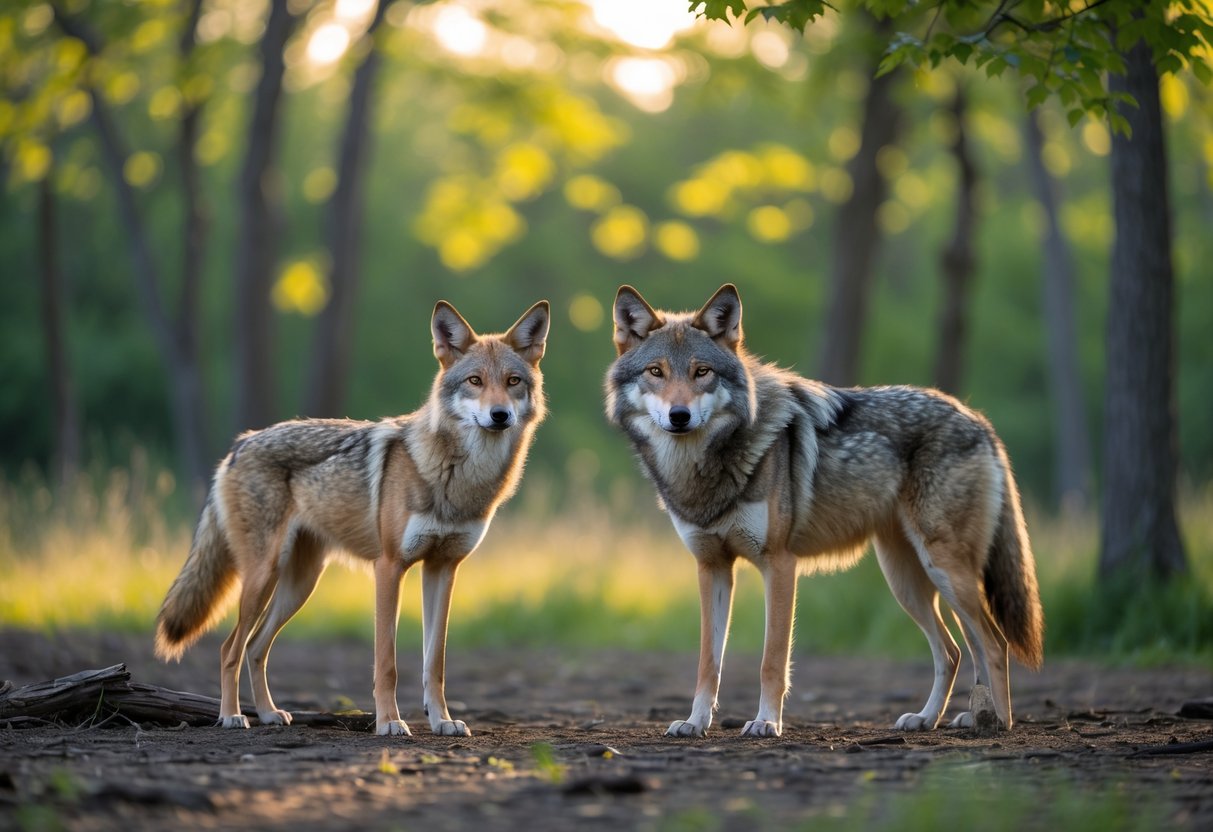
These hybrids, called coywolves, pick up traits from both parents. They typically end up bigger than coyotes, but not quite as large as wolves. It’s kind of fascinating how these animals blend qualities and adapt to changing environments.
If you’re curious about how these mixes happen or what it means for wildlife, let’s get into the science, behavior, and impact of coyote-wolf breeding. There’s more going on here than you might expect.
Can Coyotes and Wolves Breed?

So, can coyotes and wolves actually mate and have pups? They both belong to the Canis genus, which makes crossbreeding possible in some situations.
This tends to happen where their ranges overlap in North America, and only under certain conditions.
Genetic Compatibility and Biological Factors
Coyotes (Canis latrans) and wolves (Canis lupus) both have 78 chromosomes. That’s what lets them produce hybrid pups. Their DNA is close enough that their reproductive systems work together.
Still, their size and behavior differences matter. Female wolves are bigger, and males are even larger compared to coyotes. That size gap can make natural mating tricky.
Scientists have used artificial insemination to show that male wolves can fertilize female coyotes’ eggs. So, even when the animals look really different, fertilization can still happen.
The hybrids usually show a mix of traits. They’re often larger than coyotes but not as big as wolves. Their personalities can be a real mix too—sometimes more wolf-like, sometimes more like coyotes.
Where and How Hybridization Occurs
Most hybridization happens in the eastern and Great Lakes areas. Wolves there lost numbers, so with fewer mates around, some bred with coyotes. That led to a hybrid zone where these mixed animals do pretty well.
The eastern coyote, or “coywolf,” is a classic example. It carries genes from coyotes, eastern wolves, gray wolves, and even domestic dogs. These hybrids have learned to live in lots of places, from forests to the edges of cities.
In the west, wolf-coyote hybrids almost never show up in the wild. Wolves there are bigger and usually don’t mate with coyotes. Scientists have had to use artificial insemination to create hybrids in labs. Those experiments proved hybrids are possible, but it’s rare outside the lab.
Directionality and Frequency of Breeding
Most wild wolf-coyote hybrids come from either male wolves breeding with female coyotes, or more often, female wolves with male coyotes. The direction matters a lot, since size differences affect which pairings work.
Female wolves can carry bigger hybrid pups, while female coyotes struggle with the size. In captivity, female coyotes with wolf pups gave birth to bigger litters than they would with just coyotes.
Hybrid numbers go up when wolf populations drop and coyotes are everywhere. That means more mixing of mtDNA and other genes, which worries some folks who want to keep wild wolves pure.
Want to dig deeper? Check out wolf and coyote hybridization and coywolf genetics.
Coywolf Hybrids and Their Impact

Coywolf hybrids show a mix of wolf, coyote, and sometimes even dog traits. These animals shake up ecosystems and spark debates about conservation and wildlife management in North America.
What Is a Coywolf?
A coywolf is a hybrid—a mix of coyotes, gray wolves, eastern wolves, and sometimes domestic dogs. You’ll find them in places like the northeastern U.S. and eastern Canada.
Coywolves are bigger than coyotes, but not quite as hefty as gray wolves. They combine looks and behaviors from both sides. Their howls, for example, might start out deep and wolf-like, then switch to coyote yips.
You can spot coywolves in forests and even in the suburbs, especially around New York, Ontario, and Quebec. Their mixed-up genes help them survive in spots where humans have changed the landscape.
Genetic Makeup of Coywolves and Eastern Coyotes
Eastern coyotes usually carry about 60% western coyote genes, 30% eastern wolf genes, and maybe 10% domestic dog DNA. That blend gives them abilities you won’t see in pure coyotes or wolves.
Those wolf genes mostly come from eastern wolves and gray wolves. Coywolves living near forests have more wolf ancestry compared to those in cities.
The domestic dog part is smaller but may help these hybrids adapt to life near people. All that genetic variety helps coywolves thrive in all kinds of habitats across the Northeast.
Ecological and Conservation Implications
Coywolves hunt wildlife like deer and moose, showing off their skills as predators. Still, they’re smaller than pure wolves, so they don’t always fill the top predator role everywhere.
This difference can shake up the balance between prey animals and the plants they eat. Sometimes, you might wonder how much that matters in the bigger picture.
Conservationists worry about what coywolves mean for other wolves. When they breed with endangered eastern wolves or red wolves, it gets harder to keep those pure populations safe.
Some livestock owners see coywolves going after their animals. Oddly enough, these hybrids usually act less aggressive than regular wolves.
If we want to manage human-wildlife conflicts—especially in places like New York and eastern Canada—we really need to understand how coywolves behave.
Figuring out how to manage coywolf populations is tricky. People have to weigh the benefits of having these adaptable predators around against the need to protect rare wolves like the red wolf (Canis rufus) and the eastern wolf.


