
Spotting a wild animal nearby always makes you pause—was that a coyote or just someone’s dog? Some dogs can honestly look a lot like coyotes, but if you watch how they move, their size, and their shape, you’ll usually figure it out.
Coyotes are leaner, with long legs, a narrow face, and a bushy tail that hangs low. Dogs, meanwhile, often have rounder paws and tend to wag their tails a lot more.
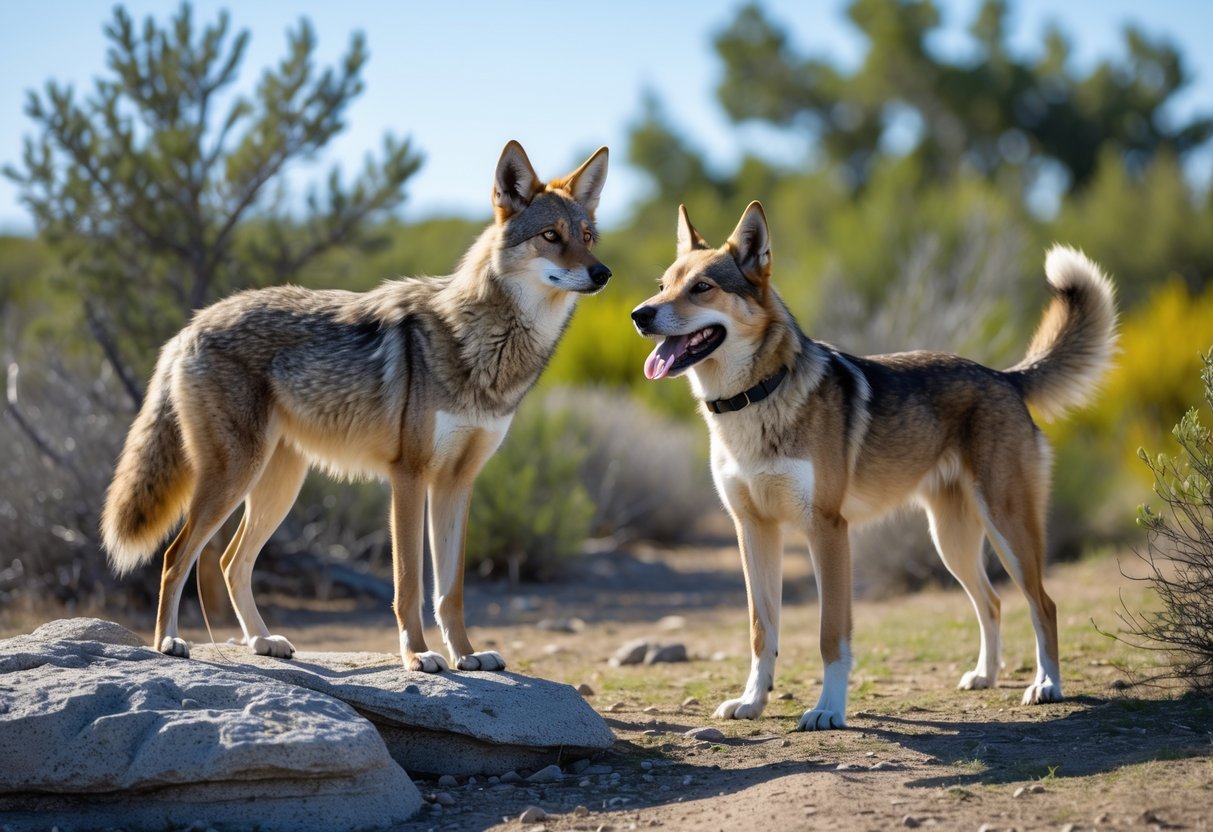
Watch how they act, too. Coyotes usually avoid people and move quietly, especially around dawn or dusk.
Dogs are more likely to be playful or just hanging out near houses, looking for attention or food.
If you listen, you’ll hear differences. Coyotes let out sharp howls and yips—kind of eerie, honestly, like music echoing at night.
Dogs bark in all sorts of ways depending on their mood. These clues can really help you figure out what you’re looking at.
If you want more tips, check out how to spot the differences between a coyote and a dog.
Essential Differences Between Coyotes and Dogs

If you look closely at how they move and act, you’ll spot clear differences between coyotes and dogs.
Each animal has features that make it stand out once you know what to look for.
Physical Appearance and Anatomy
Coyotes have slim, lean bodies and long legs built for speed. Their fur is usually greyish-brown, with streaks of white or reddish color mixed in.
One thing that jumps out is their bushy tail, which hangs low and often ends with a black tip.
Dogs come in all shapes and sizes, from tiny to massive. Their coats can be almost any color or texture.
Unlike coyotes, a dog’s tail might curl up, hang straight, or even stick up. Their faces are rounder, while a coyote’s face looks narrow and sharp.
Check out the ears: coyotes have tall, pointed ears. Dog ears? They can be floppy or pointy, depending on the breed.
If you look closely, you’ll also spot differences in their nose shape and the length of their snout.
Behavioral Clues and Temperament
Coyotes act pretty cautious, usually steering clear of humans. They move quietly and stick to themselves or small family groups.
You’ll hear high-pitched howls and yips from coyotes, which they use to talk to their pack.
Dogs, on the other hand, love being around people and other animals. They bark in all kinds of ways, from deep growls to excited yaps.
When dogs get excited, they wag their tails quickly and show open, friendly body language.
Coyotes hunt mostly at night and stay alert for danger. Dogs rely on people for food and often bark to get your attention or warn you about something.
Tracks and Movement Patterns
If you see tracks, coyotes leave narrow, oval paw prints. Their toes sit close together.
Coyotes usually walk in a straight line, moving carefully and quietly.
Dog prints look wider and rounder, with claw marks that stand out. Dogs walk and run with their feet landing in all sorts of places, so their tracks look less organized.
Coyotes move with long, smooth strides, covering ground fast and quietly.
Dogs? They might trot, bound, or even stumble around, especially when they’re excited or playing with people.
If you learn to read these tracks, you’ll start to recognize which animal passed by. It’s a handy skill for understanding the wildlife in your area.
For more info, check out ways to spot the difference between coyotes and dogs.
Dog Breeds Commonly Confused with Coyotes

Some dog breeds, especially from a distance or at dusk, can really fool you into thinking they’re coyotes.
Their fur color, body shape, and size can look almost identical. If you know the right traits to check, you’ll tell them apart faster.
Recognizing German Shepherd and Siberian Husky Traits
German Shepherds are bigger and more muscular than coyotes. Look for their upright, pointed ears and the way their backs stay straight and strong.
Their fur is thicker, usually with black and tan patterns, which don’t really match the blended gray-brown of coyotes. German Shepherds also have a bushy tail that tends to curl up a bit.
Siberian Huskies have faces that look wolf-like, and their eyes really stand out—sometimes blue, sometimes two different colors. Coyotes usually have amber or yellow eyes, which is a big difference.
Huskies have thick, fluffy fur with bold black-and-white or gray-and-white markings. Their tail curls over their back, not like a coyote’s tail, which just hangs low.
The Saarloos Wolf Dog and Other Look-Alike Breeds
The Saarloos Wolf Dog honestly looks a lot like a coyote. It has that wild, lean build and the same kind of coloring.
But here’s the thing—it’s actually bigger than a coyote. Its skull looks rounder, too.
You’ll notice the ears stand tall, but they’re set wider apart than a coyote’s ears. That’s a quick giveaway if you’re paying attention.
Breeds like the Tamaskan or Alaskan Klee Kai can throw you off with their wolf-like look. Still, these dogs usually act way more playful and less cautious than any wild coyote.
Take a look at their tails. You’ll often see them curl or stick up high, unlike coyotes, whose tails hang low.
If you spot these traits, you can usually figure out whether you’re seeing a dog or a coyote around your neighborhood.
For more details on dogs that get mistaken for coyotes, check out this guide: dog breeds often confused with coyotes.


