
Ever spot a buzzing insect and wonder if it’s a wasp or a honey bee? Trust me, you’re not the only one. These two look pretty similar at first glance, but they’re actually quite different—especially in how they look, act, and help out in nature.
Here’s the big one: honey bees show off fuzzy, golden-brown bodies and mainly collect pollen, while wasps look smooth, slim, and have bold black-and-yellow stripes. Wasps also tend to get a bit more aggressive.
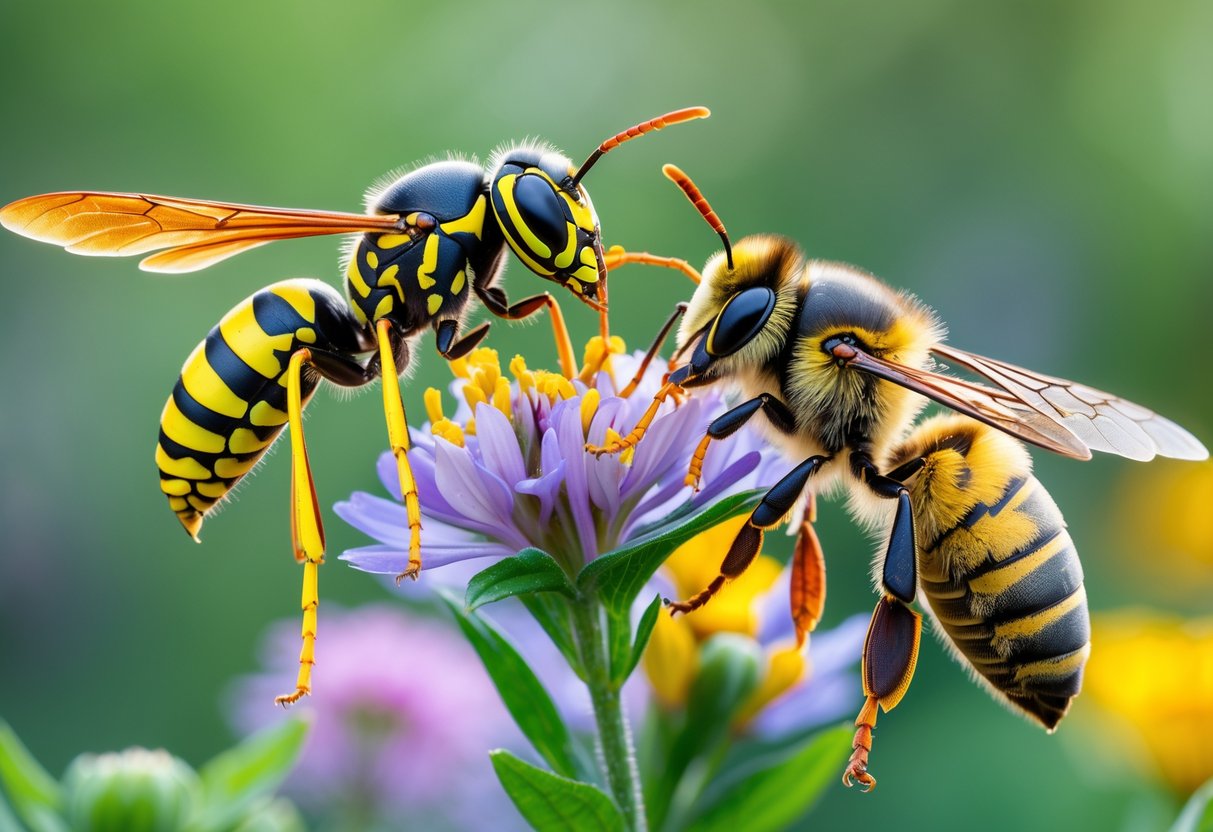
You’ll usually see honey bees hanging out on flowers, gathering nectar, and living in waxy hives. Wasps? They build papery nests and spend their time hunting other bugs or scavenging for food.
If you know these differences, you can stay safer outside and maybe even start to appreciate what each insect does for the world.
It’s honestly handy to tell them apart—whether you’re out gardening, just relaxing outdoors, or you’re simply curious about the little creatures around you.
Want more details? Check out how to tell the difference between a bee and a wasp.
Key Differences Between Wasps and Honey Bees

Wasps and honey bees don’t just look different—they act differently, especially when it comes to stinging and what they eat.
If you know a few facts, you can understand their roles and maybe avoid some trouble.
Physical Appearance and Identification
Honey bees have fuzzy, rounded bodies with a warm golden-brown color. Those tiny hairs? They help bees carry pollen from flower to flower.
Bumblebees, which are a type of bee, look even bigger and fuzzier.
Wasps, though, have smooth, shiny bodies with those unmistakable yellow and black stripes. Their waist is super narrow, so they look pretty slim compared to bees.
You’ll also notice wasps don’t have much hair.
If you’re trying to tell them apart, check for fuzziness and the shape of their waist. Bees have thick legs with little pollen baskets.
Wasps skip the pollen baskets altogether.
Stinging Behavior and Defense Mechanisms
Honey bees usually sting only once. Their stinger gets stuck, and unfortunately, they die afterward.
They mostly sting to protect their hive.
After a bee stings, it can’t sting again, but other bees might come to help defend.
Wasps don’t have this problem. They can sting over and over without hurting themselves.
They’re more likely to get aggressive if they feel threatened, even if there’s no nest nearby.
If you swat at a wasp, it might chase you, but bees tend to sting only if you really bother them.
If you want to avoid stings, don’t swat at them or make sudden moves. Just stay calm and move away slowly.
Diet and Feeding Habits
Honey bees stick to plants. They collect nectar to make honey and bring pollen home to feed their young.
They play a huge role in pollinating flowers and crops.
Wasps act more like hunters. They eat other insects, which actually helps keep pests under control.
Sometimes they’ll drink nectar, but they don’t make honey.
Because wasps hunt and bees collect pollen, each one has a different job in your garden.
It’s kind of cool to know both are important, even if you’d rather keep your distance.
If you want more tips on spotting the difference, visit Beekeeper Corner’s key differences.
Nesting, Social Structure, and Related Species

Wasps and honey bees build totally different homes. Their nests or hives use different materials and look nothing alike.
You’ll also find some wasp species, like hornets and yellow jackets, have their own quirks and nest styles.
Wasp Nests and Honey Bee Hives
Wasps usually chew up wood fibers and mix them with saliva to make papery nests. You’ll spot their nests hanging from trees, under roofs, or tucked away in hidden corners.
These nests can be round or shaped like little umbrellas, with open cells.
Honey bees do things differently. They use wax they make themselves.
The wax forms neat hexagonal cells—perfect for storing honey and raising baby bees.
Bee hives last a long time and often stay put in hollow trees or man-made boxes.
So, wasps use wood pulp for fragile, papery nests, and honey bees build sturdy wax hives that can hold honey for ages.
Social Organization of Colonies
Both wasps and honey bees live in colonies, but their social lives aren’t the same.
Honey bee colonies have a clear system: one queen lays eggs, workers do the food gathering and hive care, and drones are there to mate with queens.
Wasps mix things up. Some live alone, but many build colonies with a queen and workers.
Their groups tend to be less organized than bees.
Wasps focus more on hunting or scavenging, while honey bees stick to gathering nectar and pollen.
Spotting a queen or figuring out which insect you’re dealing with depends on what you see—wasp colonies are usually smaller and a bit less orderly than bee hives.
Common Types: Hornets, Yellow Jackets, and Others
Hornets build those big, papery nests you sometimes spot high in trees or tucked under the eaves. They’re bigger than most wasps, and honestly, a bit more aggressive too.
Yellow jackets make smaller nests, usually underground or hidden in wall cavities. If you’ve ever had one buzz around your sandwich at a picnic, you know they’re not shy about defending their turf.
You might run into paper wasps as well. Their nests look like little open combs, dangling from branches or tucked along buildings.
Knowing the differences between these wasps can help you figure out which nests are risky and what to expect if they show up near your home.


