
Ever wondered what time of night owls really get going? You’re definitely not the only one. Most owl species hunt after dark, slipping through the night to catch their prey.
Owls usually hit their stride between midnight and 4 a.m. That’s when you’ll find them hunting, flying, and calling out to each other.
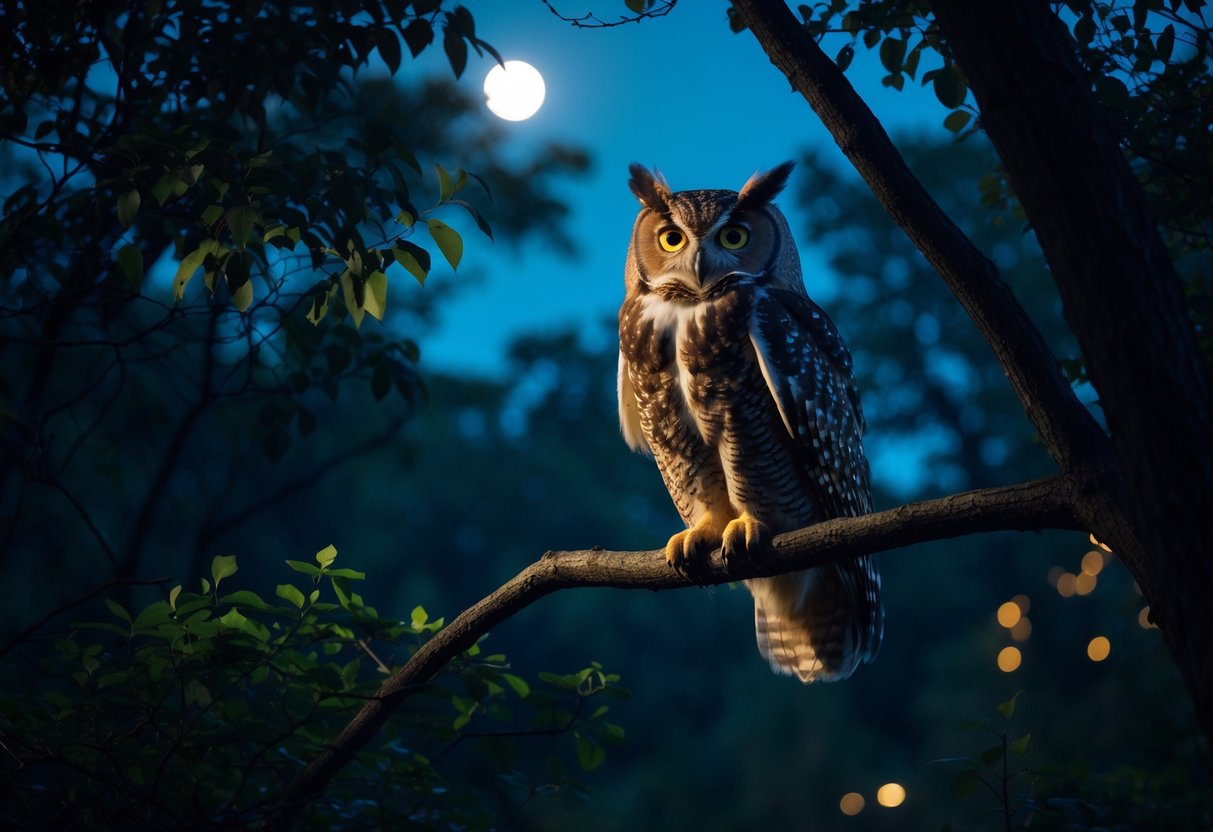
But, not all owls act the same way. Barn owls, for example, start hunting just after sunset.
Barred owls? They seem to prefer the darkest hours. If you’re hoping to spot or hear an owl, those quiet late hours are your best bet.
Their senses are sharpest then, and they move around with surprising ease. When you understand their habits, you’ll know when to listen or look for these mysterious birds.
Curious about how different owl species change up their nightly routines? There’s more to learn if you’re up for it.
Nighttime Activity Patterns of Owls

Owls don’t all follow the same schedule. Some hunt deep into the night, while others go after prey at dawn, dusk, or even during daylight.
Their activity depends on hunting style, surroundings, and whatever prey they’re after.
Peak Hours of Owl Activity
Most owls are nocturnal. They do most of their hunting from dusk till dawn.
You’ll probably hear them just after sunset and again before sunrise. Great Horned Owls and Barn Owls seem busiest during those times, since rodents are out and about then.
But owls aren’t stuck to the night. Some, like the Barred Owl and Long-eared Owl, prefer dawn and dusk.
That softer light makes it easier for them to spot prey. If you’re patient and listen at twilight, you might hear their calls.
Differences Between Nocturnal, Diurnal, and Crepuscular Species
It’s tempting to think all owls are night birds, but that’s not quite true. Nocturnal owls—like the Great Horned Owl and Barn Owl—hunt mostly at night.
Their eyes work well in low light. Crepuscular owls such as the Barred Owl are most active at dawn and dusk.
This timing lets them avoid competing with strictly nocturnal hunters. You’ll sometimes spot these owls in shadowy woods or along forest edges at sunset.
A few owls are even diurnal. Snowy Owls and Burrowing Owls hunt by day.
They stick to open areas and use daylight to catch small birds and rodents. Their habits match those of their favorite prey.
Factors Influencing Owl Activity Timing
Food, weather, and season all change when owls hunt. If prey is moving at night, owls will hunt then.
If prey comes out at dawn or dusk, owls can shift their schedule. Bad weather—cold or storms—keeps owls tucked away to save energy.
On warm, clear nights, you’ll see them hunt more. Some urban owls adapt to people by hunting at quieter times, avoiding noise and lights.
These patterns show just how flexible owls can be. Knowing these details can make your owl watching a whole lot more interesting.
For more on owl activity, check out the Birdorable guide on owls.
Unique Adaptations for Night Hunting

Owls have some wild features that help them hunt after dark. Their eyes and ears are crazy sharp, their wings barely make a sound, and they blend in almost perfectly.
You can even figure out what they’ve been eating if you take a look at owl pellets. They share a few hunting tricks and even some territory with daytime raptors, too.
Specialized Vision and Hearing
Owls have these big, tube-shaped eyes packed with rod cells. They can see in really dim light.
Since their eyes don’t move, they turn their heads—sometimes up to 270 degrees—to check things out. That wide range helps them spot prey in the dark.
Their hearing is just as impressive. The shape of their facial discs funnels sound right to their ears, which sit at different heights.
This lets them zero in on the tiniest noises—like a mouse rustling under leaves. Great Horned Owls and Barred Owls both show off these traits, which makes them expert night hunters.
Silent Flight and Camouflage
Owls fly almost silently. Their feathers have comb-like edges up front and soft, fringed edges at the back.
This design breaks up air noise, so prey never hears them coming. Their coloring also helps them hide.
Barred owls have vertical stripes on their chests that look like tree bark. Great Horned Owls sport mottled feathers that help them vanish among branches.
With silent flight and perfect camouflage, owls can sneak up on prey and dodge noisy daytime hunters like red-tailed hawks.
Owl Pellets: Evidence of Nocturnal Diet
When owls eat mice or small critters, they swallow them whole—bones, fur, and all. They can’t digest the hard stuff, so later they cough up compact pellets.
If you find a gray, oval pellet under a favorite owl perch, maybe a pine tree, you can pull it apart and find tiny bones inside. That tells you exactly what the owl’s been eating.
Barred owls and long-eared owls often leave these pellets in the same spots. This little clue helps researchers and bird lovers figure out how owls help control night-time pests.
Shared Territories with Hawks and Other Raptors
Owls usually share hunting grounds with daytime raptors like red-tailed hawks. Hawks stick to daylight hours, and then owls step in after dark.
This split schedule means they almost never go after the same prey at the same time. Still, great horned owls have a bit of a reputation—they’ll sometimes hunt smaller raptors if the opportunity comes up.
Long-eared owls prefer thick forests, while red-tailed hawks hang out in open woods. These different hangouts keep their paths from crossing too much.
If you pay attention to how owls and hawks use the land, you’ll start to see how raptors carve out their own space. Spotting signs of both can make exploring outside, day or night, a lot more interesting.


