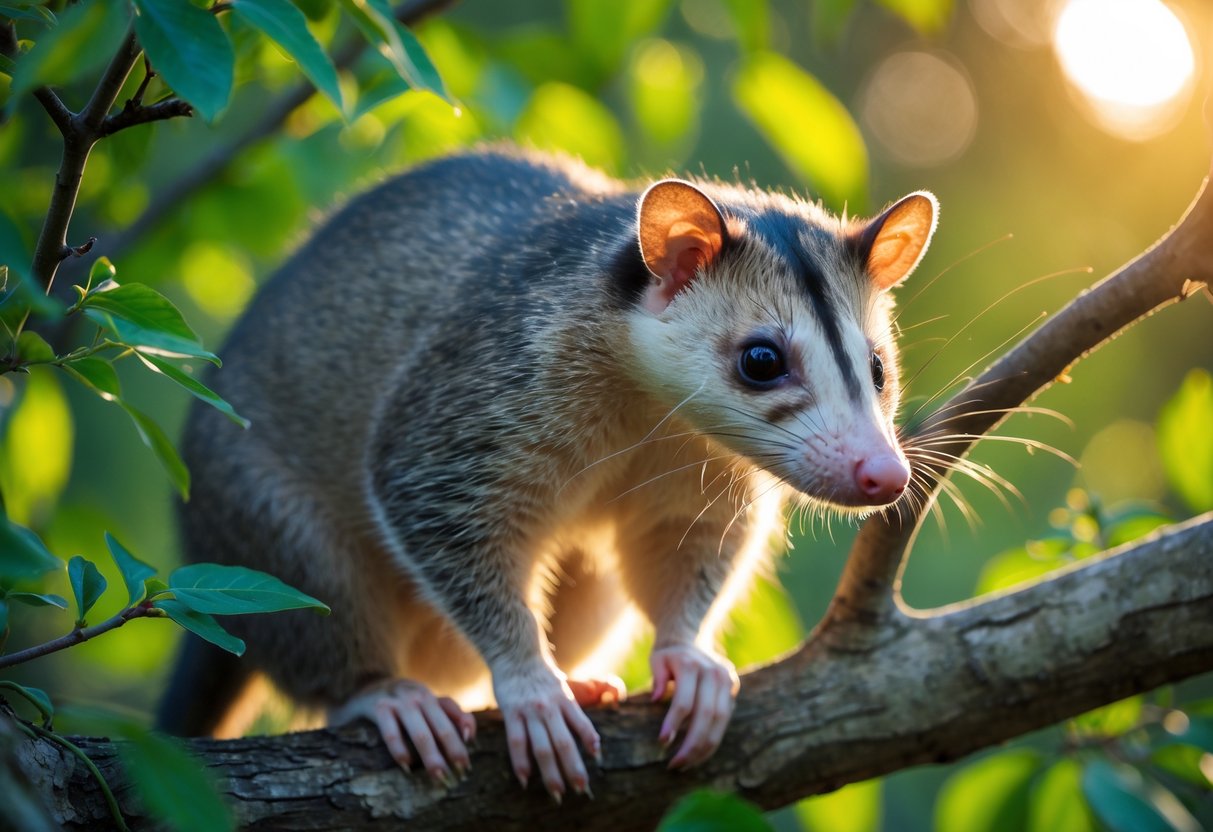
Ever spotted an opossum wandering around at night? You might wonder how long these little guys actually stick around. In the wild, opossums usually make it just one to two years. Their short lives mostly come down to all the dangers out there—predators, accidents, you name it.
Opossums that live in captivity can last a lot longer. Some reach up to four or even eight years, which is kind of amazing when you think about it.
If you know why their lives are so short, you might appreciate how tough and unique they really are. There’s more to these creatures than meets the eye.
Opossum Lifespan: How Long Do Opossums Live?

Opossums just don’t live as long as many other mammals. Their lifespan really depends on where they live and what they’re up against.
Let’s look at how their lives play out in the wild versus in captivity, what shapes how long they stick around, and how the Virginia opossum compares to animals like woodchucks.
Lifespan in the Wild vs. Captivity
Wild opossums usually get just 1 to 2 years. They deal with predators, accidents, and rough weather all the time.
Dogs, cats, and even people can be a threat. Wild opossums have to stay alert if they want to survive.
In captivity, things change. No predators, regular food, and a safe spot to sleep mean opossums can live 3 to 4 years on average.
Some have even made it to 8 to 10 years in captivity. That controlled environment really gives them a boost.
Factors Affecting Opossum Longevity
A lot of things decide how long an opossum gets. Predators are a huge problem since so many animals hunt them.
Car accidents are another big killer, especially in towns and cities.
Opossums don’t get sick with rabies very often, so disease isn’t the main issue. Still, finding enough food and dealing with harsh weather can be tough.
Young opossums aren’t great at playing dead, so they’re easier targets for predators.
If an opossum finds good shelter and enough food, it might live a little longer. But, honestly, most don’t get that lucky.
Virginia Opossum Lifespan
The Virginia opossum is the most common opossum in the U.S. and Canada. In the wild, it usually lives about 1 to 2 years.
Female opossums can have big litters, but a lot of the babies won’t make it past infancy.
In captivity, these opossums can reach up to 4 years or more with really good care. They’re about 24 to 26 inches long, tail included, and weigh 6 to 12 pounds.
Because wild opossums don’t live long, they reproduce quickly to keep their numbers up.
Comparison to Other Similar Mammals
If you compare opossums to the woodchuck, another small North American mammal, opossums have a way shorter lifespan. Woodchucks usually last 3 to 6 years in the wild.
Opossums live fast and have lots of babies. Woodchucks stick around longer but don’t have as many offspring.
Both deal with predators, but they handle survival in different ways.
Unique Traits and Survival Behaviors of Opossums
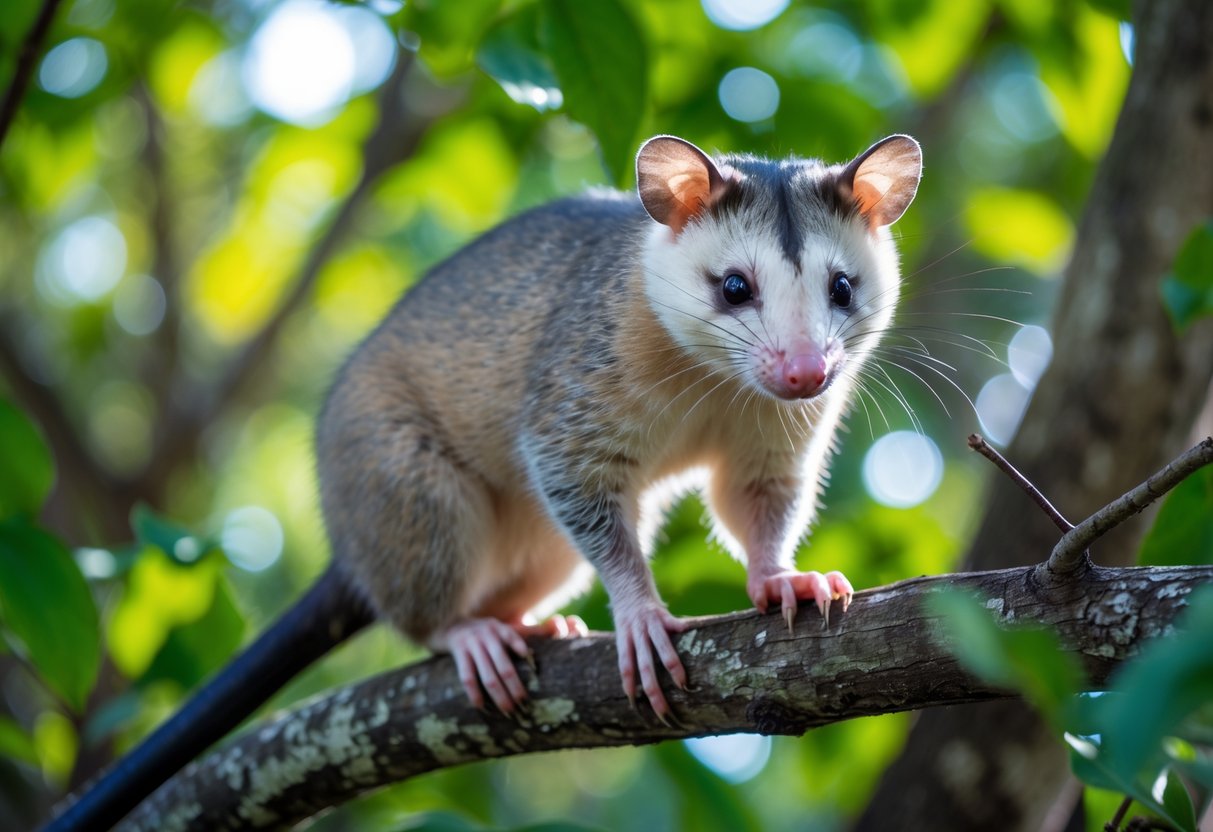
Opossums definitely have some cool tricks for staying alive. Their defense moves, the way they raise their young, and their diet all help them get by.
Playing Possum and Predation Avoidance
When something scares them, opossums can play dead. People call this playing possum.
It’s not just lying still—they actually go stiff and look unconscious, which usually fools predators. Their breathing slows, and they even smell like something dead.
This act can last for hours, and most predators just lose interest and walk away.
Opossums also use their prehensile tail to balance and hang onto branches, so they can climb out of danger pretty easily.
They’ve got opposable thumbs on their back feet, which helps them grip and climb better.
Marsupial Characteristics and Early Life
Opossums are the only marsupials in North America. Their babies are born tiny and finish growing inside the mother’s pouch, kind of like kangaroos or koalas.
After a super short pregnancy—just 11 to 13 days—the newborns, each about the size of a grain of rice, crawl into the pouch.
They stay there until they’re big enough to ride on mom’s back.
The word “opossum” comes from an Algonquian word that means “white animal.” These animals have a double womb, so the pouch works as a safe spot for the babies to get stronger.
This way of raising young is pretty different from most mammals, but it helps the fragile babies survive.
Diet and Omnivore Advantages
Honestly, opossums are kind of like nature’s cleanup crew. They’ll eat just about anything—plants, animals, whatever’s around.
They go after insects like cockroaches and beetles. Sometimes, they’ll catch small animals like mice or even snails.
You might spot them in your garden because they’re also into fruit. That’s probably not great for your tomatoes, but hey, everyone’s gotta eat.
Opossums help out by munching on pests. Fewer bugs and rodents mean a healthier neighborhood, right?
Since they’re not picky, they can handle life in cities, the countryside, or out in the wild. This “eat anything” approach has kept them going since way before Jamestown popped up.


