
Ever wondered how to actually say the word “opossum”? You’re definitely not alone. People get tripped up because you can pronounce it in a couple of different ways.
Most folks just say “possum,” skipping the first syllable. It’s easier, rolls off the tongue, and honestly, nobody’s going to correct you in casual conversation.
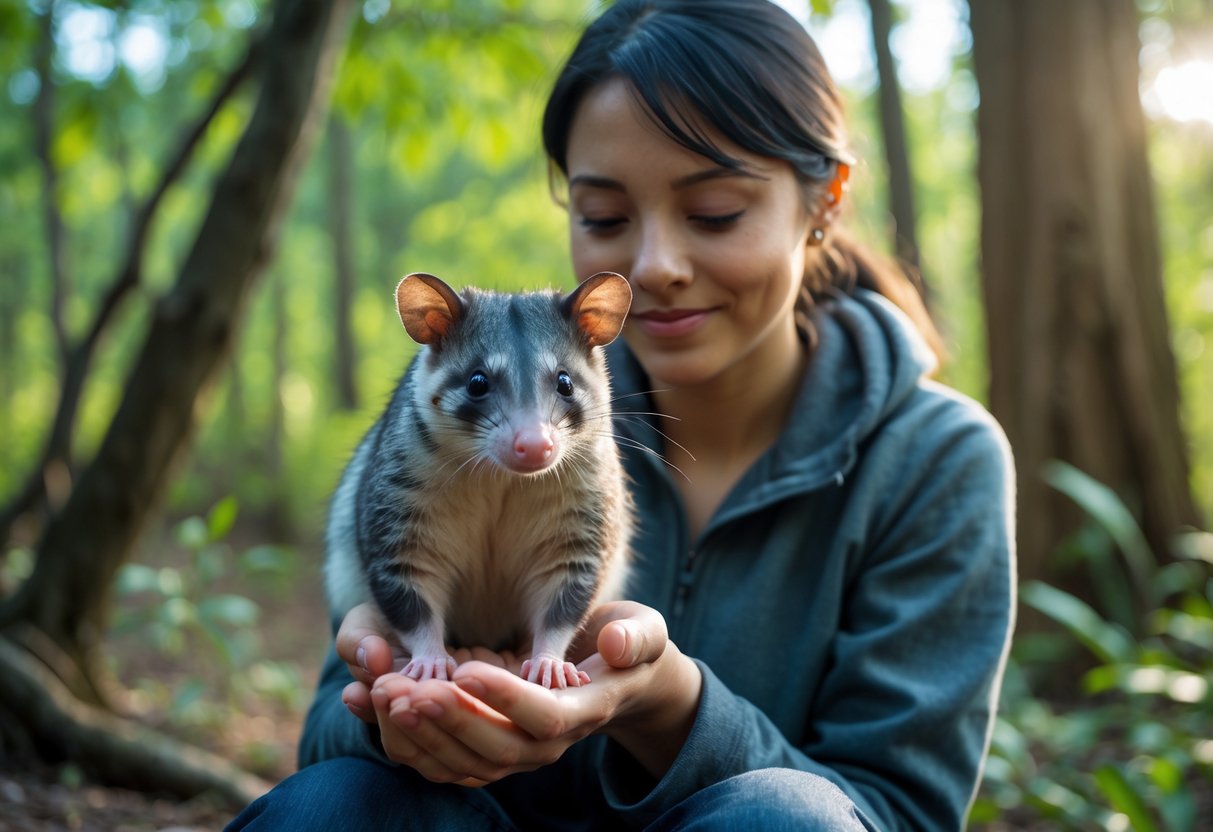
Some people, though, go with the full three syllables: “oh-POSS-um.” Scientists tend to use that version, but both are fine. Once you know the options, you’ll feel a little more confident talking about these quirky creatures.
Learning the right way to say “opossum” might seem tough at first, but it’s actually pretty easy once you’ve heard both versions. Curious why people pronounce it differently? Let’s dig in a bit.
Key Opossum Communication Methods

Opossums communicate in a bunch of ways, depending on what’s going on. They use sounds, body language, and even scents to get their point across.
If you pay attention, you can figure out what an opossum is trying to tell you.
Vocalizations and Sounds
The Virginia opossum makes a surprising variety of noises. You’ll hear hissing, growling, and clicking, especially if something scares it.
When an opossum feels threatened, it hisses loudly and bares its teeth. That sharp sound usually tells predators to back off.
Baby opossums, or joeys, use sneezing or chirping noises to talk to their mom. These tiny sounds help them stay safe and close in the pouch.
When an opossum “plays possum,” it goes completely silent. No noise at all—this trick helps it avoid danger by not drawing any attention.
Body Language and Postures
Opossums send messages with their bodies, too. If you see one raise its snout and show its teeth, it’s probably scared or annoyed.
Those stiff, upright ears? That means the opossum is on high alert.
When an opossum plays dead, it flops on its side, mouth open, tongue hanging out. It looks pretty convincing, but the opossum isn’t choosing to do this—it’s an automatic reaction called catatonia.
If you spot an opossum curling its tail or moving slowly, it’s probably feeling relaxed. These small cues can tell you a lot about its mood.
Scent Marking and Anal Gland Use
Opossums have scent glands near their anus. They rub these glands on trees or objects to mark their territory.
If you catch a musky odor around, that’s likely an opossum saying, “Hey, this spot’s mine.”
Scent marking helps them avoid fights by warning others away. It’s a quiet but effective way to set boundaries.
You won’t always see it happen, but scent plays a big role in how opossums keep the peace, both in forests and city backyards.
Opossum Social Behavior and Interactions

Opossums have some interesting ways of dealing with each other, especially moms and their babies. Adults use signals when they meet, and they react in their own style if danger shows up.
Since they’re mostly out at night, opossums keep things pretty quiet. They rely on subtle sounds, smells, and gentle touches.
Mother and Joey Communication
A mother opossum, being a marsupial, carries joeys in her pouch until they’re big enough. She uses soft sounds and gentle nudges to calm them and show them where to go.
This close contact helps the babies learn about their world without too much risk.
Moms also clean their joeys a lot, which strengthens the bond between them. When the babies start to venture out, the mother still calls and grooms them to keep them close.
Joeys really depend on her for both food and safety.
Signals Among Adults
Adult opossums usually keep to themselves, but they still send signals. They use scent marking to show territory or let others know they’re ready to mate.
Males leave scents that females can pick up with their sensitive noses.
Body language matters, too. Opossums sniff and make small movements to show if they’re feeling friendly or want to warn someone off.
Sometimes, you’ll hear quiet noises like chittering or clicking. These sounds can mean curiosity or submission.
If you watch closely, you can pick up on whether an opossum feels calm or threatened during the rare times they interact.
Responses to Threats and Predators
If something scares an opossum, it might “play possum” by flopping over, eyes closed, mouth open. This trick can last for minutes or even hours, and it usually fools predators.
Opossums also puff up their fur and hiss or growl loudly when they want to warn off danger.
Their opposable thumbs and prehensile tails let them climb trees in a hurry if they need to escape.
If you ever see an opossum frozen in place or baring its teeth, it’s just doing its best to stay safe.
Nocturnal Communication Habits
Opossums usually come alive at night, and their communication tends to be pretty quiet and subtle. They leave scent marks on branches or the ground as a way to navigate and find mates.
You probably won’t hear much from them, but sometimes they let out soft chirps or clicks to keep in touch. Their naked tail? Sometimes they use it to signal or just to grab onto branches while they’re moving around.
At night, opossums depend on all their senses—smell, touch, and sound—to share information but also to avoid drawing attention from predators. It’s a clever, low-key way to connect and stay safe.


