
Ever spot an opossum in your yard or out on a walk and wonder if you can touch it? Honestly, it’s not a great idea to touch opossums with your bare hands. They’re wild, and while they seem pretty gentle most of the time, they can bite or scratch if they get scared.
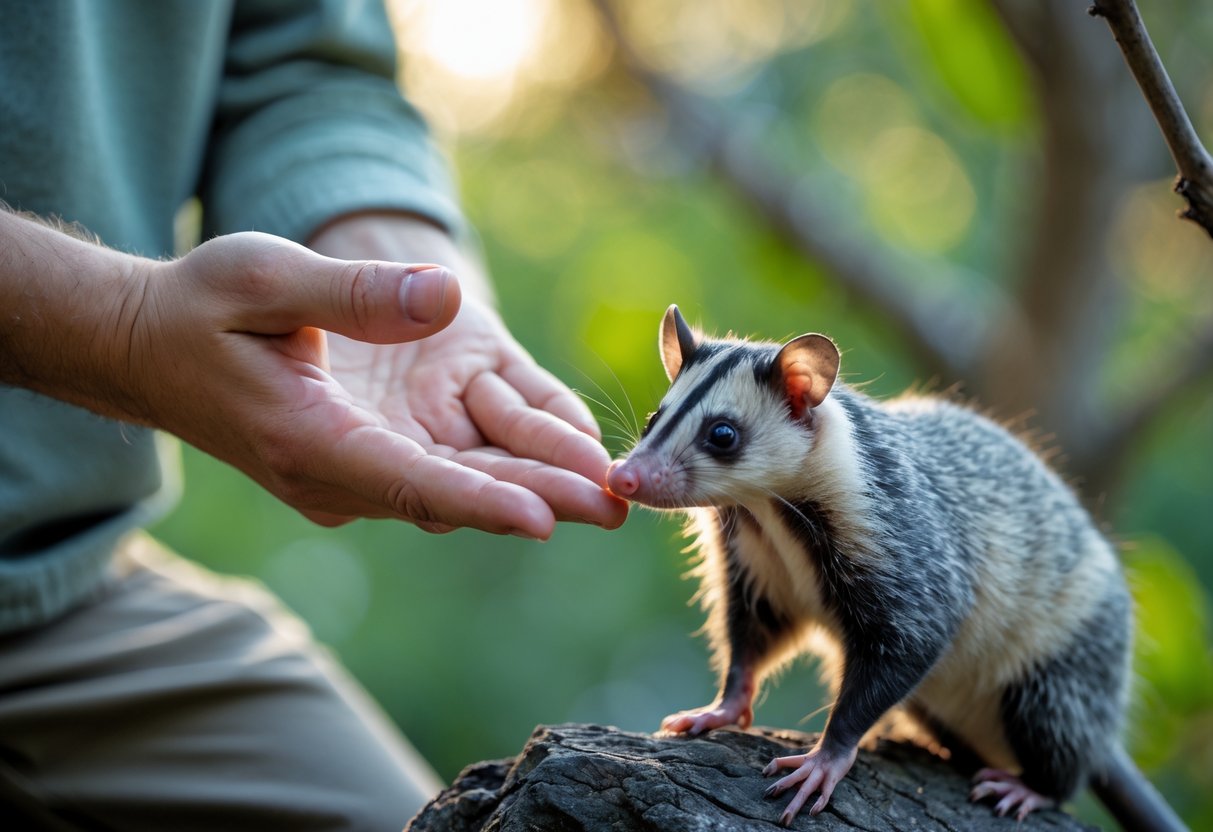
Opossums actually help out by eating pests like ticks and rodents, but they’d rather avoid people. If you want to watch or maybe handle one safely, you’ll need to get familiar with their behavior and the health risks involved. That way, you keep both yourself and the animal safe.
Curious about why opossums do what they do, or how they’re different from other critters? This guide has some useful tips and facts. You’ll see why touching them isn’t wise and what to do if you really have to interact with one.
For more details, check out this guide on handling opossums.
Is It Safe to Touch an Opossum?

Touching an opossum isn’t exactly safe. These animals might look calm, but they can carry diseases and sometimes act unpredictably. If you know what to expect, you can stay out of trouble.
Potential Risks of Handling Opossums
If you touch an opossum, you might get bitten or scratched. Their teeth and claws can leave some nasty wounds.
Those injuries can get infected if you don’t clean them right away.
Opossums haven’t grown up around people, so they get nervous if you approach. When they feel trapped, they’ll defend themselves.
Handling them just makes it more likely you’ll get hurt.
You might also pick up fleas or ticks from an opossum. Those little pests can hop onto you or your pets and cause other health problems.
So, it’s really better not to touch them at all.
Behavior of Adult Opossums Around Humans
Most adult opossums stay away from people. They’re shy and just want to escape if they spot you.
If you corner one, though, it might act tough or defensive.
Sometimes you’ll see an opossum lying still and looking dead. That’s just a trick—“playing dead”—to make you leave it alone.
Don’t take that as a sign it’s safe to get close or pick it up.
Adults are bigger and stronger than babies, so you should be extra careful. The risk of a painful bite or scratch is higher with a grown opossum.
Wild Opossum Defensive Reactions
Opossums have a few tricks to protect themselves. They might hiss, bare their teeth, or flop over and play dead.
If you scare one, it’ll probably hiss loudly and show its teeth to warn you off.
If that doesn’t work, it’ll lie still and might even give off a bad smell to make you back away.
Try to touch an opossum while it’s scared, and you could get bitten. Never try to grab or corner one—it just makes things worse.
Diseases and Parasites in Opossums
Opossums can carry diseases like leptospirosis, tuberculosis, and tularemia. You could catch these through their saliva, urine, or droppings.
They also bring along ticks, fleas, and mites, which can spread more illnesses to people or pets.
Rabies isn’t super common in opossums, but it’s still possible with any wild animal. If you get bitten or scratched, wash the wound right away and talk to a doctor.
With all these risks, wildlife experts say you shouldn’t handle opossums with bare hands.
For more tips on staying safe, check out Should You Handle an Opossum with Bare Hands?.
What to Do if You Find an Opossum

If you spot an opossum near your house, just watch from a distance and let it be. Knowing how and when to step in can help you and the animal stay safe.
There are a few steps for watching, getting help, and knowing what to do if you find a baby opossum by itself.
Best Practices for Observing Opossums
Opossums don’t want to mess with people. If you see one, stay back and don’t try to pet or feed it.
They’re usually just looking for food and won’t bother you if you leave them alone.
Don’t corner or frighten the opossum. If you want a closer look, try binoculars or a camera.
Bright lights or loud noises will stress them out, so skip those.
If opossums come by at night, keep your pets inside. That way, nobody gets hurt or chased.
When to Contact Wildlife Rehabilitation
If you find an opossum that’s hurt or a really young one (less than 7 inches long), you should call a local wildlife rehabilitator.
Don’t try to feed or fix it yourself.
Wildlife rehabbers know what to do and can give the animal the care it needs.
Handling wild animals when you’re not trained can end badly for both of you.
You can reach out to groups like the Opossum Society of the United States or local shelters if you need advice.
Handling Baby Opossums Safely
So, you’ve found a baby opossum by itself? Try not to touch it with your bare hands if you can help it.
Grab some gloves or maybe just a soft towel, then gently scoop it up. Set the little one in a small box lined with a warm blanket or towel—nothing fancy, just cozy.
Put the box somewhere quiet and warm. While you do that, reach out to a wildlife rehabilitator for advice.
Don’t rush to feed or give water; wait until a professional tells you what’s needed. Sometimes, less is more.
Keep in mind, the mom could be close by. Unless you’re sure the baby’s orphaned or in real danger, it’s usually best to leave it be.
If you want more tips or you’re just curious, check out the Opossum Society of the United States or look up other wildlife rehab resources.


