
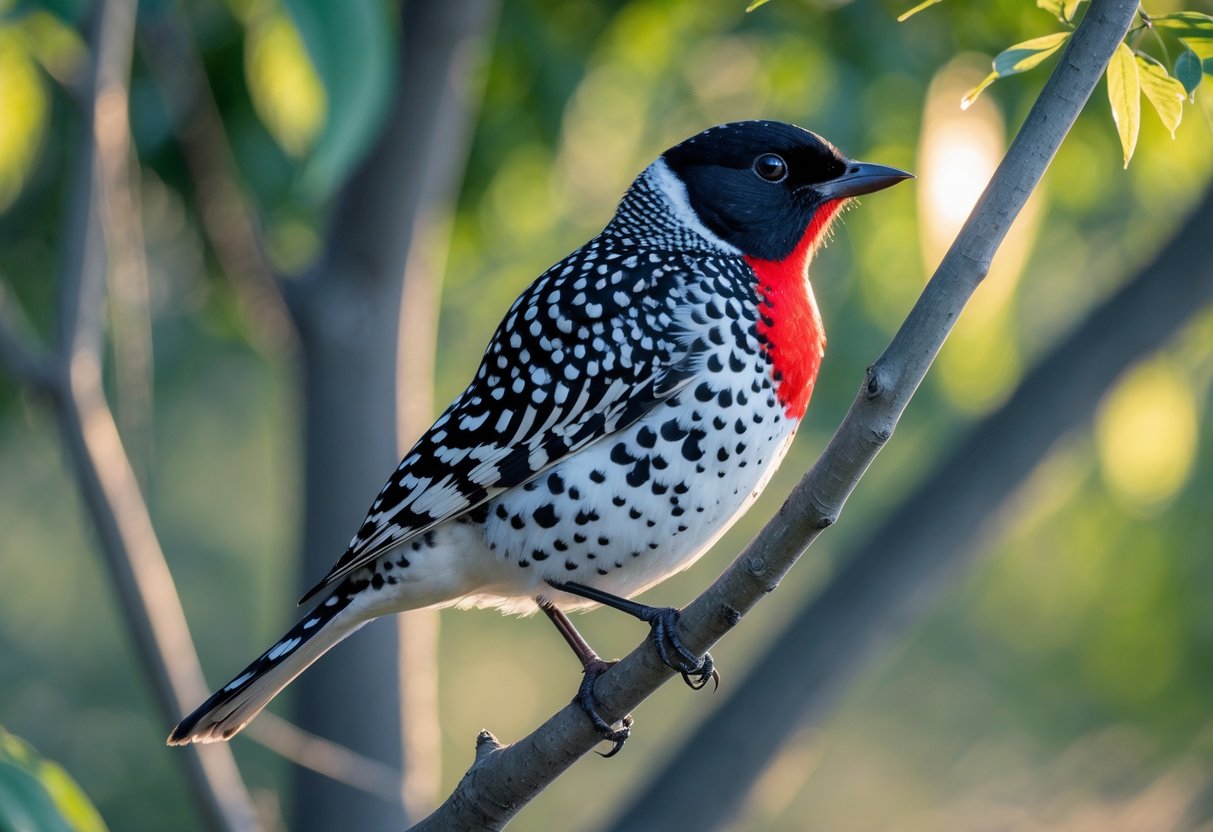
So, you’ve seen a black and white bird with a red breast? Odds are, you just spotted a Rose-breasted Grosbeak. This bird sports bold black and white feathers, plus that unmistakable red patch on its chest—it’s honestly hard to miss. Males show off this vibrant coloring, while females look more brown and white with streaks, but you’ll still notice their chunky bill and sturdy shape.
You’ll often find these birds hanging out near forest edges or in woodlands. Their sweet, robin-like song might catch your ear before you spot them.
If you’re into birdwatching, seeing a Rose-breasted Grosbeak feels like a little reward. They’re most active in the United States during spring and summer, so keep your eyes peeled.
Maybe you’re wondering if there are other birds with similar colors. Sure, some woodpeckers and finches have a bit of black, white, and red, but that crisp red chest against sharp black and white? That’s the Rose-breasted Grosbeak’s signature. If you want more details, check out this guide on rose-breasted grosbeaks.
Identifying the Black and White Spotted Bird With Red Breast

Maybe you glimpse a bird with a black and white body and a splash of red on its chest. That’s likely the Rose-Breasted Grosbeak.
Knowing the differences between males and females, and how to tell them apart from lookalikes, makes identification way easier.
Male Rose-Breasted Grosbeak Characteristics
Male Rose-Breasted Grosbeaks really stand out. Their backs and wings are mostly black, marked with white spots or patches.
The big showstopper is the bright red, triangle-shaped patch right in the middle of the chest.
Their heads are solid black, which makes the red pop even more. You’ll notice white bars or spots on the wings, and the tail is black with white edges.
When they take off, those white wing patches flash in the sunlight.
These birds are about the size of a robin, so not too tiny, not too big. The males sing a sweet, whistling tune that’s actually pretty memorable.
You’ll spot them across North America during breeding season.
Female Rose-Breasted Grosbeak Appearance
Females look quite different from the guys. They’re mostly brown and white with streaks, not black and white.
Their breasts are pale, maybe with some faint streaks, but no red patch.
On their faces, you’ll see a dark “mask” around the eyes. They almost look like big sparrows or female Purple Finches, but they’re a bit larger.
Their wings and backs have brown and white streaks, which help them blend into the trees.
Even though they’re less colorful, females have the same shape and size as the males. That’s a good clue if you’re trying to tell them apart from birds like female Purple Finches or robins, which have different patterns.
Rose-Breasted Grosbeak Versus Similar Species
It’s easy to get mixed up if you only catch a quick glimpse. The Black-headed Grosbeak also has black and white with orange or red, but its chest and face look more orange than red.
House Finches and Purple Finches both show red on their chests, but they’re smaller. Female Purple Finches don’t have the same streaky look or that bold facial mask.
Robins? They’ve got a reddish or orange chest, but their backs are grayish and they don’t have those black and white spotted wings.
If you focus on the sharp contrast—black, white, and that bright red on the male Rose-Breasted Grosbeak—you’ll know what you’re looking at.
You can find more about similar species and tips for spotting Rose-Breasted Grosbeaks here: red-chested birds.
Other Black, White, and Red Birds to Know
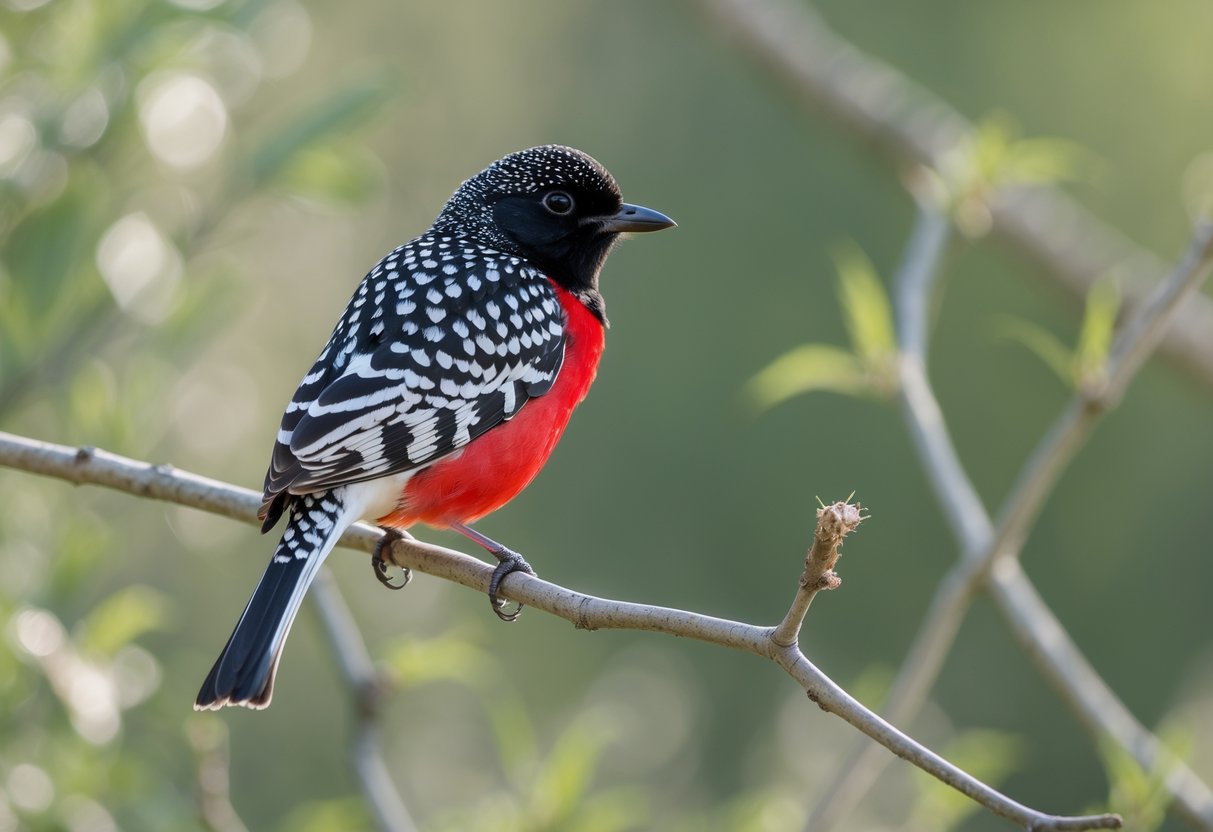
There are a handful of birds out there with eye-catching black, white, and red colors. Some have cool patterns on their wings or heads, and others just rock a red patch on the chest.
Knowing these details can really help you tell them apart.
Painted Redstart and Its Unique Field Marks
The Painted Redstart (Myioborus pictus) is a small, energetic bird that catches your eye with a bold black body and bright white wing patches.
What really sets it apart is that rich red color on its belly and lower breast. You’ll sometimes see it darting around oak woodlands or pine forests, flicking its tail and wings to chase insects.
Look for the contrast between its black face and the red belly. Its wings have those white spots that stand out, especially when the bird flits around.
If you’re in the southwestern U.S. or Mexico, you might get lucky and spot this bird’s flashy colors in your backyard.
Woodpecker Species With Red, Black, and White Plumage
A bunch of woodpeckers show off red, black, and white feathers. The Pileated Woodpecker (Dryocopus pileatus) is huge and hard to mistake, thanks to its bright red crest that looks a bit like a mohawk.
Its body is black with white stripes on the face and neck.
The Red-headed Woodpecker (Melanerpes erythrocephalus) is another showstopper, with a fully red head and black wings with big white patches.
You’ll often find it in open woodlands or sometimes in parks.
Other woodpeckers worth mentioning? The Red-bellied Woodpecker (Melanerpes carolinus) has a red crown, and the Acorn Woodpecker (Melanerpes formicivorus) rocks a red cap with black and white markings.
Then there’s the Red-breasted Sapsucker (Sphyrapicus ruber), which has a spotted black back and a bright red breast—pretty common in forested areas out west in the U.S.
Tricolored Blackbird and Crimson-Breasted Shrike Highlights
The Tricolored Blackbird (Agelaius tricolor) hangs out in big, noisy flocks. You’ll notice its black feathers and that bold red shoulder patch with a white border—pretty eye-catching when you’re out in California marshes and fields.
The Crimson-Breasted Shrike? That’s a stunner too, with its vivid red chest and jet-black head and back. Spotting one in parts of Africa feels a bit like winning the birdwatching lottery.
Both birds flash those red markings to send messages and stand their ground. It’s wild how black, white, and red just work together in nature—makes them hard to miss if you’re paying attention on your next outing.


