Snowshoe hares are fascinating animals known for their large feet and striking coat color that helps them blend into snowy environments. These hares have adapted well to their habitats in forests and undergrowth, where they feed on a variety of plants like grass and twigs.
Many predators rely on snowshoe hares as a crucial part of their diet.
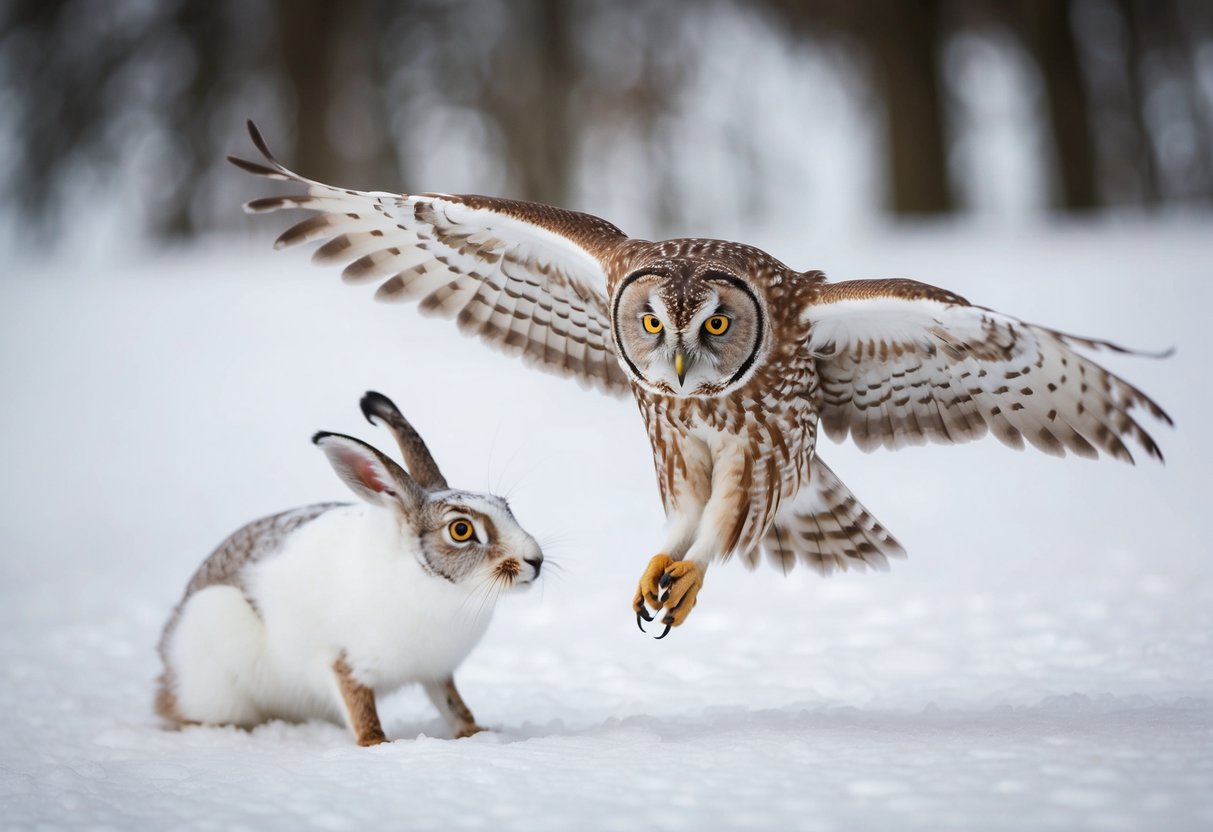
In the wild, snowshoe hares face threats from several natural hunters. Animals such as lynxes, coyotes, and owls are just a few of the predators that take advantage of the hares’ presence. Despite their camouflage, snowshoe hares must remain vigilant to avoid becoming a meal.
Understanding what eats snowshoe hares provides insight into the balance of nature and the role these creatures play in their ecosystem. As you explore this topic, you’ll discover more about the predators that hunt them and the survival strategies snowshoe hares employ to stay safe.
The Snowshoe Hare’s Lifestyle
The snowshoe hare has unique adaptations that help it survive in its environment. These adaptations play a crucial role in its daily life, including its breeding habits and diet.
Physical Adaptations and Camouflage
The snowshoe hare is well-equipped for its surroundings. One of its most notable features is its large hind feet, which act like snowshoes, allowing it to navigate through deep snow without sinking.
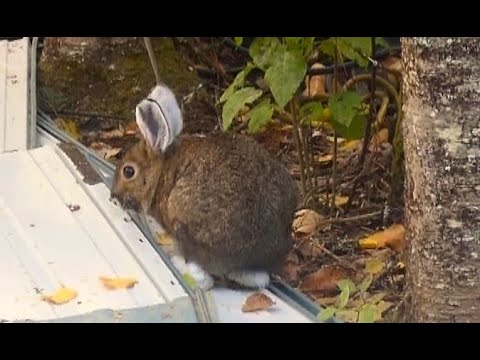
In winter, the hare grows a thick white winter coat that provides excellent camouflage against the snow. In summer, its fur changes to a brown or gray color, blending in with the forest floor. This color change helps protect the hare from predators by making it less visible in various seasons.
Breeding Habits and Reproduction
Snowshoe hares breed during the warmer months, typically starting in late winter to early spring. The breeding season can last several months. Females can produce multiple litters each year, with an average of three to four leverets per litter.
Female hares create shallow nests to give birth to their young. They provide little care after birth, as leverets are born fully furred and with open eyes. This allows them to be relatively independent soon after they are born. Since snowshoe hares can breed multiple times a year, their populations can grow rapidly when conditions are favorable.
Dietary Preferences and Foraging
Snowshoe hares are herbivores with a varied diet that depends on the season. In spring and summer, they enjoy grasses, berries, and herbaceous plants. They especially like tender new growth of woody vegetation.
As winter approaches, their diet shifts. Hares eat twigs, buds, and the bark of trees. They are known for leaving noticeable browse lines on their favorite plants, which can help indicate their presence in an area. The ability to adapt their diet according to the season helps them thrive in various environments.
Predators and Survival Strategies
Snowshoe hares face a variety of predators and have developed unique survival strategies. Understanding these threats and how hares evade them can shed light on their fascinating lives.
Common Predators of Snowshoe Hares
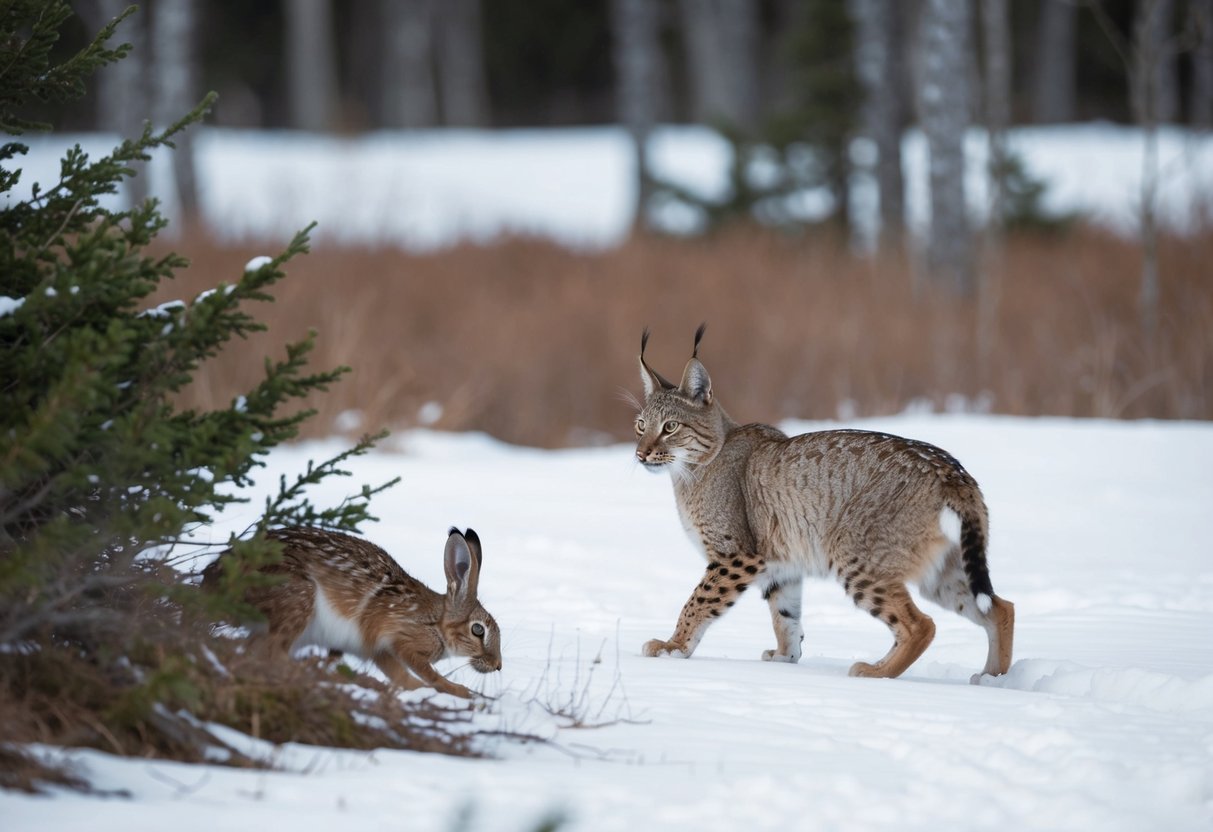
Snowshoe hares encounter many predators in their natural habitat. Key predators include lynx, coyotes, and bobcats. These animals hunt by stealth, capitalizing on the hares’ limited visibility in their snowy environment.
Owls and hawks are also significant threats, especially during the night. Their excellent sense of sight allows them to detect movement easily. Foxes and weasels are smaller but cunning hunters that can ambush hares.
In the wild, the balance of predator and prey is essential. The wolf, while larger, typically hunts in packs, making it a formidable threat to hares when they are caught off guard. With many eyes looking for a meal, snowshoe hares must remain vigilant.
Evasive Maneuvers and Protective Behavior
To survive, snowshoe hares have developed impressive evasive tactics. Their strong hind legs enable them to reach speeds of up to 45 mph when fleeing from danger. This speed helps them escape quickly when they sense a predator nearby.
Snowshoe hares also rely on their camouflage. In winter, their white fur blends seamlessly with the snow, making them harder to spot. This helps them avoid detection, especially against nocturnal predators.
Additionally, hares are known for their ability to make rapid changes in direction while running. This unpredictability can confuse hunters, increasing the chance of survival. Hares often choose to remain shy and secretive, relying on quiet behavior to stay safe. By using these strategies, they reduce the risk of becoming a meal for the many predators that threaten them.
Habitat and Distribution
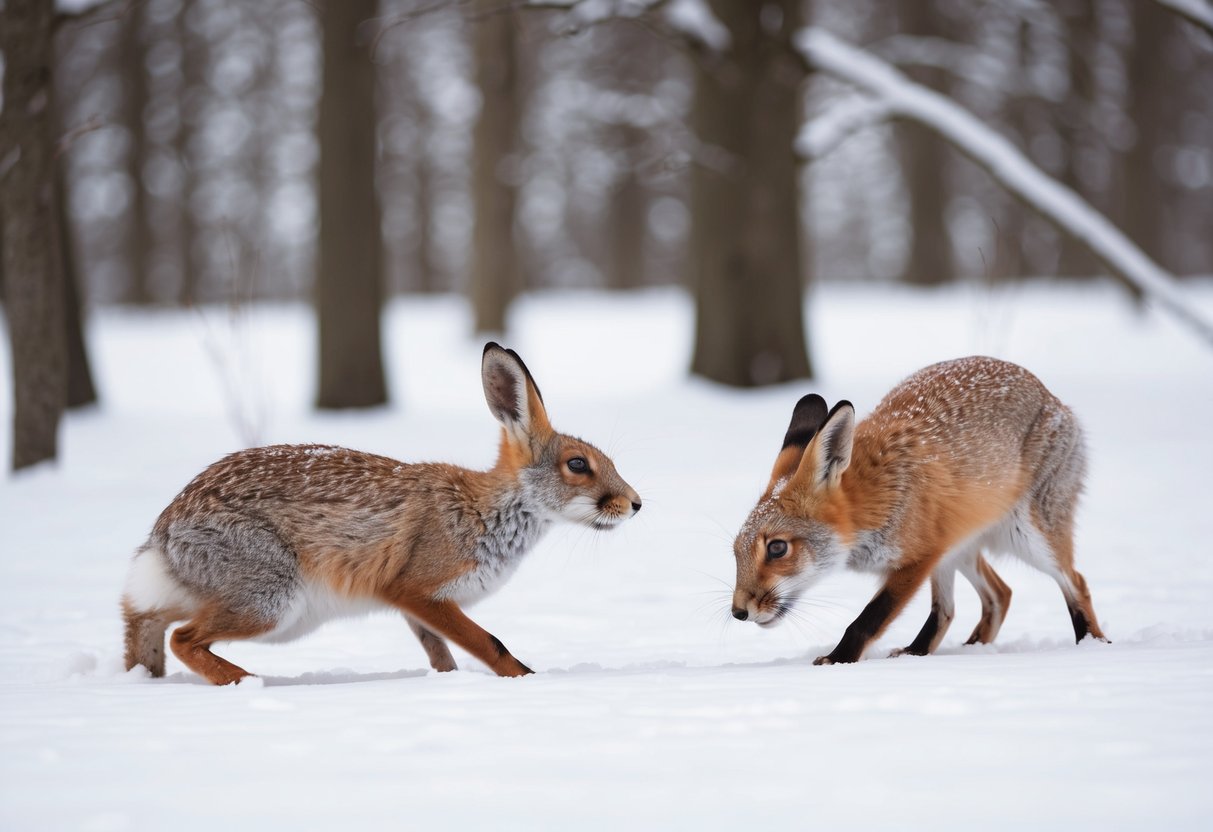
Snowshoe hares thrive in various habitats across North America. Their distribution stretches from the forests of Canada to the mountainous regions, adapting well to different environments. Understanding where these hares live helps you appreciate the challenges they face and their role in the ecosystem.
Geographical Range and Biomes
Snowshoe hares are found in diverse areas, including boreal forests, montane forests, and the Rocky and Appalachian Mountains. In Canada, they are abundant due to the vast stretches of suitable habitat.
In the northern regions, these hares prefer dense undergrowth, which provides shelter and food. During winter, their coat changes to white, helping them blend in with the snow, enhancing their chances of survival from predators.
In the summer, they consume a variety of plants, including grass and ferns, while winter brings a diet of twigs and bark. Their adaptable diet supports their presence in various ecosystems.
The Impact of Ecosystem Changes
Changes in ecosystems can greatly affect snowshoe hare populations. Climate change and habitat loss pose significant threats. Warming temperatures can alter their habitats, pushing them to higher altitudes or more northern areas where snow is consistent.
As forests are cleared or altered, the undergrowth that provides food and shelter may diminish. This loss impacts their ability to survive and reproduce.
Additionally, as their natural habitat changes, they may face new predators, which can further reduce their numbers. Protecting their habitat is essential for maintaining healthy snowshoe hare populations and ensuring a balanced ecosystem.
Conservation Status and Human Impact
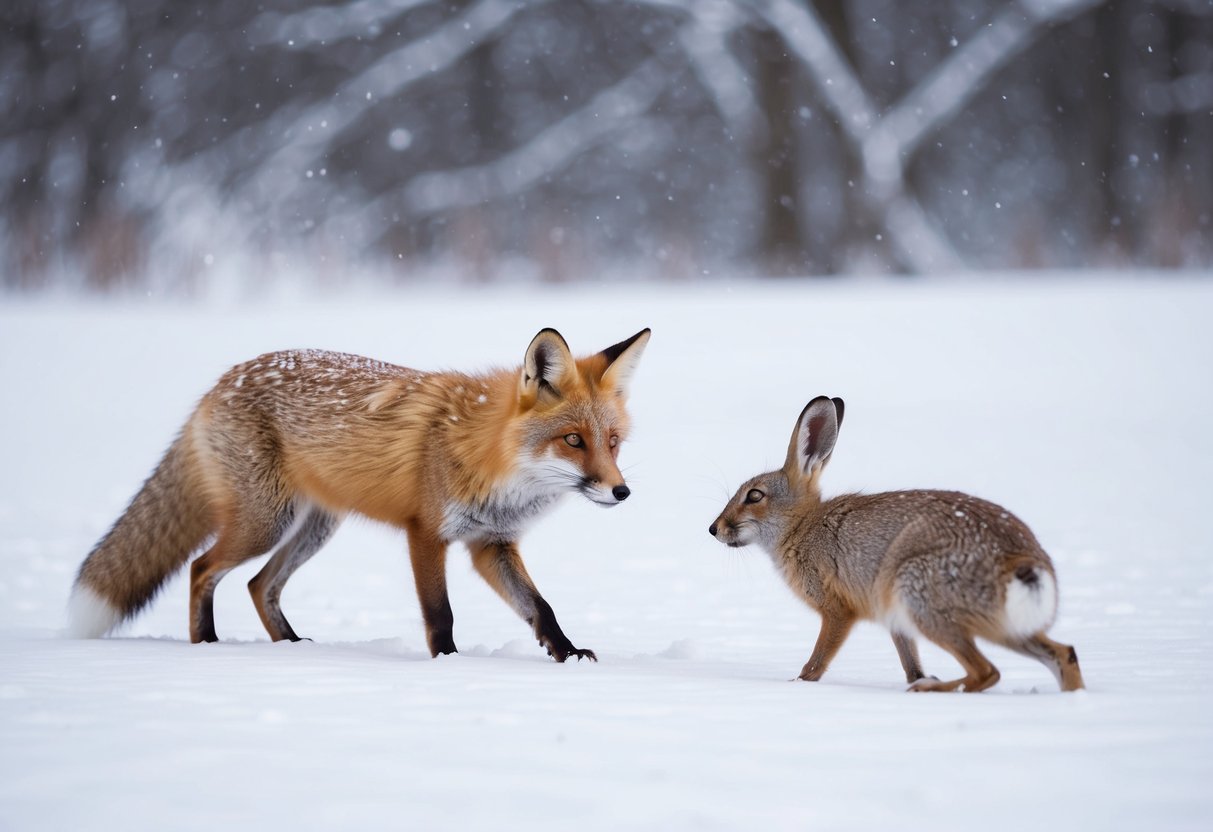
The snowshoe hare is an important species in boreal forests, where it interacts with many other mammals. These hares have a gestation period of about 36 days, leading to the birth of small leverets.
Currently, the conservation status of snowshoe hares varies depending on their location. In some areas, they face threats from habitat loss, climate change, and competition for food. The IUCN Red List includes them under a status that reflects these challenges.
These hares primarily eat plant materials and are herbivorous. Their diet can change with the seasons, which affects their survival.
Human activities such as logging and development can lead to loss of wetlands and forests, which are crucial habitats for snowshoe hares. This loss can disrupt their populations and impact the entire ecosystem.
Predators like fishers also play a role in their survival. Maintaining a balance among species is vital. If snowshoe hare populations decline, it can affect their predators as well.


