
Ever wondered how owls show affection? It’s not like they curl up or purr the way cats do.
Instead, owls express love and care by preening each other’s feathers, sharing food, and working together to protect their nests. These actions really build the bond between owl pairs and help keep their family safe.
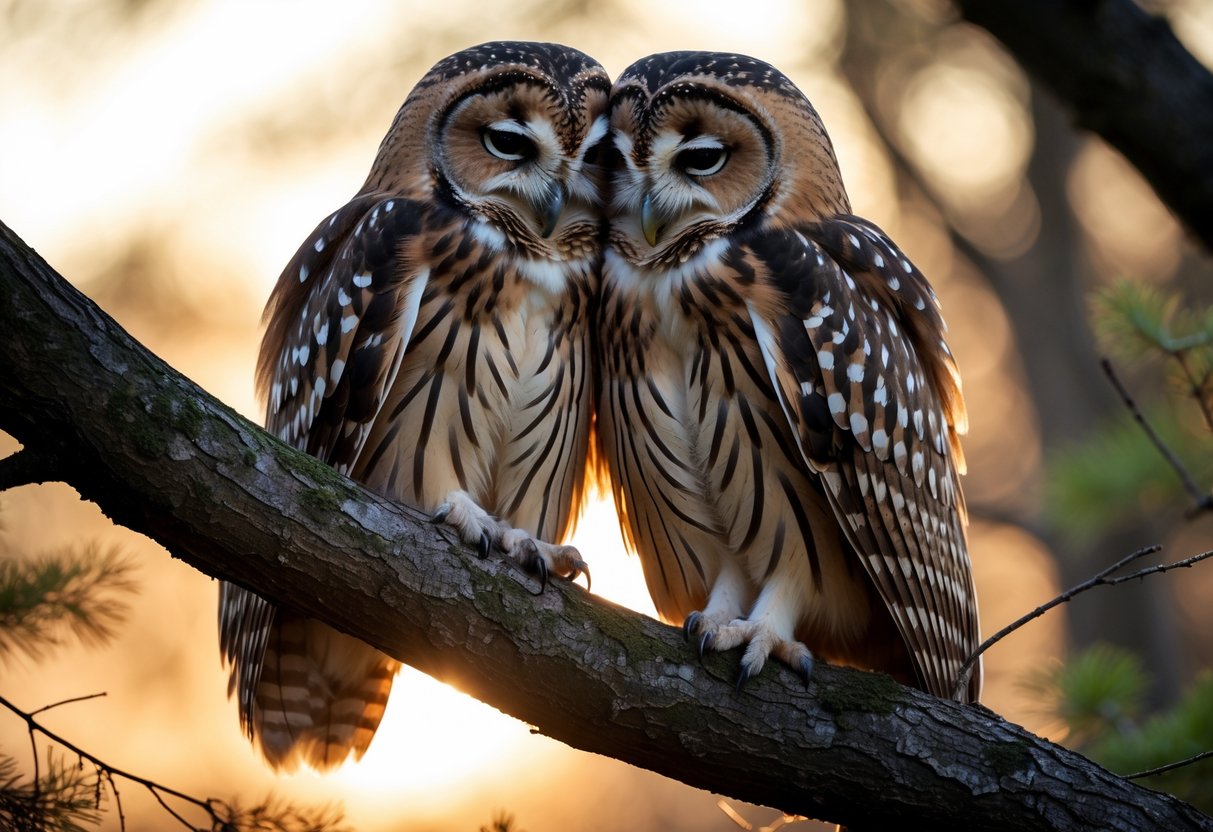
You’ll also hear owls using soft calls or even duetting to stay in touch. There’s something special about watching these quiet, gentle moments—it reveals a side of owls most people never see.
As you get to know these behaviors, you start to see how owls survive and build deep relationships. It’s kind of eye-opening to realize how much care goes on behind the scenes with these mysterious birds.
Ways Owls Show Affection

Owls use a handful of specific behaviors to bond with each other. They rely a lot on gentle touch, grooming, and just being physically close.
You can pick up on a lot about their relationships if you watch these little habits.
Preening and Grooming
Owls preen each other to show affection. When they preen, they clean and smooth each other’s feathers with their beaks.
This not only keeps their feathers tidy but also gets rid of dirt and pesky parasites.
When you spot one owl carefully grooming its mate, you’re seeing a real act of trust and care. It’s a big deal for their relationship.
They’ll often focus on spots that are tough to reach, like the back of the head or neck.
Preening isn’t just about hygiene—it’s a way for owls to stay close.
Mutual Bill Rubbing
Owls sometimes gently rub their beaks together. This looks a bit like kissing, but for owls, it’s more about bonding.
You might catch them nuzzling with their bills, which shows they feel safe with each other.
Sometimes they’ll just hold their bills together for a second before moving on. It’s a quiet way to say, “I trust you.”
Cuddling and Physical Contact
Owls show affection by cuddling up or sitting close together. Maybe you’ll see them leaning into each other, or gently touching heads.
When owls are bonded, they seem to enjoy physical closeness. Sometimes they’ll stroke the top of a partner’s head or under the chin.
Cuddling helps keep their connection strong, especially when it’s chilly out. They share warmth and comfort this way.
If you want to see more about how owls groom and bond, Mass Audubon has some great info.
Affectionate Owl Behavior Variations

Owls don’t act the same way with everyone. Their affectionate behaviors change depending on whether they’re with a mate, their chicks, or even people.
Getting a sense of these differences really helps you understand how they build trust.
Affection Toward Mates
During courtship or bonding, owls get pretty creative. Sometimes you’ll hear them softly hooting together in a duet.
They might raise their wings or gently touch beaks in a move called “billing.” It’s kind of like a sweet owl kiss.
Grooming is another big one. Owls use their beaks to clean each other’s head and neck feathers.
They also share food, with one owl sometimes bringing meat to the other as a gift. These gestures keep their bond strong during mating season.
If you want more detail on owl courtship, check here.
Parent-Offspring Bonding
Owl parents spend lots of time close to their chicks. You might see a parent cleaning or feeding the young with tiny bits of prey.
They use soft calls to keep in touch, which comforts the babies and helps build that family feeling.
You’ll sometimes notice “allopreening,” where the parent gently touches the chick with its beak. This keeps the little one’s feathers clean and shows love.
These quiet, close moments between parent and chick really matter for the young owl’s survival.
Interactions With Humans
Owls can definitely show affection toward humans, especially once they start to trust you. Sometimes, an owl will nuzzle or even gently nibble at your fingers—kind of like how they treat other owls they like.
If you spend time caring for an owl, you might spot it closing its eyes and relaxing when you’re nearby. They sometimes use soft calls that sound almost like laughter, just to let you know they’re comfortable.
Still, you should watch out—what seems like cuddling might just be an owl exploring or trying to nibble with its beak. If you’re curious about how owls interact with people, check out this example.


