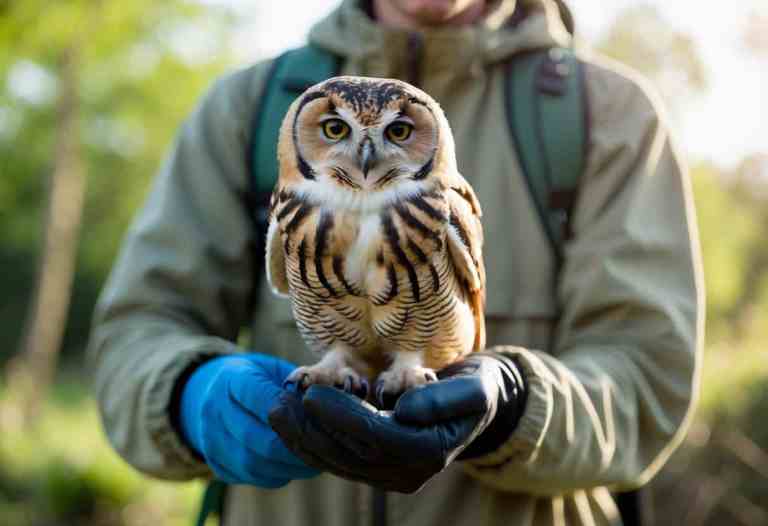
Ever wondered if seeing an owl is actually rare? Well, it kind of depends on where you are and what time you’re out there. Owls usually keep to themselves because most are nocturnal and pretty quiet when the sun’s up.
Still, some species don’t mind showing up during the day or early evening. So, honestly, your chances might be better than you expect.

Owls make their homes in all sorts of places—forests, farmlands, even city parks sometimes. Certain types pop up more often in specific areas.
You might be surprised; spotting some owls isn’t as rare as it feels if you know when and where to look. That moment you catch a glimpse of one, it’s a little bit magical, isn’t it?
If you’re curious about which owls live near you or what makes them stand out, stick around. I’ll share some tips for finding these secretive birds and maybe shed some light on why they seem so mysterious.
How Rare Is It To See an Owl?

Your odds of seeing an owl really hinge on your location and the time of day. Some owls are just easier to spot, but most have a knack for hiding or only coming out after dark.
It’s all about the species and their habits, honestly.
Factors Affecting Owl Sightings
Great horned owls and barred owls usually hang out near woods or forests. If you live close to their turf, you might spot or hear them more often.
Owls seem to favor quiet, dim places, away from crowds or city noise.
When forests disappear, your chances of seeing an owl drop. Barn owls, for example, like open fields and farms, so you’ll sometimes catch them flying low over the grass.
Bad weather makes owls less active, so you’ll probably have better luck on calm nights.
If you want to boost your chances, listen for their calls or look for owl pellets and feathers near trees where they roost.
Daytime Versus Nighttime Encounters
Most owls do their thing at night, so right after sunset or just before sunrise is your best bet. Great horned owls sometimes hunt during the day, but it’s not their usual routine.
Barred owls might be up and about in daylight, especially in quiet forests. Barn owls prefer low light, so you’ll see them at dawn or dusk, but almost never in full sunshine.
Spotting an owl during the day? It could be hunting or just resting. Try to keep your distance so you don’t bother it.
If you’re patient, bring a flashlight or just wait quietly near known owl hangouts at dusk. You might get lucky.
For more thoughts and stories, check out Is it rare to see this owl and any meanings?
Types of Owls and Where They Are Spotted
Owls turn up in all kinds of places, and each type has its favorite spot. Some are pretty common, while others are a challenge to find.
If you know what they like and how they act, you’ll have a better shot at seeing them.
Habitat Preferences by Species
Different owls like different digs. The burrowing owl prefers open grasslands and deserts, often hanging out near tunnels underground.
The snowy owl usually lives way up north in the Arctic, but sometimes wanders south to open fields in winter.
You’ll see the great gray owl in dense, old forests with big trees. The barn owl (Tyto alba) sticks to open countryside, farms, and old barns.
Barred owls love thick woodlands.
The great horned owl is a bit of a wildcard—forests, deserts, even cities, you name it. Knowing this stuff helps you narrow down your search.
Uncommon and Notable Owl Encounters
Some owls are just plain rare in most places. The spotted owl mainly lives in old-growth forests on the West Coast. It’s protected and needs a special habitat, so seeing one feels pretty special.
Barn owls and barred owls, on the other hand, are more common in North America. You might spot a great horned owl at dusk or hear its deep hoot echoing through the trees.
Every now and then, you’ll see owls like the snowy owl out during the day, usually when food is scarce and they’re on the hunt.
Owl Behavior and Observation Tips
Owls usually come out at night, so your best shot at finding them is by listening for their calls. Just stay quiet and wait, especially as the sun goes down or comes up.
Bring a flashlight, but try not to point it right at the owl. Instead, sweep the light slowly across the area. Watch for any movement or those bright, reflective eyes.
It helps a lot if you learn their different calls. Owls like to let you know they’re around by hooting or screeching. For instance, the great horned owl gives off a deep, steady hoot, while the barn owl lets out a sharp, kind of haunting screech.
If you know what their homes look like and what sounds they make, you’ll probably spot more owls out there.
For more details on spotted owls and where they live, check out this Spotted Owl Overview.