
You’ll spot deer most often where tender greens, fruits, and high-energy nuts grow.
Deer go wild for young leaves and shoots, clover and legumes, acorns, and sweet fruits. These foods pack the protein, carbs, and fats they need through the seasons.
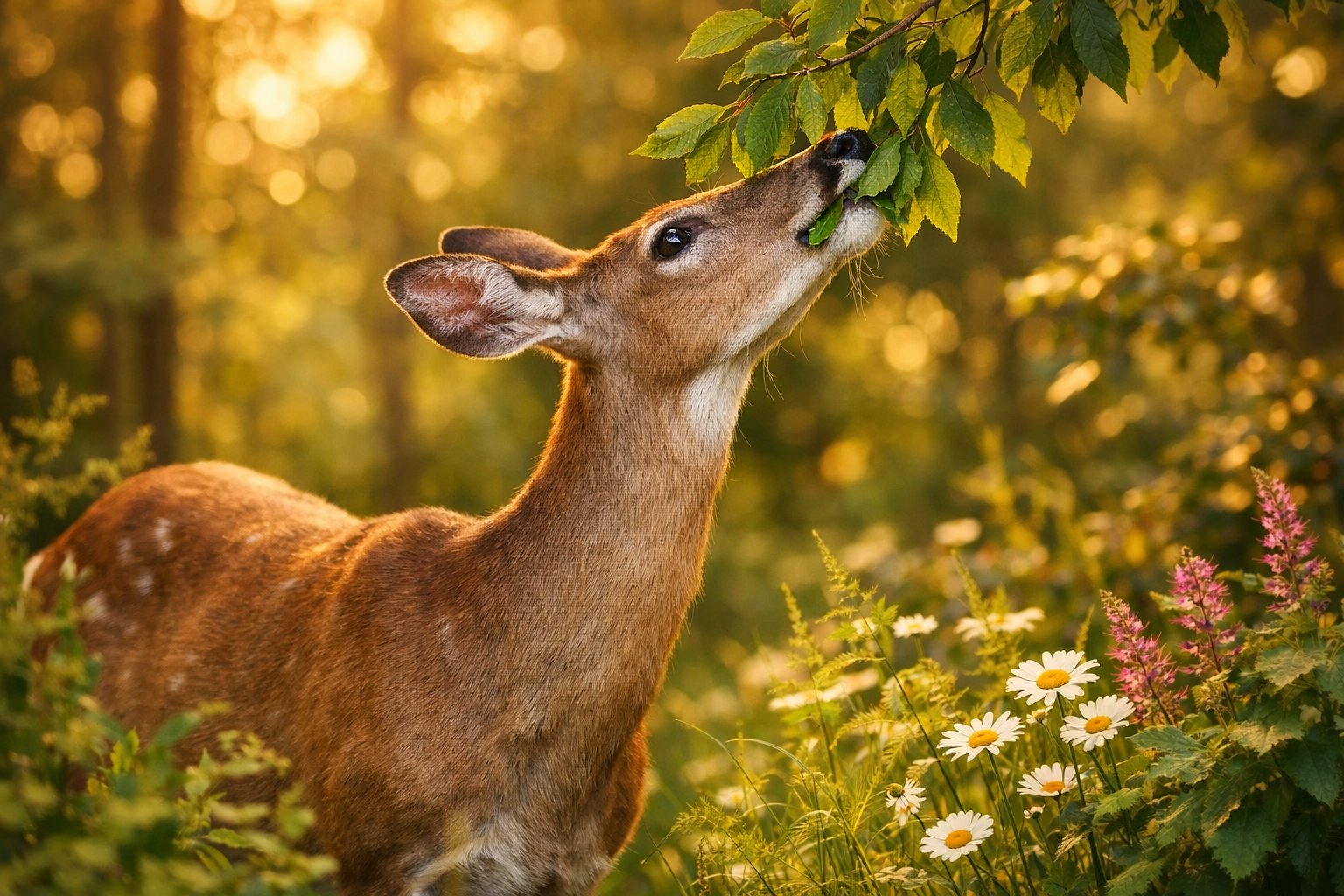
Walk a field in spring or a forest in fall and you’ll see why.
Fresh shoots and clover kickstart growth, while acorns and corn help deer bulk up for winter.
Let’s dig into which plants draw deer most, how their diet changes with the seasons, and what that might mean for your garden or property.
Deer’s Top Favorite Foods
These foods give deer a big calorie and nutrient boost at just the right times.
They help deer put on weight in fall, feed fawns in spring, and keep the herd strong through winter.
White Oak Acorns and Hard Mast
Deer absolutely seek out white oak acorns in fall and early winter.
These nuts pack fats and carbs, letting deer build up fat before the cold really sets in.
You’ll find them feeding below white oak trees when acorns start dropping.
Hard mast includes hickory, chestnuts, and beechnuts too.
Each one has a slightly different mix of fat and protein, but all of them deliver more calories than leaves or twigs.
Deer usually pick acorns first since they’re easy to eat and digest.
If you watch deer near old oak stands, a good mast crop can keep them around and even change their travel routes for weeks.
Apples, Pears, and Persimmons
Soft mast like apples, pears, and persimmons brings sugar and moisture late in the season.
Deer gobble up fallen fruit and low-hanging branches, getting quick energy in autumn and early winter.
You’ll often see deer visiting orchards or wild fruit trees, especially after a frost.
Fruit crops depend on the region and the year.
Persimmons ripen later than apples, so deer get a longer window for fruit feeding.
They prefer sweeter, riper fruit, but honestly, they’ll eat underripe ones if that’s all they find.
If you plant or protect a few fruit trees near cover, you can create a reliable food source.
Fruit draws in does with fawns too, so expect more deer traffic where soft mast is plentiful.
Clover and Alfalfa
Clover, especially white clover, is a spring and summer favorite.
It’s loaded with digestible protein and soft leaves, so deer hit clover hard when things green up.
Clover grows low, making it easy for fawns to reach.
Alfalfa works much the same way—lots of protein and calories.
Deer usually graze alfalfa at dawn and dusk to avoid the heat.
Both these crops help with antler growth and lactation because of their protein.
If you plant clover or alfalfa in food plots, you’ll keep deer around through spring and summer.
Just remember to rotate and avoid overbrowsing so the plants stay healthy.
Corn, Soybeans, and Cereal Grains
Corn and soybeans are huge in farm country.
Corn gives dense carbs and fats in fall and winter, from ears and leftover grain.
Deer eat green corn in summer, whole ears in late summer, and whatever’s left after harvest.
Soybeans offer protein in summer when the beans are green, and again in fall when pods dry out.
Deer munch on fresh soybean leaves and later on pods and dropped beans.
Cereal grains like wheat and oats also pull in deer, especially in early spring and after harvest.
Fields with these crops can concentrate deer and change their travel routes.
If you manage land, stagger planting and leave some edge rows for steady food access.
For hunters and landowners, these crops are a pretty reliable way to attract deer.
Browse, Forbs, Fruits, and Favorite Plants

Deer munch on all sorts of plants, but they go for the soft, sweet, and high-energy options first.
You’ll see them nip tender leaves and shoots, raid garden greens, and chase after nuts and berries when they’re ripe.
Tender Leaves, Twigs, and Nutritious Greens
Deer love young shoots and fresh leaves from trees like maple, dogwood, ash, and willow.
These offer easy-to-chew fiber and a bit of sugar, so deer browse them heavily in spring and right after the snow melts.
They always hit saplings and new growth first since those stems are thin and the leaves are extra tender.
When food gets scarce, you might catch deer eating oak leaves—though they’d rather have acorns in the fall.
In winter, woody twigs and buds give them the roughage they need.
If you manage woodland, mix up the ages of your trees so deer always have fresh browse.
Berries, Blackberries, and Raspberries
Deer go after fruits that are easy to reach and packed with sugar.
Blueberries, blackberries, and raspberries are favorites because they ripen over several weeks and offer quick calories.
You’ll spot deer visiting brambles and grape vines in late summer and fall.
Soft fruits like pokeberries and wild grapes also tempt deer.
Fruit patches near trails or field edges get hit the hardest.
If you want berries for yourself, you’ll need fences or just plant them away from deer cover.
Hostas, Lettuce, and Garden Vegetables
Your gardens? Yeah, they’re prime targets.
Hostas, lettuce, brassicas like cabbage, beans, sunflowers—deer love these for their soft leaves and mild flavors.
They’ll eat tender transplants, pull up young plants, and strip leaves from mature crops.
Protect your beds with fences, repellents, or raised containers.
Pansies, impatiens, daylilies, and roses also take a hit; roses lose their buds and azaleas or rhododendrons get nibbled.
If you plant tougher or more aromatic species along the garden’s edge, you might deter a few deer, but honestly, they’re persistent.
Shrubs, Saplings, and Wild Plants
Shrubs like honeysuckle, bitterbrush, and sagebrush give deer both cover and food.
Deer love to browse shrubs and saplings—especially young oak and beech trees—when there aren’t many nuts around.
You’ll often see them nibbling on arborvitae, holly, and even English ivy at the lower levels.
Nut-producing plants—chestnuts, beechnuts, and oak acorns—are basically “deer candy” in the fall. These nuts really shape where deer decide to go.
Mushrooms and forbs (those wild, broad-leaf plants) mix things up and offer extra nutrients as the seasons change.
If you’d rather not have deer stopping by, try keeping dense cover away from your yard and plant things they don’t care for.


