
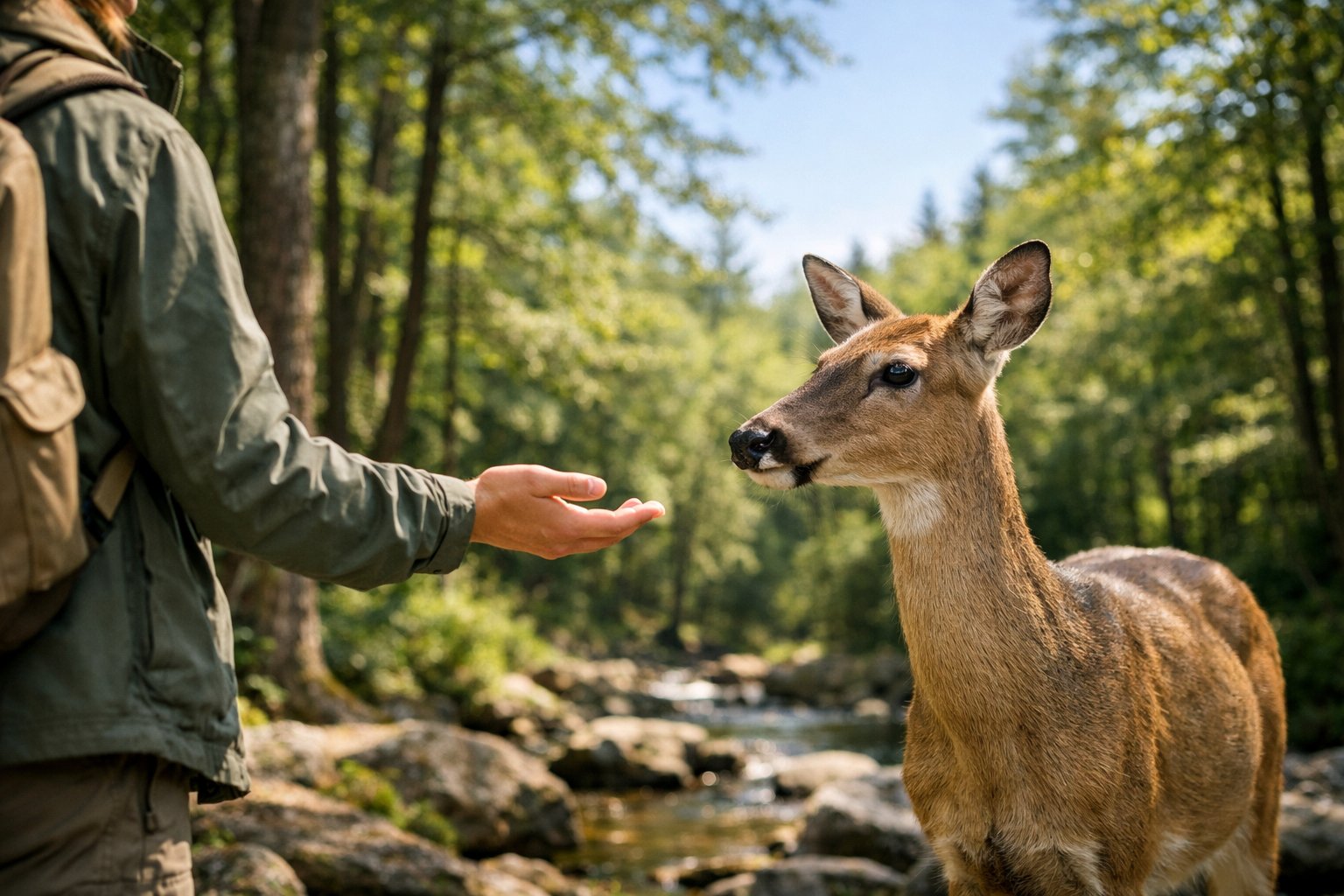
Sometimes, when a deer stands nearby, calm and curious, you might feel tempted to reach out and touch it. Don’t do it—touching wild deer puts both you and the animal at risk.
Give yourself space and try to stay calm. This way, you can watch without causing harm.
If you spot a fawn or an injured deer, what you do next really matters. Let’s get into why touching deer is a problem and what you can do to help without making things worse.
Why You Should Not Touch Deer

Touching deer puts you and the animal in real danger. You risk picking up infections, getting hurt, or messing up a deer’s natural habits.
Local laws might also make it illegal to handle wild animals.
Risks of Disease Transmission
Deer can pass infections to you by direct contact, through their bodily fluids, or via ticks that fall off them. These animals often carry ticks that spread Lyme disease and other nasty illnesses.
If you handle a deer, your odds of getting a tick bite go up. Stay away from deer hides, blood, or organs—some germs stick around on those tissues.
Chronic wasting disease (CWD) attacks deer brains and nervous systems. No one’s caught it from deer yet, but wildlife agencies say you shouldn’t touch or eat deer from areas where CWD shows up.
Rabies in deer is rare, but it can happen. If a rabid deer bites or scratches you, that’s a big problem.
If you end up touching a sick or dead deer, wash your hands right away and call your local wildlife agency.
Potential for Injury and Aggression
Most deer run off when people approach, but if you corner or scare them, they can hurt you. Bucks get especially aggressive during the rut and might use their antlers or hooves.
Does with fawns can also lash out if they think their babies are threatened.
Wild deer sometimes carry parasites that can cause skin infections if you get scratched. Pets who chase or get too close to deer might get bitten or kicked.
Don’t try to pick up a running fawn or restrain a grown deer. Keep your distance, and leash your dog so everyone stays safe.
If you see a deer that looks injured, call a wildlife rehabilitator instead of trying to help on your own.
Impact on Deer Well-Being and Behavior
When you touch a deer, you might change its behavior or even threaten its survival. Fawns depend on having almost no scent to hide from predators.
If you leave your scent on a fawn, you can make it more likely to get abandoned or found by something hungry.
If deer get used to people, they lose their natural fear and start coming closer to homes, gardens, or even roads. That raises the risk of car accidents and other problems.
Feeding or touching deer can mess up their diet and lead to health issues. It’s better for everyone if you keep your distance and let deer learn from their mothers.
Legal Issues with Handling Wild Deer
In a lot of places, laws ban handling, keeping, or moving wild deer unless you have a permit. These rules exist to protect both people and animals.
If you break the law, you could face fines or have the animal taken away.
If you find a fawn that seems hurt or orphaned, reach out to your state wildlife agency or a licensed rehabilitator first. They’ll tell you what’s legal and safe.
Always check local rules before you touch or move any wild deer.
What to Do If You Find a Fawn or Injured Deer

If you come across a young deer, check for obvious injuries and see if the mother is nearby before doing anything. Keep people and pets away.
Call the right wildlife agency or a licensed rehabilitator if the animal looks hurt or in trouble.
Why Fawns Are Sometimes Alone
Newborn fawns spend hours alone while their mothers feed. The doe hides her baby in tall grass or brush to keep it safe from predators.
Fawns barely smell and stay super still—it’s normal, not a sign they’ve been abandoned.
Step in only if the fawn is bleeding, has a broken leg, acts weak and cries nonstop, or you see it near a dead adult deer.
If a fawn follows you, begs, or looks obviously hurt, that’s when it needs help. Otherwise, leave it alone and keep kids and dogs away.
Safe Actions Around Baby Deer
If you absolutely must approach, move slowly and don’t make a lot of noise. Wear gloves and use a towel to avoid leaving your scent if you need to handle the animal.
Only touch the fawn if you have to move it out of immediate danger, like off a road.
If you’ve handled a fawn, rub an old towel on the grass and wipe the fawn down so the mother is more likely to accept it again.
Don’t feed cow’s milk or give water. Never try to raise a fawn yourself—it almost always ends badly for the animal and can make it lose its natural fear of people.
Involving Wildlife Rehabilitators and Agencies
Call your local animal control, state wildlife agency, or a licensed wildlife rehabilitator right away if you see a fawn that’s injured or clearly orphaned. Don’t try to move the deer before you talk to the authorities—some states really care about where deer go because of disease concerns.
If you come across an injured adult deer, just report it and let the professionals handle the situation, even if that means capture or euthanasia. Look up your state fish and wildlife office or a nearby wildlife rehab center to find the right contact info.
When you call, make sure you give them the exact location, describe the condition, and mention any injuries you can see.


