
Ever spot a wild animal that kinda looks like a dog and a fox had a baby? You’re not alone. So, is a coyote a dog or a fox? Short answer—it’s neither. A coyote is its own wild thing, called Canis latrans, though it’s definitely a close cousin to both dogs and foxes. Coyotes sit in the same family as dogs and foxes, but they’ve got their own quirks and behaviors that set them apart.
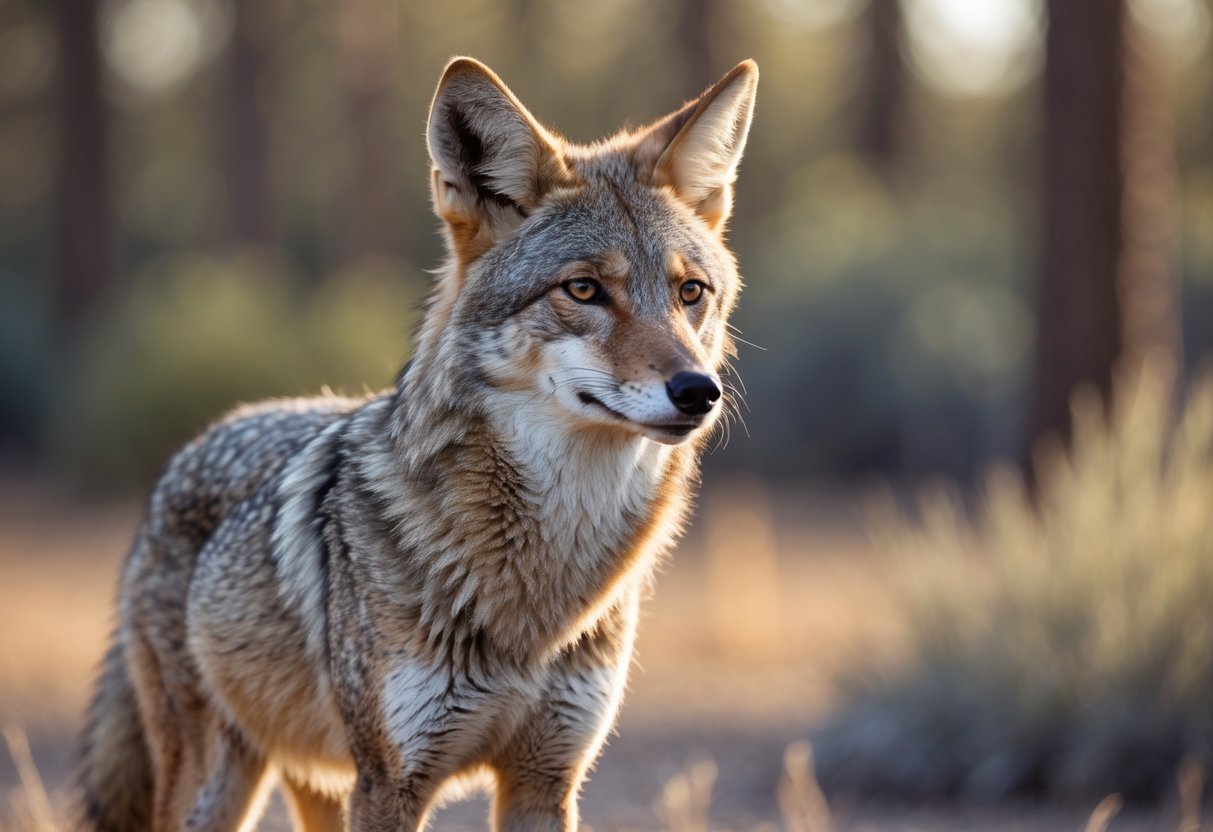
People often mix up coyotes and foxes since both have those pointy ears and bushy tails. But coyotes? They’re usually bigger, with a different body shape and way of living.
Foxes like to do their own thing, staying solo most of the time. Coyotes, though, hang out in groups and act more like dogs in that way.
If you want to tell them apart, it’s worth knowing these details. Coyotes really aren’t just wild dogs or sneaky foxes—they’re something in between, and honestly, they’re pretty fascinating.
Is a Coyote More Like a Dog or a Fox?
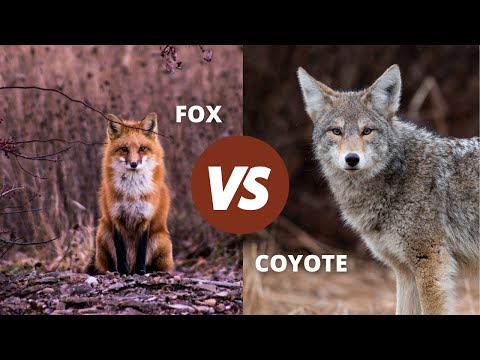
Coyotes have things in common with both dogs and foxes, but when you look at their biology, appearance, and behavior, you’ll notice they lean more one way than the other.
Let’s break it down.
Canis latrans Family and Classification
Coyotes belong to the species Canis latrans. That puts them in the same genus as dogs and wolves.
So, they’re more closely related to dogs than to foxes. Foxes, like the red fox (Vulpes vulpes), fall under the genus Vulpes.
Think of coyotes as wild, distant relatives of your pet dog. They evolved right alongside wolves and dogs, picking up similar traits along the way.
Foxes? They split off on a different branch of the family tree. That’s why coyotes seem more “dog-like” even though you’ll never find one curled up at the foot of your bed.
Physical Appearance Comparison
Coyotes stand taller and look more muscular than most foxes. Their legs are longer, and their bodies have a lean, almost wolfy vibe.
Foxes, especially the red ones, are smaller with short legs. Their tails are super bushy—sometimes as long as their bodies.
Coyotes’ tails look thinner and droop when they walk. Their fur is usually grayish-brown with some reddish bits mixed in.
Foxes come in all sorts of colors—red, silver, black, you name it. Coyotes’ ears are smaller and rounder, while foxes have those big, sharp, pointy ears that stick right out.
| Feature | Coyote (Canis latrans) | Fox (Vulpes vulpes) |
|---|---|---|
| Size | 3 to 4.5 ft long | 1 to 3 ft long |
| Weight | 15 to 50 lbs | 5 to 30 lbs |
| Tail | Long, thin, hangs down | Bushy, almost body length |
| Coat Color | Gray/brown with red hues | Red, gray, silver, black |
| Ears | Smaller, rounded | Large, pointed |
Behavioral Differences
Coyotes act a lot like wild dogs and wolves. They stick together in family packs and use howling to talk to each other.
You might hear their eerie, up-and-down howls at night, even in the city. It’s a sound you don’t forget.
Foxes, on the other hand, are loners. Outside of mating season, they hunt by themselves.
Their sounds are higher-pitched—lots of yipping and whining, nothing like that coyote howl.
Coyotes are surprisingly good at city life. They figure out how to hunt and roam right under our noses.
Foxes show up in cities too, but they’re sneaky and prefer to hide out in dens or tunnels.
Habitat and Range
Coyotes call North America home. You’ll spot them in deserts, forests, grasslands, and city parks.
Their range keeps growing, and now they’re all over the U.S. and Canada.
Foxes have a much bigger reach. The red fox lives in Europe, Asia, and North America.
They handle all kinds of climates—from frozen tundra to dry deserts.
So, if you’re in North America, you’re more likely to run into a coyote. Foxes, though, pop up all over the world and often go unnoticed.
Curious about spotting the differences? Check out this handy fox vs coyote guide.
How to Distinguish Coyotes from Dogs and Foxes

You can pick out coyotes from dogs and foxes if you know what to look for. Check their size, color, ears, tails, and even their tracks.
Once you get the hang of it, it’s not too hard.
Size, Weight, and Silhouette
Coyotes usually fall between foxes and most dogs in size. They measure about 3 to 4.5 feet long, tails included.
They weigh anywhere from 15 to 50 pounds.
Foxes, like the classic red fox (Vulpes vulpes), are smaller—1 to 3 feet long and just 5 to 30 pounds.
Foxes look slim, with short legs and a delicate build.
Dogs come in all shapes and sizes, but the wild ones you might mix up with coyotes tend to be stockier. They often have broader shoulders and shorter legs.
Coyotes look lean, almost wolf-like, and once you spot those proportions, it gets easier to tell them apart.
Coat Color and Markings
Coyotes wear coats of gray, tan, and reddish-brown fur. You’ll often see black streaks along their back or tail, which gives them a salt-and-pepper style.
Their coloring helps them disappear into woods or fields.
Foxes? They’re more colorful. The red fox, for example, has a bright reddish-orange coat, white belly, and a white-tipped bushy tail.
Some foxes come in gray, silver, black, or even white, depending on where they live.
Dogs’ colors are all over the place. You’ll see spots, patches, short fur, long fur—nothing really matches wild canines.
Ears and Tail Features
Coyotes have tall, pointy ears that fit their head size. Their tails are long but not especially bushy.
When they run, their tails usually hang down low.
Foxes sport even bigger ears compared to their heads. Their tails are thick and bushy, often with a white or black tip.
When foxes run, their tails stick out or up, not down.
Dogs’ ears and tails? It depends on the breed. Some have floppy ears, others pointy. Tails might wag all over or curl up.
Coyotes keep their tails low, while dogs often show more tail action.
Tracks and Prints
Coyote tracks might look a lot like dog prints at first glance, but there are some differences you can spot if you look closer. Coyotes leave a narrow, oval-shaped paw print with four toes.
You’ll usually notice their claw marks—these show up sharper and straighter because coyotes actually use their claws when they run and hunt. That’s pretty different from dogs.
Dog tracks show up rounder and wider, thanks to their paw shape and blunter claws. Most dogs leave a messier, looser walking pattern; they just don’t have that focused hunting stride that coyotes do.
Fox prints? Those are tiny—about as small as a cat’s. Their tracks look compact, with pointed toes.
You probably won’t see much in the way of claw marks with foxes, since they use stealth or even climb trees instead of digging in with their claws.
So, if you spot tracks around your place, take a look at the size, shape, and those claw marks. They’ll give you a decent clue about whether a coyote, dog, or fox wandered through—especially when animals are more active, like during pup-rearing or mating season.


