
When bees get angry, it’s usually because they feel threatened or you’ve disturbed their hive. The best way to calm down angry bees? Stay calm yourself, move slowly, and use smoke or calming tools to help them feel less scared or defensive. Keeping a cool head really helps keep things from spiraling out of control.
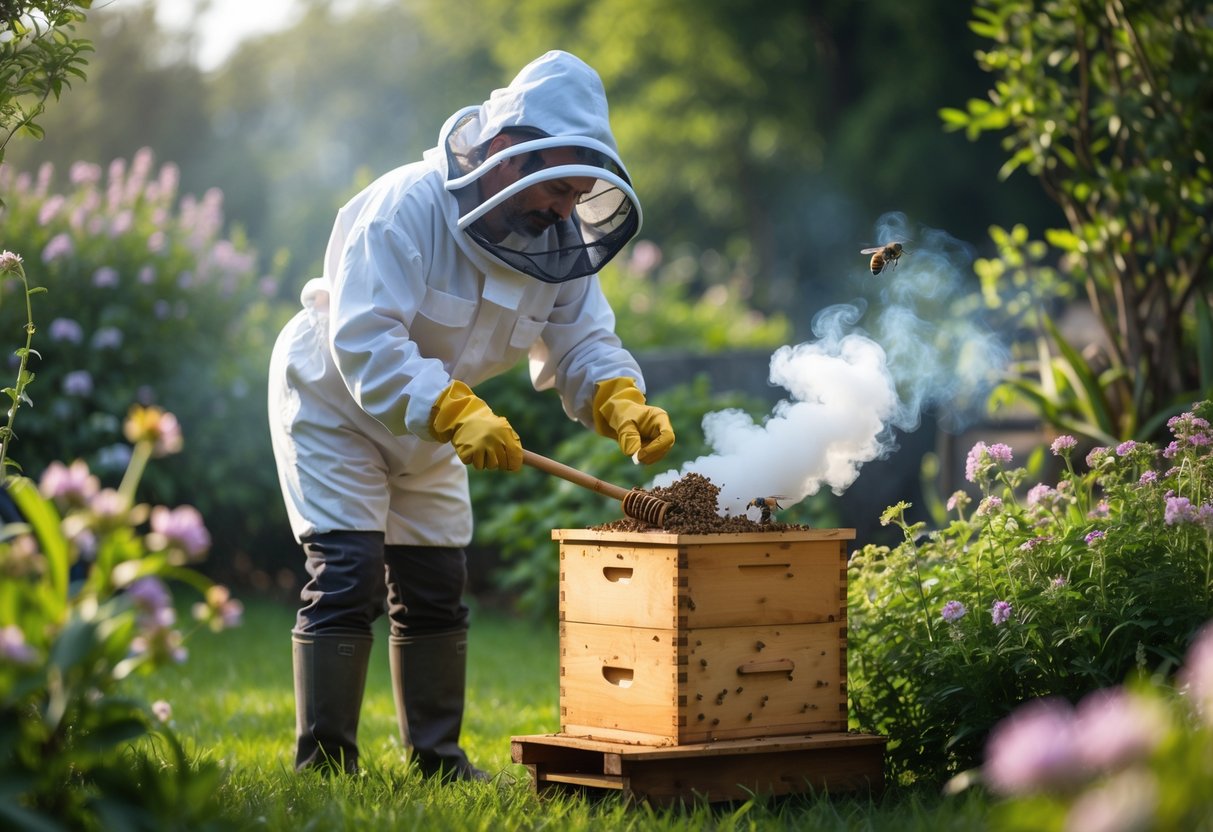
Approach your hive carefully. Try not to make quick or loud movements.
You can use a smoker or even sweet food to distract the bees and lower their aggression. If you know why bees get upset, you can often prevent trouble before it starts.
If you’re looking for simple, safe ways to calm angry bees, this guide can help you handle them with a bit more confidence.
How to Calm Down Angry Bees Safely
To calm angry bees, you need to read their behavior, use the right tools, and stay calm yourself. These steps help you avoid stings and keep the bee colony peaceful while you work.
Recognizing Bee Aggression and Warning Signs
Aggressive bees usually give you some warning before they sting. You might notice them flying quickly around you or hear a loud, anxious buzzing.
They release an alarm pheromone that calls in more bees to defend the hive. Sometimes you’ll see shaking or even head-butting inside the hive.
If you spot these signs, the colony probably feels threatened. Try to work gently and keep things as calm as possible.
Wearing a bee suit really matters since it protects you from stings while you watch the bees’ mood. When you know these signals, you can act safely and reduce stress for everyone—bees included.
Using a Bee Smoker Effectively
A bee smoker is probably your best tool for calming angry bees. The smoke hides the alarm pheromone that would otherwise send bees into attack mode.
Start by puffing smoke gently at the hive entrance. Then, give a few light puffs between the frames inside.
This usually encourages bees to eat honey and settle down a bit. Don’t get carried away with the smoke, though.
Too much smoke can stress them out. Use slow, soft puffs to soothe the colony without making things worse.
A steady hand and just enough smoke make the whole job safer and less stressful.
Best Practices During Hive Inspections
Hive inspections can really rile up the bees if you’re not careful. Always approach the hive slowly and quietly.
Quick or jerky movements often trigger aggression. Keep the hive open only as long as you need to.
Try not to block the sun, since bees usually act less defensive in bright light. Wear your bee suit, gloves, and veil for protection.
If the bees start getting too angry, just pause and let them calm down before you continue. Close the hive quickly when you’re done to help the bees settle.
Staying Calm and Moving Slowly
Your body language can make a big difference. If you stay calm and move slowly, bees usually don’t feel as threatened.
Don’t flail your arms or swat at them—trust me, that never helps. Stick to steady, smooth motions.
Take slow, deep breaths to keep yourself relaxed. Bees usually sting only when they feel danger.
By staying composed, you lower your risk of stings and make the hive a calmer place. Pay attention to your movements so you don’t accidentally upset the bees more than necessary.
Preventing Bee Aggression and Long-Term Calm

If you want calm bees over the long run, you’ve got to pay attention to their environment, health, and daily behavior. Support the queen bee, keep predators away, and make sure your bees always have enough food.
These steps really help prevent sudden aggression and keep the whole colony peaceful.
Understanding the Role of the Queen Bee
The queen bee sets the mood for the whole hive. If she’s weak, old, or missing, the colony can get cranky or aggressive.
Watch for signs like fewer eggs or weird bee behavior. If you need to, replace the queen—a process called requeening.
A strong, healthy queen gives off pheromones that help keep bees relaxed and working together. A good queen means less fighting in the hive and fewer aggressive attacks when you visit.
This makes beekeeping a lot less stressful for you.
Managing External Threats and Predators
Animals like bears and skunks can really spook your hive, making bees defensive or outright aggressive. Bears sometimes try to break open hives, and skunks might scratch near the entrance, upsetting the bees.
To protect your hive:
- Use electric fences to keep bears away
- Build barriers to block skunks
- Place hives in quiet, low-traffic spots
These steps cut down on stress for your bees and help keep their mood calm. When bees feel safe, they’re much less likely to act out.
Providing Adequate Nutrition and Preventing Dearth
Bees get cranky when they don’t have enough food. Dearth happens when flowers and nectar just aren’t around.
To avoid this, make sure your bees always have access to enough pollen and nectar.
You can help out by:
- Setting up feeders with sugar syrup when nectar runs low
- Planting flowers nearby that bloom at different times
- Checking the hive’s food stores often
When your colony has enough to eat, they stay energetic and pretty chill. If they’re hungry, bees get defensive fast, so keeping them fed really matters.
Curious how the pros handle feeding and threats? Take a look at how expert beekeepers deal with aggressive honey bees.


