
If you’re dealing with bees swarming around your home or garden, you’re probably wondering how to get them to leave—ideally without harming them. The best way to keep bees away is by using natural repellents like vinegar, cinnamon, or certain plants, and by avoiding anything that might hurt the bees or their environment.
These approaches let you protect yourself while still respecting the bees’ important role in nature.
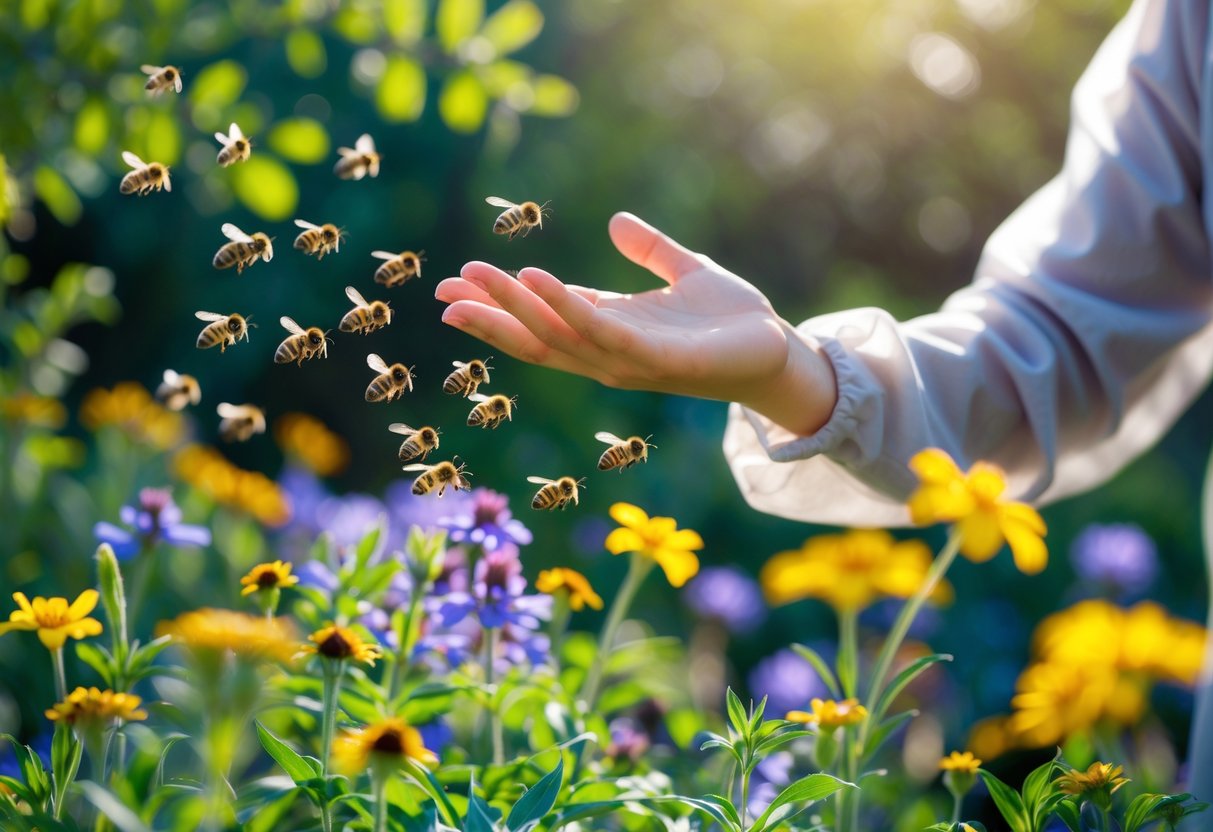
Bees play a huge part as pollinators, but when they hang out too close, it can feel a bit much—especially if you have allergies. Figuring out if you’re actually looking at bees, or maybe wasps or hornets, helps you pick the best way to keep them away.
You don’t have to call pest control right off the bat. Try easy fixes first, like spraying a mix of water and vinegar near their hive at night or planting herbs that bees tend to avoid.
These gentle tricks work with the environment, so it’s less likely the bees will come back. If you want more ideas, check out natural ways to make bees abandon their hive safely.
Safe and Effective Ways to Make Bees Go Away

You can deter bees by removing what attracts them and making your space less appealing. Even small changes in your yard or around the house can stop bees from settling in or starting a hive.
Remove Food and Water Sources
Bees love sweet foods and water. To cut down on bee visits, keep food covered when you’re outside—especially sodas and fruit.
Clean up crumbs and spills quickly so you don’t accidentally invite them over.
Make sure trash cans have tight lids, and toss out garbage regularly to get rid of those food smells bees follow.
If you have birdbaths or pet bowls outside, change the water often so bees don’t use them for a quick drink.
Standing water in gutters or flower pot saucers can also bring in ground bees. Fix leaks and dump out containers where water collects, and your yard will seem less like a bee hangout.
Seal Entry Points and Cracks
Bees often search for tiny spaces to build a hive. Walk around your house and check for gaps or holes in walls, eaves, and the foundation.
Seal these up with caulk or weatherstripping.
Don’t forget spots around windows, doors, vents, and where utility pipes come in. Closing up cracks keeps bees from sneaking into your walls or attic.
If you see a small hive starting up near your house, don’t try to get rid of it yourself. Instead, reach out to a beekeeper or a pro who can remove the hive safely and keep the bees alive.
Repel Bees With Natural Scents
Some smells really turn bees off, so you can use them to keep your space bee-free. Try citronella candles, cinnamon sticks, or spray a little vinegar in outdoor areas.
Plants like eucalyptus, mint, or wormwood work as natural bee deterrents. Put them near picnic spots, doorways, or flower beds to help keep bees away.
Some people even say dryer sheets in your pocket or nearby can help. If you’re allergic to bee stings, don’t block bees’ paths, and always have an epinephrine pen handy if you need it.
Water Lawns to Deter Ground Bees
Ground bees dig nests in dry, sandy soil. If you keep your lawn moist, it’s harder for them to move in.
Water your yard regularly, especially in dry spells, to make it less inviting for ground bees. Don’t overdo it—wet soil can cause its own problems.
If you suspect ground bees are around, leave their hive alone. Ground bees usually aren’t aggressive, but they’ll still sting if you mess with them.
If you or someone nearby has bee sting allergies, be extra careful to avoid contact.
If you want more natural ways to make bees go away, check out 6 Ways To Make Bees Go Away That Are Easy and Safe.
Natural Repellents and Professional Bee Removal Options
You’ve got a few natural options for keeping bees away without hurting them. Using certain plants, oils, or even things you probably already have at home can make bees decide to go elsewhere.
If the bee problem gets out of hand, call in experts who can safely remove them from your place.
Use Mint, Citronella, and Eucalyptus
Mint, citronella, and eucalyptus make great natural repellents. Bees can’t stand the smell of these strong plants.
Grow them near doors, windows, or your patio to help keep bees away.
Essential oils from these plants work too. Mix a few drops with water in a spray bottle and spritz areas where bees tend to show up.
Mint and eucalyptus oils are especially handy for outdoor hangouts.
Apply Vinegar or Essential Oils
Vinegar is another easy way to keep bees at bay. Its strong scent makes bees stay away from your outdoor spots.
Just mix vinegar with water in a spray bottle and mist places like picnic tables, garden chairs, or flower pots.
Oils like citronella, peppermint, or rosemary work well, too. Add a few drops to water and spray around your yard or home to create a gentle barrier.
Remember to reapply after it rains.
Hang Mothballs or Citrus Peels
Mothballs and citrus peels are simple DIY options to deter bees. Mothballs smell bad to bees, so hang small bags around your patio—but keep them away from kids and pets.
Citrus peels, especially lemon or orange, can help, too. Scatter the peels around your yard, patio, or near doors and windows.
The natural oils in the peels give off a scent bees don’t like, so they’re less likely to come close.
When to Call Bee Removal Services
If you spot a hive close to your home, or you keep seeing a lot of bees buzzing around, it’s probably time to call in a professional bee removal service. Honestly, trying to handle it yourself isn’t worth the risk.
These experts show up with the right tools and know-how to move the bees without hurting them—or wrecking your property. Bees play a huge role in pollinating plants, so you really don’t want to harm them unless you have no other choice.
The pros can also deal with tricky situations, like hives tucked inside walls or up in trees where you can’t easily reach. It’s just safer and smarter to let them handle it.


