
Ever watched bees buzzing around your garden and wondered when they finally call it a day? Honestly, bees don’t stick to a strict bedtime like we do, but you’ll usually find them winding down when it gets dark.
Most bees stop working and head to bed at night, catching about 5 to 8 hours of sleep, usually in or near their hive.

During the day, bees stay busy collecting nectar and pollen. Once the sun goes down, they settle in for some much-needed rest.
Some bees sneak in quick naps during daylight, but their main sleep kicks in overnight. If you pay attention, you’ll notice they get a lot quieter as evening approaches.
Curious about how bees rest, where they sleep, or how their sleep shapes hive health? There’s a lot to discover about what bees get up to once the sun sets.
When Do Bees Go To Bed?

Bees stick to pretty clear routines when it comes to resting. Their sleep depends on species, the light around them, and their role in the hive—or if they’re out on their own.
Typical Sleep Times for Different Bee Species
Honeybees and bumblebees do most of their work during the day, then rest at night. Honeybees usually sleep for around 5 to 8 hours after dark.
Bumblebees act similarly, though you might catch them napping briefly during the day. Solitary bees get a bit more flexible—they don’t live in hives, so they rest whenever it feels right.
You’ll find that bees like to rest when it’s cooler and darker. Their habits line up with being diurnal—awake in the daylight, sleeping at night.
Role of Light and Temperature on Sleep Timing
Light really shapes when bees go to bed. As soon as it gets dark, most bees head back to their hive or nest to rest.
Sunlight disappearing tells them it’s time to stop foraging. Temperature matters too.
When it’s cold—especially in winter—bees sleep less or adjust their routines. For instance, if the temperature drops to around 14°C, bees group up to stay warm.
If it falls below 9°C, they huddle tight and barely move to save energy. Their sleep really ties into how light and warm their environment feels.
Differences Between Worker, Nurse, and Solitary Bee Sleep
Worker bees and nurse bees sleep differently because of their jobs. Workers, who go outside to forage, mostly sleep at night for about 6 hours.
Nurse bees, who stay inside to care for larvae, sleep in short bursts throughout the day. Solitary bees don’t have hive chores, so they rest when they want—often more during cold or dark spells.
Sometimes, solitary bees even sleep while hanging onto flowers or tucked away in tiny hiding spots. Each bee’s job changes how and when it sleeps.
You’ll see this in how long and how often they rest, whether it’s day or night.
Factors Affecting Bee Sleep Patterns
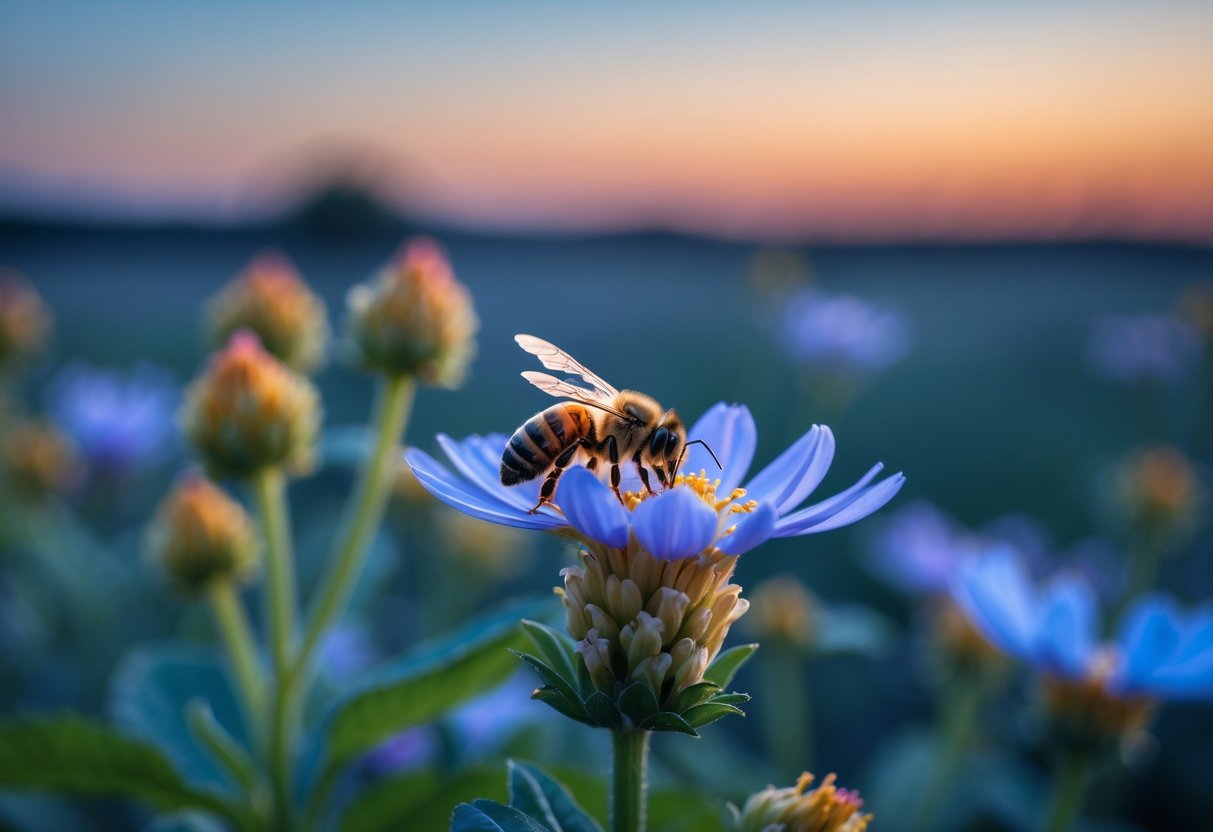
A bunch of things affect how bees sleep—from their environment to the time of year and what they do in the colony. These factors shape when and how long bees rest.
You’ll notice how light, temperature, and colony needs all play a part in their sleep habits.
Environmental Influences on Bedtime
Light really sets the tone for bees’ bedtime. Bees stay active while it’s bright out, but start winding down as the sun sets.
Light pollution from streetlights or buildings can throw them off, making them stay up later than they should. That can leave them less ready to gather food the next day.
Pesticides and bad air quality stress bees out and mess with their natural rhythms, which isn’t great for the whole colony. Noise and vibrations near hives can wake them up or make them move.
Sometimes, you’ll spot bees resting on flowers or grass during the day. At night, they mostly stick to honeycomb cells where it’s warm and safe.
Seasonal and Weather-Related Changes
Bees’ sleep schedules change with the seasons. In warm months, longer days mean more foraging and shorter sleep.
When it’s colder or rainy, bees slow down and spend more time resting in the hive. Temperature inside the hive matters, too.
If it gets too cold, bees cluster together to keep warm, which changes how often and when they sleep. On hot days, bees might leave the hive and hang out in “bee beards”—little groups clinging to surfaces outside.
Seasonal changes even shape pollination since bee activity depends on how much they sleep and rest.
Impact of Colony Structure and Role on Rest
Not all bees get the same amount of sleep. Worker bees that head out to gather food usually catch fewer hours of rest than nurse bees or those who stay inside the hive.
Foragers really need enough rest to stay sharp during their flights from flower to flower. It’s a tough job, honestly.
The queen bee sets the hive’s daily rhythm. Sometimes, bees wake up earlier or later, just following her lead.
A hive with a strong social structure usually keeps better sleep routines. That structure can really boost the colony’s overall health.
In crowded hives, honeycomb cells provide plenty of sleeping spots. This setup lets workers rest near their jobs, so the whole colony keeps humming along.


