
Knowing how much your rabbit should eat each day is key to their health and happiness. A healthy rabbit typically needs about 1/4 to 1/2 cup of high-quality pellets, unlimited hay, and fresh vegetables every day. The right balance of food can keep your furry friend active and thriving.
It can be surprising to learn that a rabbit’s diet relies heavily on hay and fresh greens. While pellets are important, they should only be a small part of the overall diet. Getting the right portions of each type of food can help avoid health issues down the road.
In this article, you’ll discover detailed feeding guidelines tailored to your rabbit’s age and weight. This will help you ensure that your pet receives the nutrition they need for a long, happy life.
Understanding Rabbit Diets
Your rabbit’s diet is crucial for its health and well-being. Knowing the right balance of food types will help your bunny thrive and avoid health issues. Let’s explore the dietary needs and the types of food suitable for your pet rabbit.
Dietary Needs of Rabbits
Rabbits have unique dietary requirements. They need a mix of hay, fresh vegetables, fruits, and pellets. Hay should make up the largest part of their diet, as it’s high in fiber, which is essential for their digestive system. Aim to provide unlimited access to hay daily.
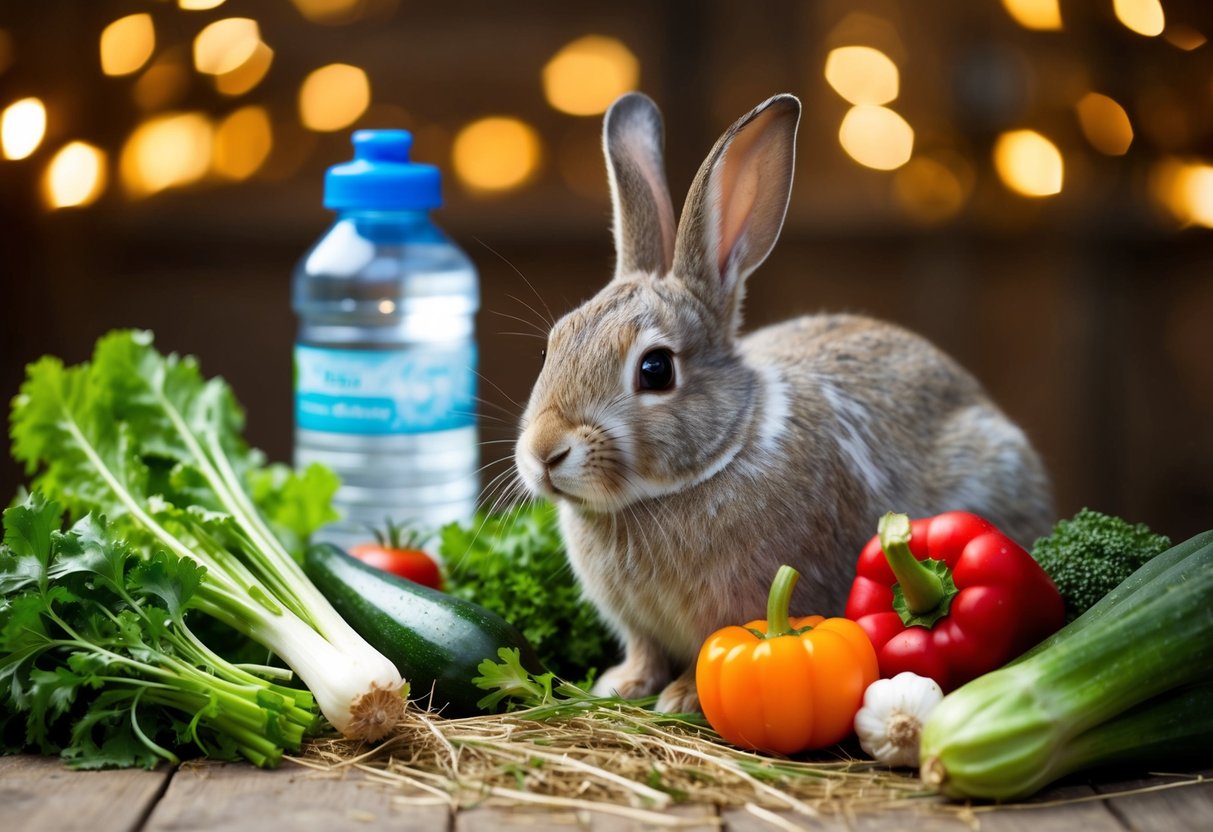
Fresh vegetables are also important. You can offer leafy greens like romaine lettuce, kale, and parsley. Portion these to about 1 cup per 2 pounds of your rabbit’s weight. Avoid starchy veggies and give fruits only as treats, about 1-2 tablespoons per day.
Pellets should make up a smaller portion of their diet. One-quarter to a half cup of high-quality pellets is enough for most rabbits. Always monitor your rabbit’s weight and adjust its food accordingly. A balanced diet will help prevent obesity and other health issues.
Types of Rabbit Food
When feeding your rabbit, you have several options. Each type of food contributes to a healthy diet. Here are the main types of rabbit food:
-
Hay: This includes timothy hay, alfalfa hay, and orchard grass. Quality hay is essential for dental health and digestion.
-
Pellets: Choose pellets that are high in fiber and low in protein. Look for brands that use natural ingredients and avoid those with seeds or colored bits.
-
Fresh Vegetables: Offer a variety of leafy greens and other veggies. Some good choices include cilantro, basil, and bell peppers.
-
Fruits: Treat your rabbit with fruits like apples and blueberries in moderation.
Remember, variety is key. A mixed diet will ensure your rabbit gets all the nutrients it needs to stay healthy and happy.
Daily Feeding Guidelines
Feeding your rabbit a balanced diet is key to their health. Proper nutrition includes plenty of hay, appropriate pellets, and fresh greens. Let’s explore the essential parts of your rabbit’s daily diet.
Hay: The Staple of a Rabbit’s Diet
Hay is the most important part of your rabbit’s diet. It provides the necessary fiber that keeps their digestive system working well. You should offer unlimited grass hay daily, which can include types like timothy, orchard, or meadow hay.
Avoid alfalfa hay for adult rabbits, as it is too high in protein and calories. Young rabbits can have alfalfa hay, but only in moderation. Always check that your hay is fresh and free from mold.
Pellets: Nutritional Additions
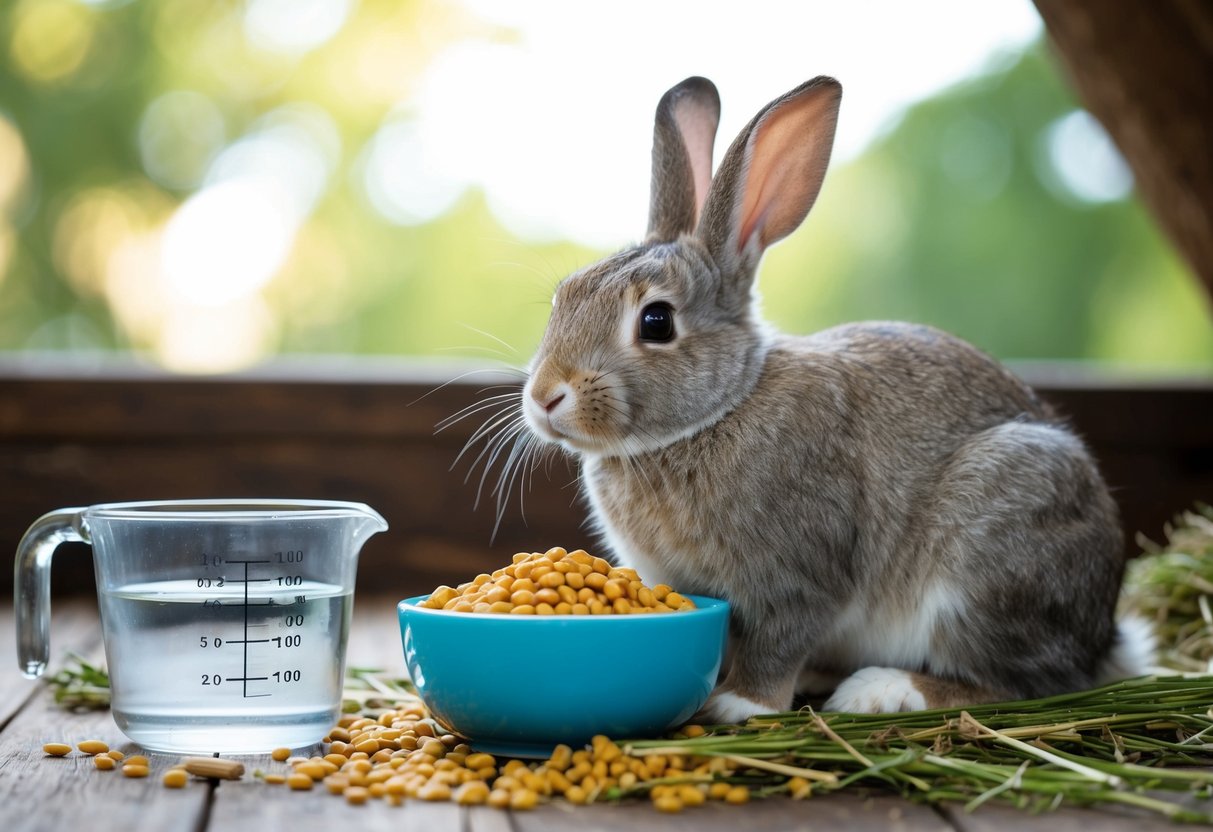
Rabbit pellets can be a good addition to their diet, but they should not be the main focus. Aim to give about 1/4 to 1/2 cup of pellets per day, depending on your rabbit’s size. Choose high-quality pellets that are high in fiber and low in calcium. Look for brands that contain at least 18% fiber.
Make sure your rabbit’s pellets do not have too many seeds, nuts, or added sugars. These can harm your rabbit’s health over time. Monitoring portion sizes helps prevent obesity in your furry friend.
Fresh Greens: For a Balanced Diet
Fresh leafy greens offer essential vitamins and minerals for your rabbit. You can feed them a mix of greens like romaine lettuce, cilantro, and parsley. Start with a small amount, about 1 cup of greens per 2 pounds of body weight.
Introduce new greens gradually to avoid digestive upset. Always wash the greens thoroughly to remove any pesticides. Avoid feeding your rabbit starchy vegetables such as carrots or potatoes, as these can lead to weight issues.
Special Considerations
When feeding your rabbit, it’s important to tailor their diet based on their age and to ensure their digestive health. Different life stages require specific nutrition and care to keep your bunny happy and healthy.
Age-Specific Diet Recommendations
Young rabbits and senior rabbits have different dietary needs. For young rabbits, ages 8 weeks to 7 months, it’s best to offer high-quality pellets and unlimited hay. You should provide approximately 1/4 to 1/2 cup of pellets daily, along with fresh vegetables that help with growth.
For senior rabbits, typically over 7 years old, the focus shifts to maintaining weight and digestion. They may need softer pellets and more hay since older rabbits often face dental issues. Watch for signs of weight loss or changes in eating habits, as these may indicate health issues.
Ensuring Digestive Health
Digestive health is crucial for your rabbit. A balanced diet rich in hay, fresh vegetables, and limited pellets helps prevent issues like GI stasis. Ensure your rabbit has unlimited access to grass hay, as it promotes gut motility.
Introduce fresh vegetables slowly and watch for any changes in droppings. If you notice soft stool or a decrease in appetite, reassess their diet immediately. Keeping hay as their main food source will help keep their digestive system functioning properly.
Treats and Snacks

Rabbits love treats, but it’s important to keep them healthy. Their digestion is sensitive, so you should limit treats to about 1-2 tablespoons per day.
When choosing treats, stick to safe options. Some good choices include:
- Fresh herbs like parsley and basil
- Small pieces of fruit such as apples or strawberries (just a little!)
- Vegetables like bell peppers or broccoli
You should always introduce new treats slowly to avoid tummy troubles. Also, avoid giving your rabbit processed snacks, chocolate, or anything high in sugar, as these can be harmful.
Timothy hay is a great snack! It helps with digestion and keeps your rabbit’s teeth healthy. You can also offer hay as a primary food source, as it should make up most of their diet.
Remember, fruits and veggies should be an occasional delight, not daily staples. Keeping treats to a minimum ensures your rabbit stays happy and healthy!


