
People usually think of owls as quiet, but honestly, their sounds can really surprise you depending on the species. Some owls belt out loud hoots or even piercing screams, while others stick to softer calls that you might not even notice unless you’re paying close attention.
The volume of an owl’s call depends on the species and what it’s trying to do at that moment.
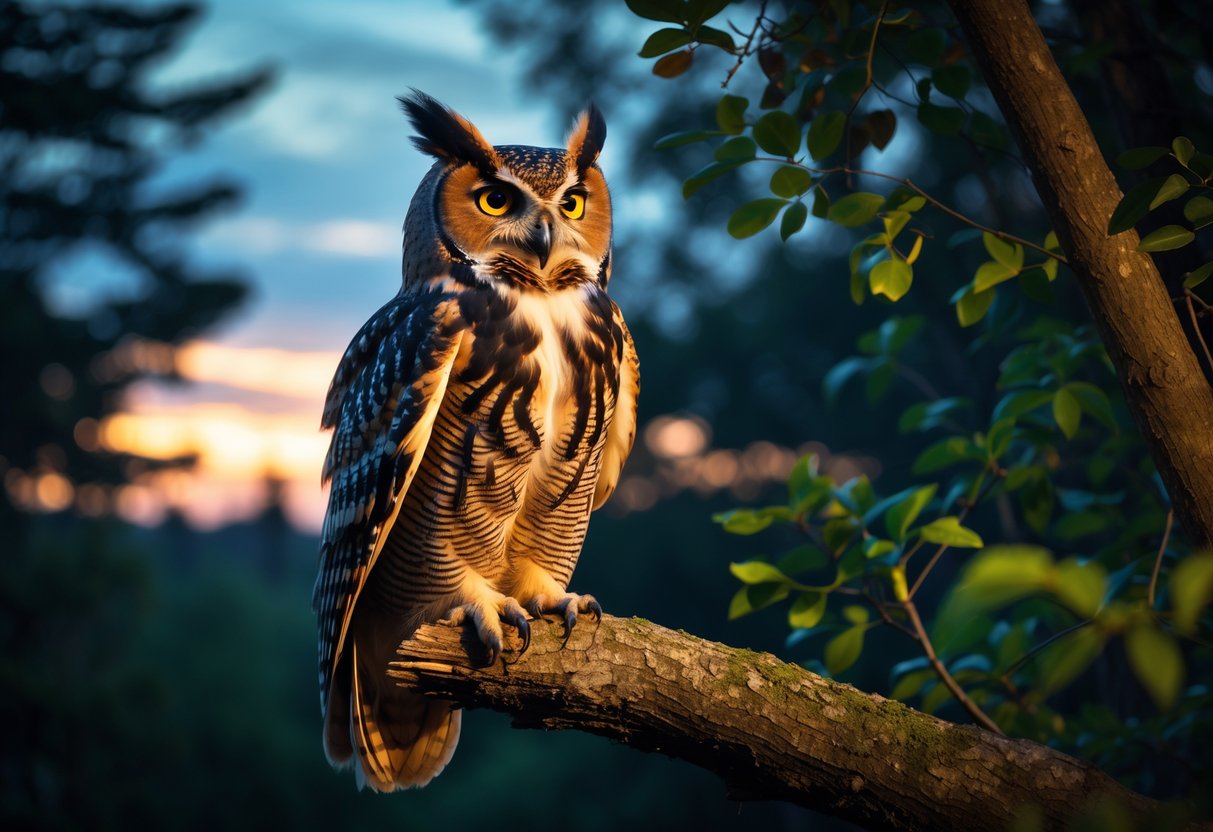
You might walk outside at night and hear some owls hooting so loudly it almost echoes, but then there’s the Barn Owl, which lets out this sharp, eerie scream that can really catch you off guard. Some owls, though, just fly by almost silently—you barely hear a thing when they’re hunting.
Owls use calls to communicate, claim their space, or attract a mate. The volume? Well, it usually matches whatever the owl needs right then.
Ever wondered how close you have to be to actually hear an owl? Or maybe why some hoots just fade into the background while others seem to cut through the night? You’re not alone.
Let’s dig into what makes owl sounds so unique—and just how loud these mysterious birds can get.
How Loud Are Owls Compared to Other Birds?

Owls beat most other birds when it comes to flying quietly, especially if you compare them to hawks. Their calls? Usually softer, but somehow they still manage to carry through the darkness.
If you pay attention to both their flight and their calls, you’ll start to appreciate how owls keep a low profile and hunt so well.
Typical Owl Call Volumes
Most owl calls fall between 50 and 60 decibels. That’s about as loud as people chatting in a living room.
Their hoots, whistles, or screeches echo through forests at night. It’s how they talk to each other or claim their territory without making a big scene.
Owls often keep their calls soft enough not to spook prey, but loud enough for other owls to hear.
This balance lets them stay sneaky while they hunt or raise chicks.
Comparison With Hawks and Other Raptors
Hawks really crank up the volume, with calls sometimes louder than 70 decibels—think city traffic.
Their wing beats are noisy, too. Hawks flap quickly and have stiff feathers, so you hear them coming.
Owls, though, have these special wing feathers that muffle their flight, letting them glide by almost silently.
You probably won’t hear an owl’s wings overhead, but a hawk? No contest.
This silent flight gives owls a huge edge when they’re sneaking up on dinner at night.
If you’re curious about how owls pull off this trick, check out the silent flight of owls.
Different Owl Species and Their Unique Sounds
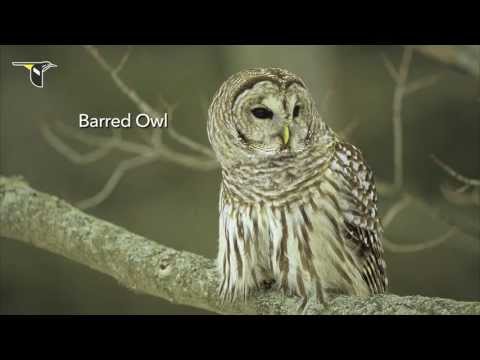
Owls each have their own signature calls. Some keep it classic with patterned hoots, while others go for screeches or even quiet squeaks.
You’ll notice some owl calls ring out loud and clear, echoing through the night, while others barely rise above a whisper.
Barred Owl Hoots and Screeches
Barred Owls get attention for their clear, rhythmic hoots. Their call sounds like, “Who cooks for you? Who cooks for you-all?”—eight or nine notes, and it’s surprisingly easy to pick out if you’re listening.
Their hoots travel far through the woods, so you might hear them even if you’re not that close.
But Barred Owls don’t just stick to hooting. They’ll let out harsh screeches or even growls if they feel threatened or need to defend their turf.
Depending on what’s happening, you might hear a calm hoot or a sharp screech.
Great Horned Owl Calls
Great Horned Owls have that classic, deep hoot you probably picture when you think of an owl.
They usually hoot in bursts of three to five notes, and the sound is strong enough to echo through the trees.
But they don’t stop at hooting. Sometimes they make a cat-like “MEEE-Owww,” or even bark and scream if they’re upset or warning others.
All these sounds help you figure out what mood the owl is in—if you listen closely, you might start to pick up on their meaning.
Snowy Owl and Short-Eared Owl Vocalizations
Snowy Owls aren’t as chatty as some other owls. When they do call, it’s a deep, urgent hoot, almost like a warning.
They’re more likely to make these sounds during the day, especially in the Arctic where the sun barely sets.
Short-Eared Owls go for a quick, sharp “whinny” sound. Their calls are softer and shorter than those of Great Horned or Barred Owls.
You probably won’t catch them hooting much, but if you’re out at twilight, listen for that fast, high-pitched call—especially if they’re flying or near their nest.
Barn Owl and Long-Eared Owl Sounds
Barn Owls don’t hoot like most other owls. They let out a long, eerie scream or even a weird hiss.
You might hear this loud scream in the dark, and honestly, it can startle you if you’re not expecting it. It’s one of those sounds you won’t easily forget.
Long-Eared Owls, on the other hand, make a soft “whoop” or sometimes a few low trills. Their calls sound quieter and much more secretive.
They use these sounds to keep hidden from predators and prey alike. If you’re wandering near thick woods at night, you might just catch their call—though you’ll probably need to be pretty close to notice it.


