
You’ll usually spot a fawn sticking close to its mom for about a year. The little one weans at around 3–4 months but hangs around, learning the ropes of survival.
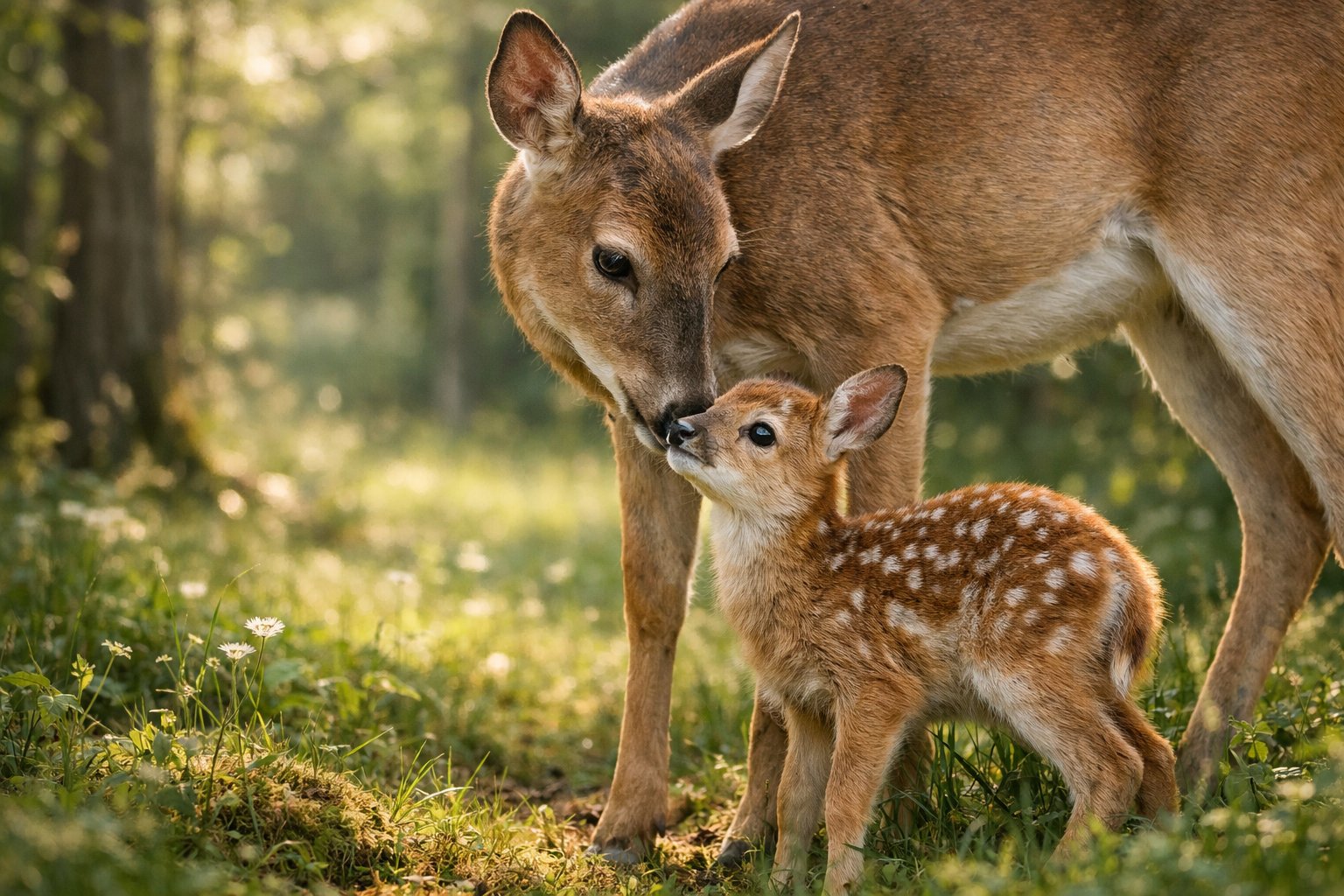
At first, the doe hides her fawn and slips back just to nurse it. She teaches the fawn where to eat, sleep, and how to avoid trouble.
Most fawns stay with their mama for about a year, building up strength and skills before heading out solo.
Curious about why fawns hide alone, when they stop nursing, or what pushes them to leave? Well, the next bits dive into how growth, food, and safety shape their journey.
How Long Does a Baby Deer Stay With Its Mama?

A fawn leans on its mom for food, safety, and learning how to live in the wild. Mom handles nursing, shows the fawn what to eat, and eventually lets it go when it’s ready.
Stages of Maternal Care and Bonding
Right from birth, the doe hides her fawn and keeps her scent down. Newborns often freeze in tall grass while mom heads off to eat, but she comes back a few times a day to nurse.
This sneaky routine keeps predators from sniffing out the baby. The bond between mother and fawn runs deep in those first weeks.
The doe licks her fawn and even eats its droppings to keep everything scent-free. Nursing gives the fawn vital nutrition and antibodies, but it also teaches the little one when to follow and when to bolt.
By the time the fawn hits 2–8 weeks, it starts nibbling on plants and learning where to find food. Mom shows it warning signals and escape routes.
These lessons stick—they’re what help the young deer dodge danger and fit into the family group.
Timeline to Independence for Fawns
Most fawns get weaned by 10–16 weeks. They can munch on plants by then, but you’ll still see them hanging around their mom.
True independence usually shows up later, somewhere between 6–12 months. Young males tend to leave their home turf in their first year to find their own space.
Females, though, often stick closer to where they grew up and might even form small groups with their mothers. By about a year, most fawns act like independent deer, but some still tag along with mom through fall and winter.
If food runs low or mom has new fawns, she might nudge the older one out sooner. Local conditions and how crowded the area is with deer can change the timing, so there’s no one-size-fits-all answer.
Differences Among Deer Species
Different deer species follow a similar script, but with their own twists. White-tailed deer fawns usually stay with mom for about a year.
Some species, especially those on islands or in areas with less danger, might stick together longer. Where predators are thick, moms may push their fawns to go solo earlier.
Your local deer, the climate, and how many deer live nearby all play a part in how long a young one stays with its mom.
If you want more details for your area, check out local wildlife pages or guides like this one on how long fawns stay with their mothers.
Development and Survival of Fawns

Fawns count on their mothers for food and safety, and to learn the basics of survival. Early on, it’s all about nursing and hiding.
Later, they practice running, nibble on plants, and join up with family groups.
Early Life: Nursing and Hiding
Most white-tailed fawns weigh somewhere between 6–10 pounds at birth. In those first few weeks, your fawn will nurse a lot.
Doe milk packs in the fats, proteins, and antibodies the fawn needs while its gut and immune system get up to speed. Moms often leave their fawns alone for long stretches to keep predators away.
The fawn’s spots and pale coloring help it blend in with the grass and dappled sunlight. Sometimes, you might spot a fawn lying still in a “form” while mom’s off feeding.
She comes back a few times a day to nurse. If you stumble upon a fawn by itself, don’t touch it.
Your scent can actually make its mom abandon it. Wildlife rehabbers always say: just leave the area so the mother feels safe to return.
Survival Skills and Camouflage
Camouflage and a faint scent give fawns their best shot at staying hidden. Those white spots break up their outline and match the forest shadows.
This trick works best where there’s thick cover and tall grass. Predators—coyotes, bobcats, bears, foxes—make the first month a real gamble.
Survival also depends on good habitat and plenty of food. Bad weather, too many predators, or poor habitat can really hurt their chances.
Moms teach their young where to hide, when to freeze, and which spots are safest. As the fawn grows, you’ll notice it gets more alert and moves into thicker cover.
Learning Independence and Social Behavior
Around four weeks in, your fawn can already run. It starts to spend more time following its mother.
Nursing keeps going for several months, but the fawn gradually adds grasses, leaves, and forbs to its meals as its gut gets used to them. Most white-tailed deer fawns usually finish weaning between 8 and 12 weeks, though they stick close to their mothers for much longer.
As the months go by, female fawns typically stay near their mothers and join up with other does. Male fawns, on the other hand, tend to leave before the next breeding season—probably to avoid inbreeding, which makes sense, right?
If you watch how they move or group up, you’ll learn a lot about their home range and how crowded the local population is.
Food abundance during the fawning season and the quality of the habitat really shape how fast fawns grow and how many survive. When resources are plentiful, more fawns make it to their first year, and the local deer population stays pretty steady.


