
Ever wondered how fast a deer can really run? Most deer can hit speeds between 30 and 50 miles per hour, depending on their species, size, and what’s going on around them. That burst of speed helps them dodge predators and makes for some pretty wild, zigzagging dashes if you ever catch one in action.
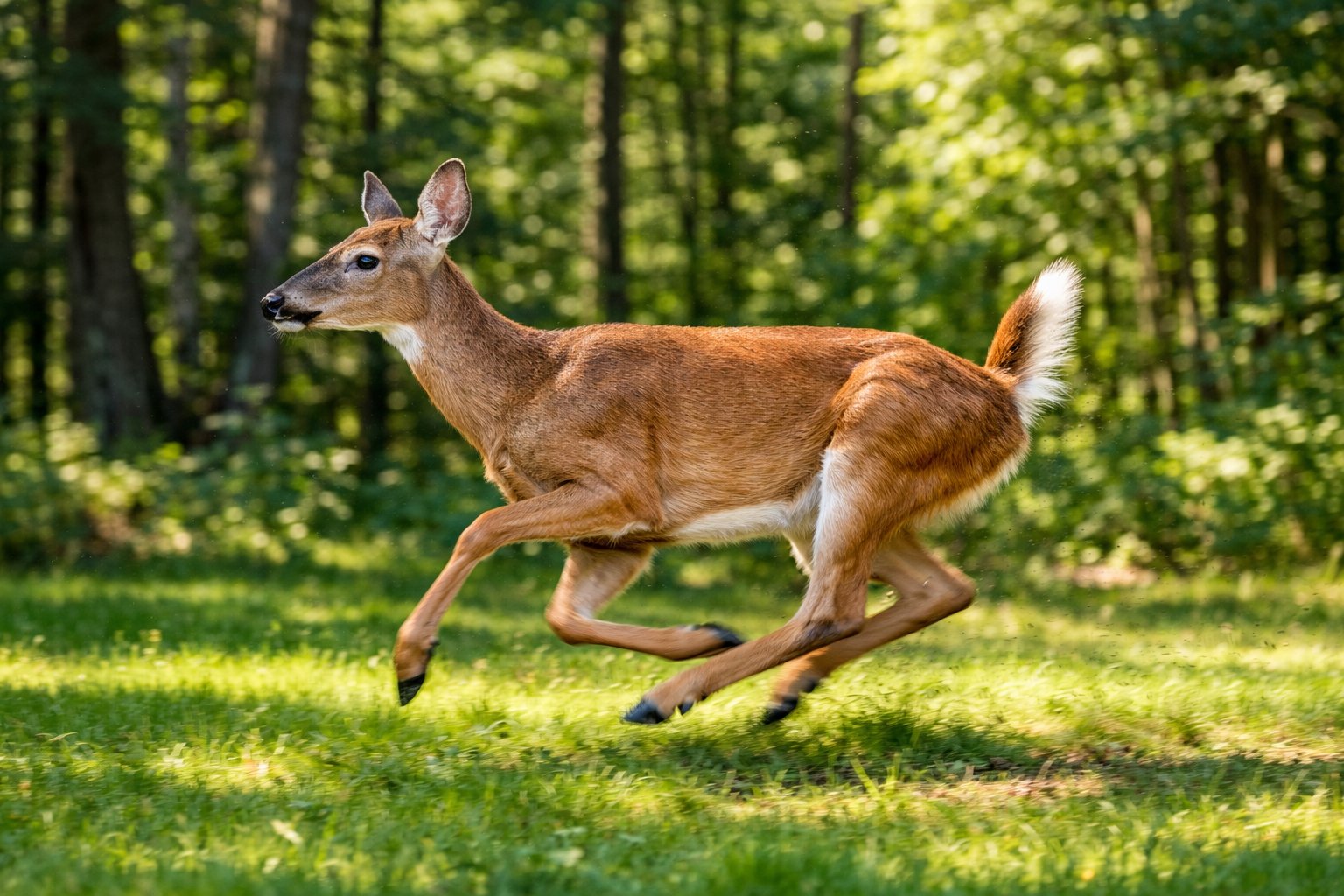
Let’s dig into which deer species are the fastest, what holds them back, and how things like terrain, age, and stress can mess with their pace. You’ll get clear speed ranges, real-world comparisons between different deer, and some simple reasons why certain deer just outpace the rest of the Cervidae family.
How Fast Can a Deer Run: Facts, Speed Ranges, and Influencing Factors

Deer can really move when they need to. They rely on quick sprints, sharp turns, and their knowledge of the land to get away from danger.
Their speed changes based on species, age, terrain, and how healthy they are. You’ll probably notice these differences if you’re out hiking or hunting.
Maximum Running Speeds Across Deer Species
Different deer species have their own top speeds. White-tailed deer usually sprint up to around 35–45 mph for a few seconds when they’re out in the open.
Mule deer can hit similar speeds, especially on flat ground. Red deer often max out near 40 mph.
Caribou and some of the bigger species can sometimes reach about 50 mph, though that’s pretty rare.
Deer only hit those top speeds for a moment or two. They’ll slow down to a fast trot or just keep moving steadily once the danger passes.
You won’t often see a deer sprinting flat-out for more than a few hundred yards.
Factors Influencing Deer Speed and Agility
A deer’s age and health make a huge difference. Younger, fitter deer can speed up and change direction faster than older or injured ones.
If a deer is pregnant or carrying extra fat, it won’t run as fast.
The ground matters, too. Open fields let deer really open up, but thick brush, hills, or deep snow slow them down and force them to zigzag more.
Weather and footing play a role—wet ground or ice can make a deer more cautious and slow things down.
Anatomy and Adaptations for Speed
Deer have long, muscular hind legs that give them a strong push-off. Their muscles are built for quick bursts, not marathons.
A flexible spine lets them stretch their stride out when they’re running full tilt.
They’re light on their feet, and their narrow hooves help them cross all sorts of ground without wasting energy.
Big eyes and sharp reflexes help them react fast. All these traits work together, so deer can use speed, leaping, and sudden turns to get away from threats.
Deer Speed Versus Predators and Hunters
Predators like wolves and coyotes don’t always rely on speed alone. Wolves might run 35–40 mph in short bursts, but they usually use teamwork and stamina to catch deer.
Coyotes can reach similar speeds, sometimes over 40 mph.
If you’re out hunting or hiking, keep in mind that deer depend on quick acceleration, cover, and knowing the terrain. Hunters need to be ready for a deer’s sudden sprint or zigzag.
If you spot a deer near a road or trail, expect it to move unpredictably—give it some space.
Deer Species and Speed Comparisons

Not all deer are built the same. Some species are sprinters, while others mix speed and endurance to get away or travel long distances.
White-Tailed Deer Speed and Behavior
White-tailed deer usually hit around 30 mph in short bursts. You’ll often see them using quick, bounding leaps and sharp turns to dodge predators—or even cars.
Young, healthy adults hit top speed more easily than older or injured deer.
They’re really agile. White-tailed deer often jump fences or dive through brush, zigzagging instead of running in a straight line.
During the rut, bucks move faster and more often as they chase does. Their escape moves depend more on sudden jumps and quick turns than on running flat-out for long stretches.
Mule Deer and North American Species Performance
Mule deer live mostly in the western parts of North America and can reach about 35 mph.
You’ll notice how they use big, powerful jumps to cross rocky or open ground quickly. Their big ears and strong legs help them spot danger and get away fast.
White-tailed deer move quicker through woods and brush, while mule deer do better in open, rugged areas. Caribou and elk run faster than most, but mule deer strike a balance between speed and being sure-footed in the mountains.
Elk, Moose, and Other Large Deer
Elk and moose are much bigger, but they’re still surprisingly quick.
Elk can hit about 45 mph if they’re alarmed. You’ll see them sprint straight across meadows to escape.
Moose can get up to 35 mph, even though they weigh hundreds of kilos. Their size makes sharp turns tough, so they prefer open spaces to build up speed.
Red deer, found in Europe and parts of Asia, run about as fast as elk. They often move quickly during migrations or when something spooks them.
The Fastest Deer Species: Reindeer, Pronghorn, and Roe Deer
Reindeer (caribou) can really move, clocking in at nearly 50 mph when something spooks them. They mix speed with serious endurance, especially during those long, tough migrations.
Pronghorn aren’t actually deer, but people love to compare them anyway. They hit about 55 mph and can keep up that pace longer than most hoofed animals.
Roe deer are smaller and pretty nimble. They usually top out around 30–35 mph. When danger shows up, they count on quick bursts and hiding in thick cover.
If you look at these animals side by side, you’ll notice that their size, where they live, and how far they travel all play a part in how and when they run. Makes you wonder how much more they could do if they really had to, right?


