
So, you’re thinking about keeping bees. Maybe you’re wondering: how much space do you actually need? Here’s the thing—your garden doesn’t have to be enormous, but bees do need enough flowers and plants to gather nectar and pollen.
A garden with about 1,000 square feet of flowering plants usually supports one healthy bee colony.
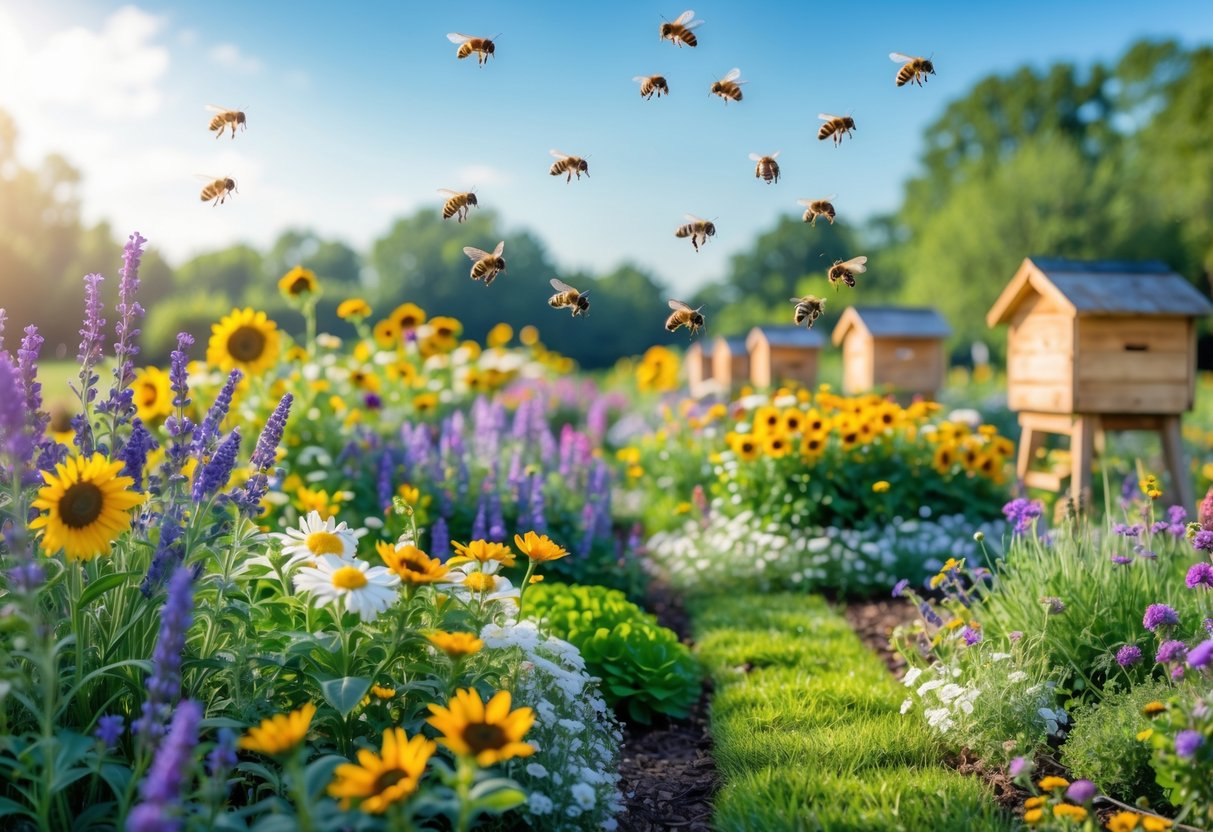
Bees often fly up to four miles for food, but they’ll do much better if you give them plenty to eat right at home. The variety and quality of your plants matter way more than the exact size of the garden.
If you pick the right flowers and keep a bit of space around your hive, you’ll make a cozy spot for bees to hang out and get to work.
You’ll also need to leave about five feet of clear space around each hive. That helps keep bees safe and gives you room to move.
Planning for both the bees’ foraging and their hive space is key. Want to know how to set this up? Let’s dive in.
Determining the Ideal Garden Size for Bees

When you’re planning your bee garden, keep a few things in mind. You need space for the hive, room to move around it, and enough land if you want more than one hive.
These factors help your bees stay healthy and productive.
Minimum Space Requirements for a Single Hive
A single beehive is about 22 inches by 16 inches—so roughly 1.5 feet by 1.3 feet. But you’ll need more than just that footprint.
Try to give at least 10 square feet around the hive. That way, bees can move freely, and you have room to manage the hive without stressing them out.
You’ll also want enough flowers nearby for nectar and pollen. That’s pretty important for both pollination and honey.
If you only have a small garden, you can squeeze a hive into a 3 foot by 3 foot area. Just make sure you’ve packed the surrounding space with a good mix of plants.
Safe Distances and Hive Placement
For everyone’s safety, don’t put your hive right next to busy walkways or where kids play. Leave at least 5 feet of clear space on all sides.
That buffer lets you work comfortably and keeps accidental run-ins with bees to a minimum.
Point the hive entrance away from paths and play areas. That way, bees are less likely to cross paths with people.
Think about wind and give the hive a bit of shade, especially in summer. Good placement helps bees fly smoothly and boosts pollination in your garden.
Multiple Hives and Acreage Recommendations
If you’re adding more hives, space matters even more. For two or three hives, set aside at least 20 to 30 square feet to avoid crowding.
Each hive needs its own little zone to cut down on swarming and disease.
If you’re dreaming bigger—maybe a small commercial setup—you might need up to five acres. That land should be packed with different flowers and have water for the bees.
Check out more details on minimum garden size for bees and space needed for hives.
Key Factors That Influence Garden Space for Bees

When you’re making a bee-friendly garden, a few things really shape how much space you’ll need. Local rules, the kinds of plants you have, how close your neighbors live, and how you keep bees happy in tight spaces all play a part.
Beekeeping Laws and Local Regulations
Before you set up your hive, check your local beekeeping laws. A lot of places have rules about how close hives can be to property lines or neighbors.
Sometimes you’ll need a permit, or maybe there’s a limit on hive numbers. Some spots even require fences to keep bees from wandering.
These rules protect you, your neighbors, and the bees themselves. Knowing the regulations ahead of time saves you headaches and helps you plan your garden and hive spots.
Bee-Friendly Gardens and Forage Availability
Bees need a good mix of flowers for food. The more types you plant, the happier your bees will be.
Even with just 10 square feet, you can keep a couple of hives if you fill the space with lots of blooms. Native flowers are the easiest since they bloom right when bees need them.
Try to plant flowers that bloom at different times. That way, your bees always have something to eat—even if your garden isn’t huge.
Neighbour Considerations and Safety
Bees will zip around your garden, and sometimes they’ll end up near your neighbors. It’s just how it goes.
Give at least five feet of space around your hive for easy working and clear flight paths. Don’t put hives by busy walkways or playgrounds.
It’s smart to chat with your neighbors before you start. Letting them know your plans can ease any worries about stings or swarms.
You can use hedges or screens to guide bees’ flight paths and keep everyone safer.
Urban and Small Space Solutions
You can keep bees even if your garden’s on the small side. With a little smart planning, a vertical or compact garden packed with native and flowering plants really does the trick.
You only need about 22 by 16 inches of space for a hive. That’s not much at all. If you design your space well, you’ll save room and make life easier for your bees.
Try setting up corridors or simple paths so bees can get to flowers beyond your own property. It’s a small change, but it helps a lot.
Living in a city? You might want to look at roof gardens or even balcony planters filled with bee-friendly plants. It’s surprising how much pollination you can support, even if you barely have any ground space.
Honestly, your bees don’t need a big yard to do well. For more inspiration on tiny gardens, check out how much space do you need for a beehive.


