
If you want to avoid bee attacks, staying calm really helps. Don’t make sudden moves—bees notice that kind of thing.
Wear snug clothes and move slowly. That way, bees are less likely to see you as a threat and sting you. Skip the bright colors and strong scents. Those just draw bees in or make them edgy.
Try not to swat at bees or get noisy around them. If a bee acts aggressive, just back away slowly and look for a safe, enclosed spot.
Knowing a bit about how to protect yourself makes a big difference, especially if you ever end up near a swarm or a bunch of irritated bees.
How to Prevent Bees From Attacking You

To avoid bee attacks, you need to understand how bees behave. Try to steer clear of their nests, dress right, and pay attention to what’s going on around you.
Staying calm and moving carefully lowers your chances of getting stung.
Understand Bee Behavior and Warning Signs
Bees don’t usually attack unless they feel threatened. If you hear them buzzing loudly near you or see them flying close to your head, they’re probably telling you to back off.
Some bees, like Africanized honey bees (people call them killer bees), get defensive really fast.
If you spot bees swarming or guarding a spot, just don’t get close. Angry buzzing and quick movements toward you mean they’re ready to defend their hive.
Try to stay calm and walk away slowly if you notice these signs.
Avoid Provoking Bees and Hives
Don’t swat at bees or move suddenly. That just annoys them and can trigger an attack.
If you find a hive or nest, keep your distance. Bees get protective about their home, and even the calm ones can turn aggressive if you mess with their hive.
If you accidentally get too close, walk away slowly—don’t run or jump. Loud noises or vibrations from things like lawn mowers can also upset them.
Move gently instead of quickly to avoid setting them off.
Proper Clothing and Scents
Wear snug clothes that cover your skin. Tuck your pants into your socks or shoes, and maybe use tape at your sleeves. That way, bees can’t sneak inside and sting you.
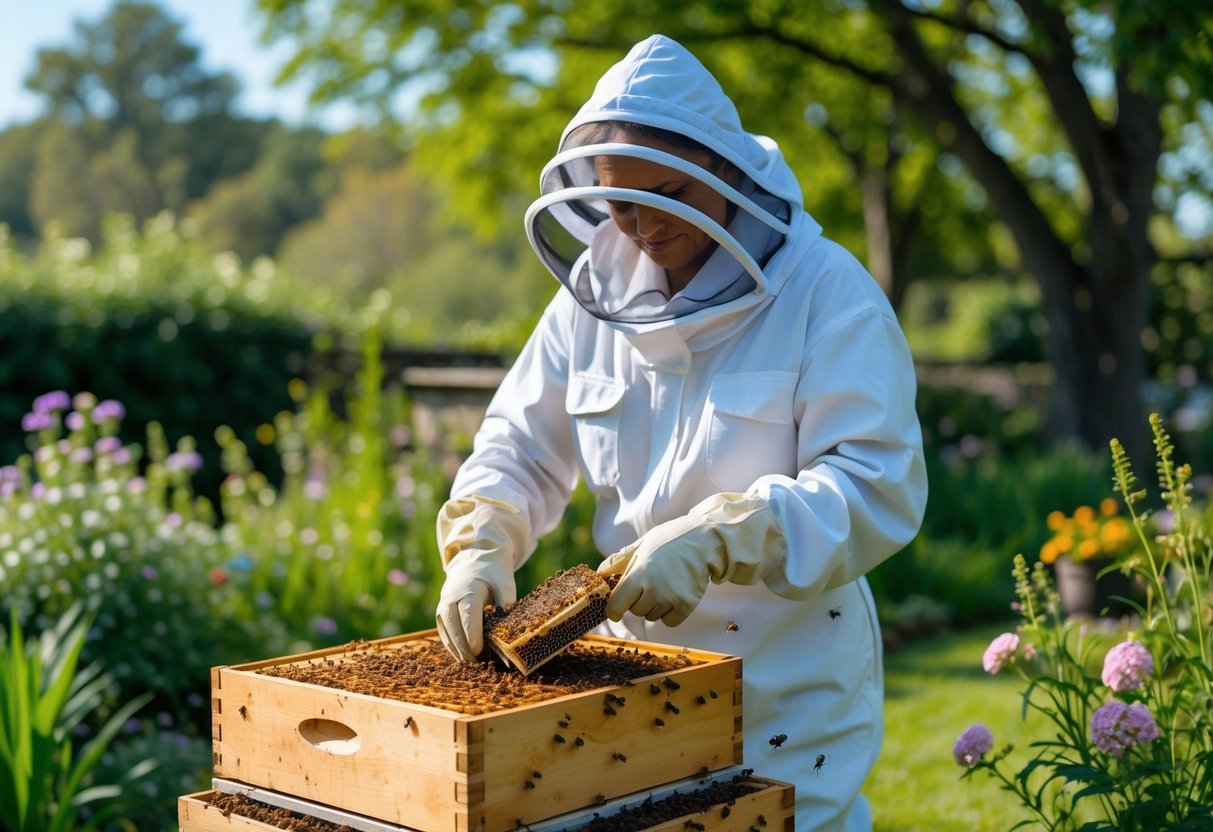
A beekeeper’s hat or mesh net is a good idea for your face.
Skip bright colors, floral prints, and strong perfumes or scented lotions. Bees love those smells and colors, so go for plain, light-colored clothes instead.
Smooth fabrics seem to bother bees less, too.
Environmental and Seasonal Considerations
Bees get more active in warm weather and certain seasons. Early mornings or cool evenings are safer if you need to work outside.
Try to avoid using loud tools like mowers near bees. Vibrations and smells from those can stress them out.
When flowers and food are scarce, bees—especially aggressive ones like Africanized honey bees—get even more protective of their nests.
If you see a lot of bee activity or flowers, it’s probably smart to stay clear of the area.
What to Do During and After a Bee Attack or Sting

If bees start attacking, try to stay calm and act fast. The way you move, what you avoid, and how you handle the sting all matter for your safety.
Effective Escape Strategies
If bees attack, don’t swat or flap your hands. That only makes things worse.
Move away fast but don’t panic. Run in a straight line to get out of their path.
Don’t zigzag or jump in water—bees might wait for you at the surface.
Head for an enclosed space, like a car or building, and get inside as quickly as you can. Shut the doors and windows behind you.
If you can, use your clothes or a soft brush to gently sweep bees off. Cover your face and neck, since those spots are extra sensitive.
Critical Mistakes to Avoid
Try not to panic or scream. Loud noises and sudden moves can make bees even angrier.
Don’t swat at the bees. When you do, they release pheromones that call in more bees.
Don’t jump in water—bees can wait for you.
Stay away from bushes, trees, or tall grass, since bees might head back to their hive there.
Don’t ignore a sting. Even if it doesn’t hurt much, leaving the stinger in lets more venom get into your skin.
Bee Sting Removal and Initial Care
If you get stung, remove the stinger as fast as you can. Use your fingernail, a credit card, or a piece of gauze to scrape it out.
Don’t squeeze the stinger—this pushes more venom in.
Wash the area with soap and water to prevent infection.
Put a cold compress or ice pack (wrapped in cloth) on the spot to help with swelling and pain.
Taking an over-the-counter pain reliever or antihistamine can help with the discomfort and itching.
Don’t use pesticide products or random home remedies on the sting unless a doctor says it’s okay. Some things just make it worse.
Recognizing and Responding to Allergic Reactions
Keep an eye out for signs of an allergic reaction, also known as anaphylaxis. You might notice trouble breathing, swelling in your face or throat, a racing heartbeat, dizziness, or hives spreading across your skin.
If you spot any of these symptoms, call for emergency help immediately. Grab your epinephrine auto-injector and use it if you have one nearby.
Even if the symptoms seem mild, don’t let your guard down. Sometimes reactions can get worse fast, so watch closely.
For less severe reactions, try to stay calm. Remove the stinger, clean the area, and take an antihistamine if you need it.
Honestly, knowing what to do can really make a difference if you ever get stung by a bee. If you want more info on handling bee stings, check out what to do after a bee sting.


