
Ever wondered if honey bees can actually recognize you? Turns out, they can. Honey bees learn to spot and remember human faces, especially if you hang around their hive enough. So those little buzzing insects in your garden might be a lot sharper than folks give them credit for.
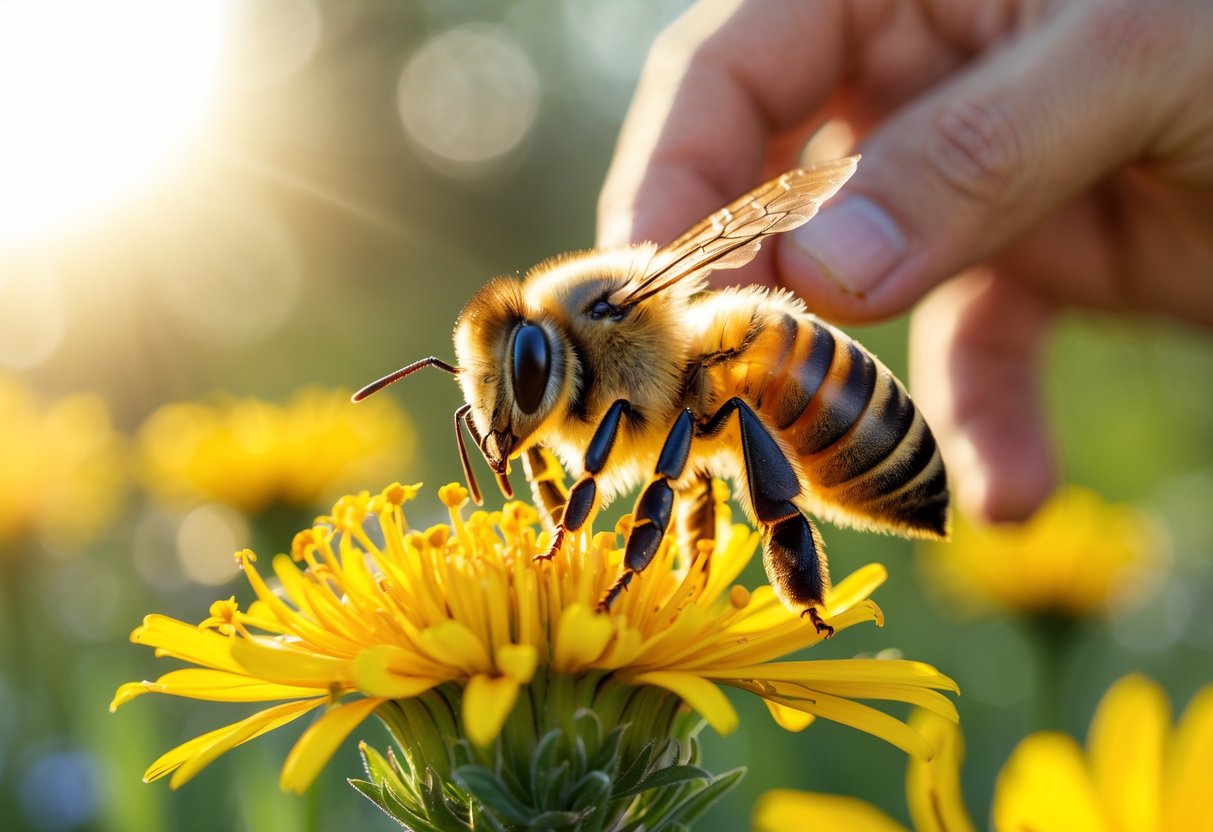
Even with such tiny brains, honey bees pull off some clever tricks to identify faces, kind of like how we do. Knowing this might change the way you see your trips to the hive—and maybe give you a new respect for these busy pollinators.
Curious about how bees remember you and what that means for your connection with them? Let’s dive into their surprisingly good memory skills.
Do Honey Bees Recognize You?

Honey bees have a knack for seeing and recognizing faces. Their brains, though tiny, use special ways to remember patterns and features.
This lets them tell faces apart—including humans they see a lot. Of course, there are limits to what they can pick up.
Scientific Studies on Bee Face Recognition
Scientists have shown that honey bees can actually recognize individual human faces, even with their small brains. Bees learn to spot features like your eyes, nose, and mouth by breaking a face down into simple patterns.
Researchers trained bees by pairing a certain face with sugar water, and the bees remembered it later. This means bees use their visual memory to identify humans they see again and again.
If you want more details, check out this honey bee face recognition research.
How Honey Bees Recognize Patterns and Features
Your face is a mix of patterns, and honey bees are pretty good at noticing details. Instead of seeing a face the way you do, bees focus on shapes, contrasts, and how features are arranged.
They use visual processing to piece together simple shapes into something more complex. This lets them tell faces apart based on how the features line up, not by recognizing a face like we do.
So, bees kind of remember a puzzle made of eyes and mouth shapes. That’s how they figure out who’s who.
Beekeeper Interactions and Familiarity
Bees often remember the folks who care for them—think beekeepers. If you work closely with a hive, honey bees start to recognize your face and even your movements.
This helps bees act differently around familiar people. They might be less defensive with someone they know.
It’s not exactly a deep friendship, but more of a learned response. If you’re curious about how bees relate to their caretakers, here’s more on bees forming familiarity with beekeepers.
Limitations of Bee Recognition Abilities
Bees can recognize faces, but their brains and eyes only take them so far. They don’t see faces the way humans do.
Bees focus on patterns and contrasts, not on unique features or emotions. Their memories don’t last as long as ours, and changes in lighting or angle can throw them off.
Mostly, bees use these skills to recognize other bees or things that matter for survival. Spotting human faces just happens to be a side effect of that.
If you want to dig deeper, this article on bee memory and recognition science is pretty interesting.
Understanding Honey Bee Intelligence and Vision

Honey bees have sharp eyes and surprisingly smart brains, especially for such tiny insects. They use these skills to find flowers, recognize landmarks, and even pick out human faces.
Their abilities help them survive and support the world around you.
The Role of Visual Processing in Bee Behavior
Honey bees depend a lot on their eyes to get around and talk to each other. Their vision picks up colors, patterns, and even ultraviolet light—stuff we can’t see.
This helps them find flowers full of nectar and steer clear of danger. It’s kind of wild to think they can remember faces, including ours.
Bees process what they see by zeroing in on key features, a bit like how we recognize people. This helps them spot beekeepers who visit often.
Their eyes and brains team up to process images quickly. This “active vision” lets them notice the details they need, even while flying.
That’s part of why bees are so good at finding food and making it back home.
Insect Intelligence Compared to Artificial Intelligence
Honey bees show some impressive smarts, considering their brains weigh only about 1.9 mg. They can learn, remember, and solve problems—traits that make up insect intelligence.
Some scientists even compare bee brains to artificial intelligence. Bees use simple but clever tricks to recognize patterns and faces.
These natural methods have inspired new ideas in robotics and computer vision, teaching machines how to solve visual puzzles more efficiently.
It’s kind of amazing, honestly. Bees manage to do all this with way less power than a computer, but their skills—especially in recognizing shapes and adapting to changes—are hard to beat.
Implications of Bee Cognition for Pollination and Ecosystems
Bee intelligence really shapes how pollination happens, which keeps so many plants and crops alive. When bees remember flowers or share info with each other, they collect nectar a lot more efficiently.
Bees recognize their environment and spot landmarks, so they keep coming back to their favorite flower patches. That habit boosts pollination and helps the whole ecosystem—especially the plants we count on for food.
Learning how bees think and see can actually help us improve beekeeping and conservation. If we respect their memory and learning, we’re more likely to protect these tiny pollinators and the natural systems they make possible.
If you’re curious, check out how honeybee intelligence affects pollination and ecosystems.


