
Touching a bumble bee can look tempting—they appear soft and fuzzy, right? Still, you really have to be cautious.
Touching bumble bees usually isn’t safe, since it stresses them out and can make them sting if they feel threatened. These insects don’t go around stinging for fun. They only use their sting when they need to protect themselves.
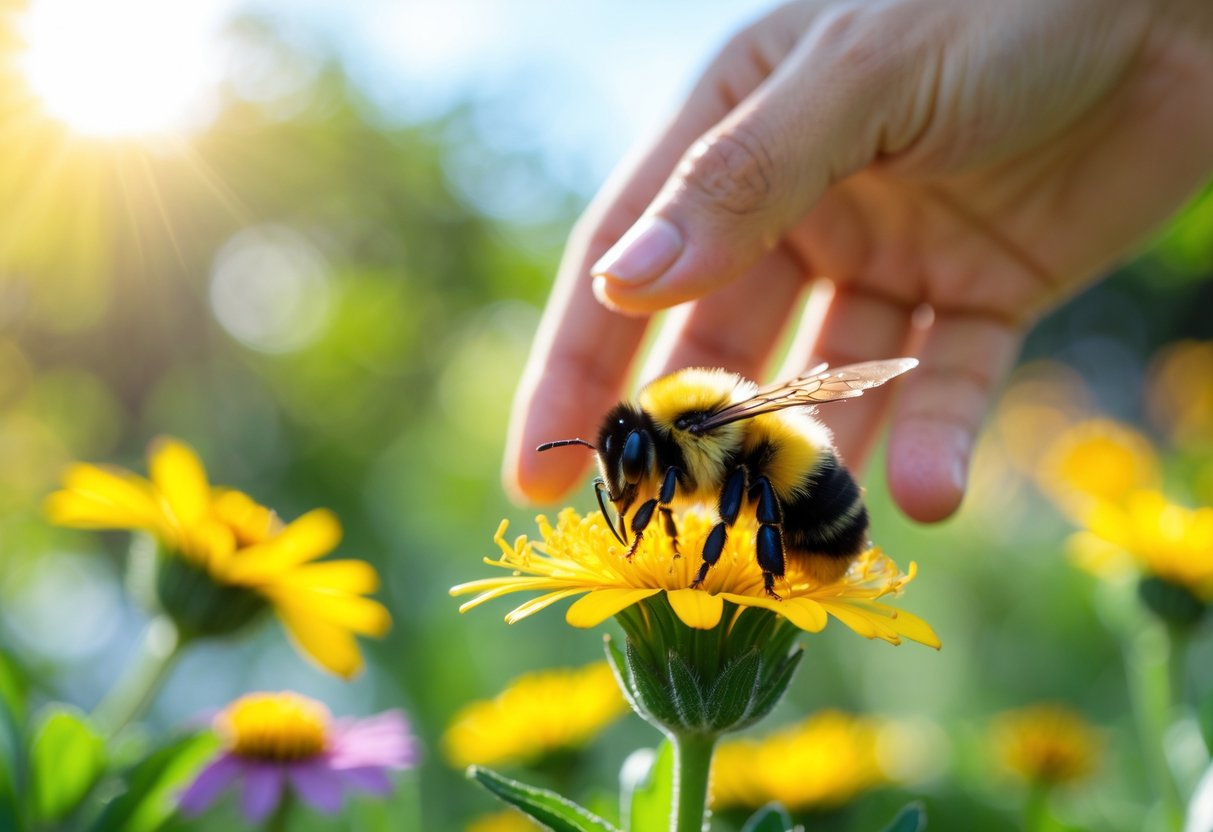
You can get a close look at bumble bees as they collect pollen. Most of the time, if you leave them alone, they’ll leave you alone too.
Learning to respect their space keeps you safe and lets the bees do their thing in nature. Want to know when or if it’s ever okay to interact with them? Stick around!
Is It Safe To Touch A Bumble Bee?

Touching a bumble bee brings some risks, mostly stings. If you know how bees behave and what triggers them, you’ll be less likely to get hurt.
Bumble bee stings aren’t as common as you might think, especially if you handle them with care and understand their nature.
Bumble Bee Stings: Risk Factors And Common Myths
Bumble bees sting mainly when they feel scared or threatened. They don’t just attack because you’re nearby.
Their sting hurts, causes redness and swelling, but honestly, it’s usually less painful than a honey bee sting.
People often think bumble bees are aggressive, but that’s not really true. Most bumble bees stay peaceful and only sting in self-defense or if someone disturbs their nest.
Wearing bright colors or making sudden moves near a bumble bee can up your chances of getting stung.
Differences Between Bumblebees And Honey Bees When Handling
Honey bees leave their stinger behind when they sting, which kills them. Bumble bees don’t do that.
Bumble bees can sting more than once because their stinger is smooth and doesn’t get stuck in your skin.
They’re bigger and fuzzier than honey bees, so they often look less threatening. Plus, they move slower.
Honey bees act more defensive and protect their hives pretty aggressively. Bumble bees seem more relaxed unless you bother them.
| Feature | Bumble Bee | Honey Bee |
|---|---|---|
| Stinger | Smooth, can sting multiple times | Barbed, stinger stays in skin, dies after sting |
| Aggressiveness | Less aggressive | More defensive |
| Size | Larger and fuzzier | Smaller and less fuzzy |
Understanding Bumblebee Behavior And Aggression
Bumble bees usually stay calm and focus on gathering pollen. If you spot one working on flowers, it’s probably not interested in stinging you.
They mostly sting if you grab them or move suddenly. Bumble bees react to vibrations and quick movements.
If you keep calm and move slowly, the bee feels less threatened. They don’t chase people like hornets or yellow jackets.
Usually, if you stay still, you’ll be fine.
When Bumble Bees Are Most Likely To Sting
Bumble bees defend their nests fiercely. If you get too close to a nest, you might get stung by several bees.
Away from the nest, they’re less protective and usually only sting if you handle them roughly.
The best time to avoid stings is when bees are busy collecting pollen. They’re less defensive then.
Try not to touch them during cold or rainy weather—bees get slower and more stressed, which can make them sting more easily.
Check out this guide to safe handling if you want more info.
How To Safely Interact With Bumble Bees

If you want to get close to bumble bees, stay calm and gentle. You can lower your chances of getting stung by learning to read the bee’s body language.
Remember, these pollinators play a big part in helping plants grow all around us.
Tips For Minimizing The Risk Of Being Stung
Move slowly and try not to make sudden movements. Bumble bees usually won’t sting unless you scare them.
If you actually want to touch one, let it walk onto your hand—don’t grab it.
Wear light-colored clothes since dark colors can attract bees. Skip strong perfumes or scented lotions; those can irritate them.
Never squash or pinch a bee, or you’ll probably get stung.
If you see a bumble bee gathering pollen, it’s busy and less likely to sting. That’s a good time to watch quietly or, if you’re careful, let it rest on you.
Always wash your hands after touching things bees have landed on.
Recognizing Signs Of An Agitated Bumblebee
A bumble bee that’s upset will fly loudly and dart around you. It might buzz close to your face or body as a warning.
If a bee raises its tail or looks like it’s ready to sting, just stop and stay still. Swatting or moving quickly can make things worse.
Watch for repeated aggressive moves and calmly step away if you notice them.
A peaceful bumble bee moves slowly and doesn’t hover around you. If you learn to spot these signs early, you’ll avoid stings and help keep the bee calm.
Bumblebees As Essential Pollinators In Your Garden
Bumblebees really shine as pollinators. Their fuzzy bodies pick up loads of pollen, which helps out all kinds of flowers.
They visit a surprising variety of plants. Fruits, veggies, and flowers in your garden end up stronger and healthier because of their hard work.
When you help keep bumblebees safe, you’re also protecting your garden’s pollination. Try planting things like lavender, clover, or sunflowers—they’ll thank you for the food and a comfy spot to rest.
Bumblebees like gardens that stay natural and chemical-free. If you skip the pesticides, you’ll see them stick around and thrive.
Honestly, inviting bumblebees into your garden just makes everything better. You’ll probably notice bigger harvests and a livelier garden.
Curious about getting up close? Check out this article on Can You Physically Hold a Bumble Bee? A Guide to Safe Handling.


