
Ever wondered how to tell if that bee buzzing by is actually a honey bee? You’re definitely not the only one. Once you know what to look for, spotting a honey bee gets a lot easier.
Honey bees usually look smaller than bumble bees. Their bodies are slender and fuzzy, with those classic golden-brown and black stripes. You’ll often catch them moving calmly near flowers or hanging around their hives.
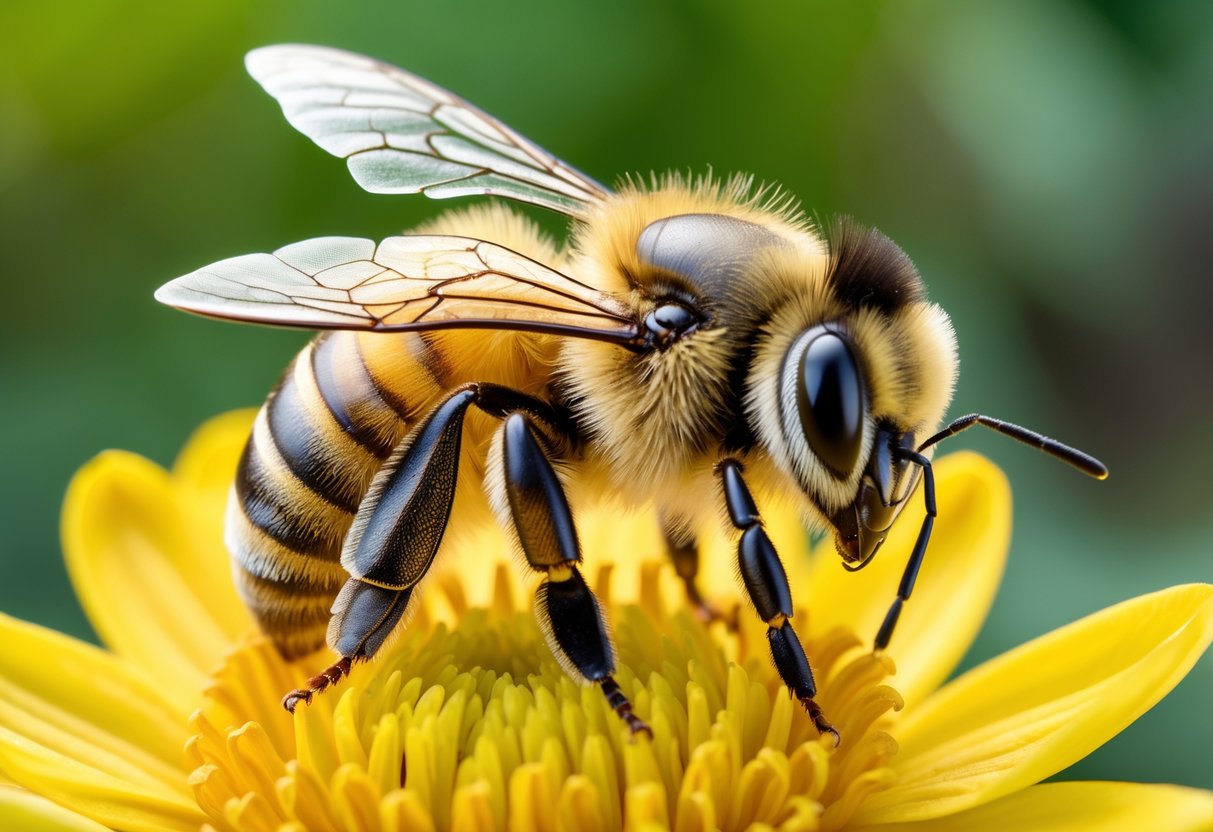
Where a bee lives and how it acts can also give you clues. Honey bees build hives in yards or gardens. Other bees, like bumble bees, tend to nest underground.
If you watch how they move and pay attention to their shape, you’ll start to pick out honey bees pretty quickly.
Learning these tips comes in handy whether you’re gardening, enjoying nature, or just curious about bees in general. Spotting the signs lets you appreciate their role without confusing them for other bugs.
For more details on what makes honey bees unique, check out how to identify honey bees in your garden.
How to Identify a Honey Bee

When you’re trying to spot a honey bee, focus on its shape, size, and the key parts of its body. Their main features include the eyes, antennae, wings, and legs.
You might also notice differences between the types of bees in a hive, like workers and drones.
Body Shape, Size, and Color
Honey bees have a pretty slender, oval body—about 15 mm long, give or take. Their color usually mixes golden-brown with black stripes.
Bumble bees look rounder and fuzzier, but honey bees have shorter hair on their bodies.
A honey bee’s body splits into three parts: head, thorax, and abdomen. The abdomen’s got those clear stripes and tapers to a point.
Worker bees come smaller than drones, though both share that same basic shape.
Unlike wasps, honey bees aren’t shiny or bright. Their duller color actually makes them easier to spot out in the wild, if you ask me.
Head Features: Eyes, Antennae, and Ocelli
Take a close look at a honey bee’s head. You’ll see two big compound eyes on the sides, made up of tons of tiny lenses. These eyes help them see wide angles.
Between those compound eyes, you’ll find three ocelli. They’re simple eyes that help detect light. They show up as three small dots on top of the head.
Their antennae are long and jointed. Bees use them to smell and touch things around them.
Worker bees have extra-sensitive antennae since they’re out gathering nectar and pollen most of the time.
Wings and Legs: Structure and Pollen Basket
Honey bees have two pairs of clear wings. The front wings are bigger, while the smaller hind wings hook together for flight.
If you listen closely, you’ll hear a steady buzzing sound as they fly.
Their legs look thin but don’t let that fool you—they’re strong. On the hind legs of worker bees, you’ll spot a special area called the corbicula, or pollen basket.
It’s a smooth, slightly concave spot with stiff hairs around it, perfect for carrying pollen from flowers.
Drones don’t have pollen baskets since they don’t collect pollen.
Sex and Caste Differences
Honey bee colonies include three types: workers (female), drones (male), and the queen.
Workers are smaller and handle most jobs—gathering food, guarding the hive, and so on. You’ll spot pollen baskets on their legs.
Drones look bigger and have rounder abdomens. Their eyes sit larger and closer together, which helps them spot the queen during mating flights.
Drones don’t have stingers or pollen baskets.
The queen is the biggest of the bunch, with a long abdomen. She usually stays in the hive, laying eggs.
You won’t find her out collecting pollen. Knowing these differences really helps you figure out which honey bee you’re looking at.
If you want more details, check out these tips on how to identify honey bees.
Distinguishing Honey Bees from Other Species

If you want to know whether you’re looking at a honey bee, focus on its size, shape, and how it acts compared to other insects. Some common look-alikes? Wasps, bumble bees, carpenter bees, and sweat bees.
Each one has unique features that make telling them apart a little easier.
Honey Bees vs. Wasps
Honey bees have a rounder, more compact body covered with tiny hairs. These hairs help them collect pollen.
Their color is mostly brown or golden with black bands.
Wasps look smoother and shinier, with a thin waist between the thorax and abdomen. They’re usually brighter yellow with sharp black markings.
Behavior gives you more clues. Honey bees stay pretty gentle and rarely sting unless they’re defending the hive.
Wasps? They can get aggressive and might chase you if they feel threatened.
Honey bees usually stick to flowers, gathering nectar and pollen. Wasps often hunt other insects or scavenge.
Difference from Bumble Bees
Bumble bees come bigger and fuzzier than honey bees. Their bodies look round and thick with hair, often black with yellow or orange bands.
Honey bees, on the other hand, are smaller and less hairy.
Bumble bees don’t build large hives like honey bees. Their nests are smaller and underground or tucked in hidden spots.
You’ll also notice bumble bees fly with a slower, noisier buzz. If you see a big, fuzzy bee moving slowly, it’s probably not a honey bee.
Carpenter Bees and Sweat Bees
Carpenter bees look a lot like bumble bees, but their abdomens are shiny and bare—no hair. Honey bees have fuzzy abdomens.
Carpenter bees like to bore into wood for nests. You might spot small holes in wood around your place if they’re nearby.
Sweat bees are much smaller and often show up in metallic green or blue colors. They’re attracted to human sweat because of the salt.
Unlike honey bees, sweat bees aren’t hairy and don’t make typical hives. If you notice tiny, metallic bees crawling on your skin or plants, those are probably sweat bees—not honey bees.
Other Common Bee Species
You’ll probably spot plenty of other bee species out there. Some look smaller and not nearly as fuzzy as honey bees.
Others show off different colors or have wings that don’t quite match the usual look. Honey bees, though, stand out with their squat bodies, two pairs of wings, and that fine hair all over.
Inside the hive, honey bees split into three main roles: queens, workers, and drones. This social setup really sets them apart from the more independent, solitary bees.
If you want to get better at recognizing these traits, it’s worth checking out some identification guides—like how to tell if it’s a honey bee.


