
Found a bees’ nest in your garden or lawn? That can be a bit worrying, especially if you’re not sure what to do next.
If you want to get rid of a ground bee’s nest safely, try gentle methods first—like flooding the area with water or piling mulch over the nest to encourage the bees to move on. Using harsh chemicals? Not a great idea. It usually doesn’t work well and it’s just bad for the bees.
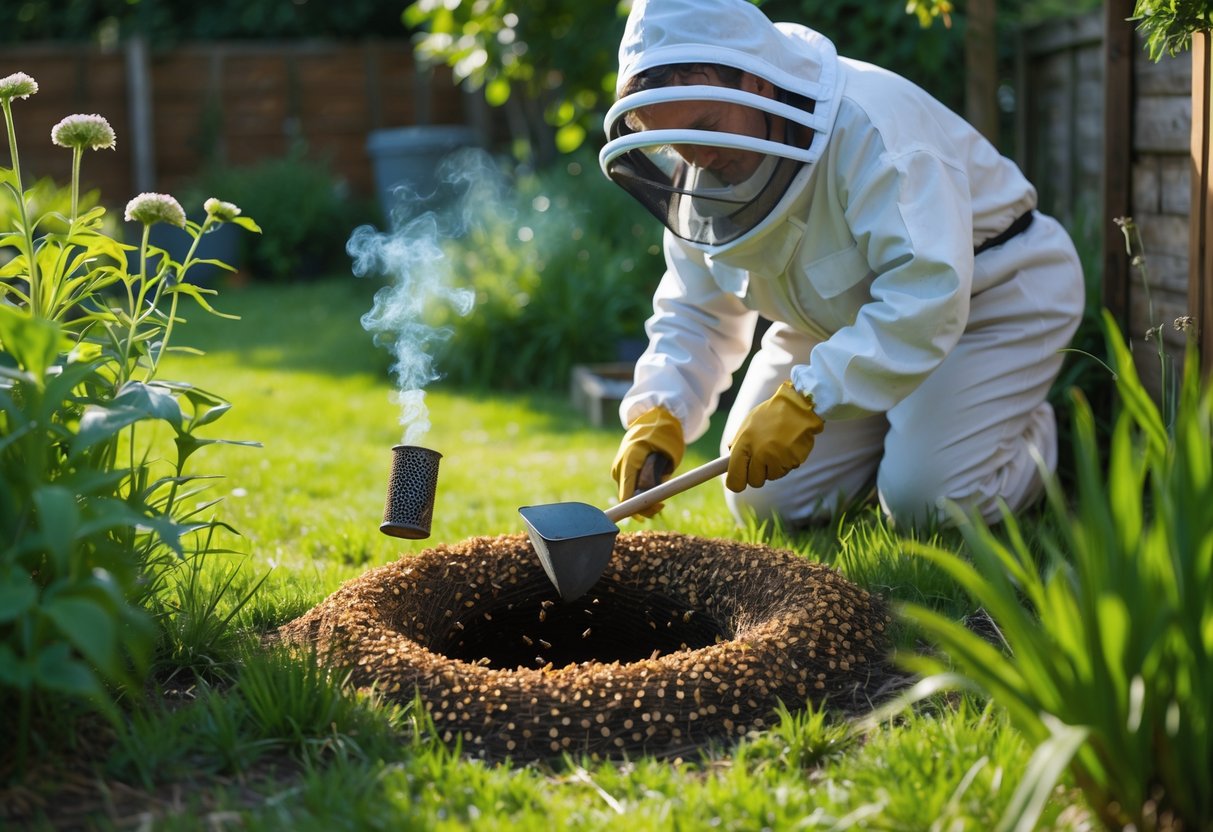
Bees can be annoying sometimes, but they’re actually super important pollinators. It’s best to remove the nest without hurting them.
If you know what to look for and how to approach it, you can keep yourself and your garden safe—and the bees, too. You might handle things yourself with a few simple tricks, or maybe you’ll want to call in a pro.
How to Safely Get Rid of a Bees Nest in the Ground in the UK

If you find bees nesting in your lawn or garden, you’ll need to be careful. You want to avoid harming the bees or yourself.
First, figure out what kind of bees you’re dealing with. That makes everything easier.
Identifying Ground Bees and Their Nests
Start by checking out the bees. Ground bees, like mining bees or solitary bees, dig little holes in the soil or grass. You’ll probably spot tiny bees flying in and out of these holes.
Bumblebees sometimes build nests underground too, but their nests look a bit different—bigger, and covered in soft stuff like grass or leaves.
Mining bees and solitary bees usually don’t act aggressive and rarely sting unless you bother them. If you see lots of bees going into a hole about half an inch wide, you probably have a ground bees nest.
If you know which bees you have, you can pick the right way to move them along without hurting important pollinators.
Best Times and Methods for Removal
Try to remove a bees nest in late autumn or early spring. The bees aren’t very active then, and some might be hibernating.
Don’t try to remove nests in summer. That’s when bees are out and about—and way more protective.
Careful removal works best. You can try flooding the nest gently with water to encourage the bees to leave. Don’t overdo it, though, or you might hurt the bees or mess up your soil.
Sometimes just covering the nest with mulch or soil is enough to make them move on. Skip the insecticides—they hurt bees and the environment.
If you time things right, most of the bees will be out foraging, so you’ll have fewer stings and less stress all around.
DIY Solutions and Gentle Deterrents
You’ve got a few natural options. Water the soil often—that makes the area less attractive since bees like it dry.
Planting things like eucalyptus, citronella, or garlic near the nest can help too. Bees really don’t like those smells.
You can mix up a spray with water, a little dish soap, and cayenne pepper. Spray it near the entrance holes, early in the morning or late in the evening.
If you’re trying any DIY removal, wear protective clothing. You don’t want to get stung. Go slow and gentle—lots of ground bees are good for your garden.
When to Contact Professional Pest Control
If you’re allergic to bee stings or the nest is big and busy, just call professional pest control. They know what they’re doing and have all the right gear.
Pros can also tell you about any UK laws that protect certain bees. For example, bumblebees are protected and you can’t harm them without special permission.
If the nest is close to where people hang out, pest control can help you avoid trouble—safely and humanely.
Bringing in the experts is safer for you, your family, and the bees, especially if the nest is tricky to reach.
For more info on safe removal, check out Safely Remove Bees Ground Nests: A Step-by-Step Guide.
Protecting Bees and Preventing Future Ground Nests

Bees keep plants growing by moving pollen around. You want to protect these helpful insects, but you probably don’t want more ground nests popping up.
Understanding why bees matter—and how to stop them from nesting where you don’t want—can help you keep a good balance.
The Importance of Pollinators in the UK
Pollinators like honey bees, bumblebees, and solitary bees play a huge part in growing fruits, veggies, and flowers. Without them, a lot of plants wouldn’t even make food.
Ground bees especially help by pollinating wild plants and crops. Bumblebees and honey bees live in colonies, but lots of solitary bees nest right in the soil.
Most ground bees are gentle and rarely sting. If you see them around, it’s usually a sign your garden’s in good shape.
By looking after pollinators, you’re helping the environment and food production. You can do your bit by planting bee-friendly flowers and skipping the harsh chemicals.
How to Discourage Bees From Nesting in Your Garden
If you want to keep bees from nesting in your yard, try watering the soil often. Wet ground makes it a lot less attractive for bees looking to dig in.
Mulch the spots where bees usually show up, since a thick layer covers the ground and really puts them off. You might want to plant eucalyptus or mint near those trouble areas—some folks swear by these as natural bee deterrents.
A garlic spray works as a gentle nudge for bees to move along, and it won’t harm them. Maybe skip the harsh chemicals, though; those can hurt bees and other good bugs you actually want around.
Block off any obvious nesting spots with something simple, and keep your lawn neat so there’s less for bees to dig into. With a few of these changes, you’ll make your garden less inviting for nests but still friendly for pollinators you want to keep.


