
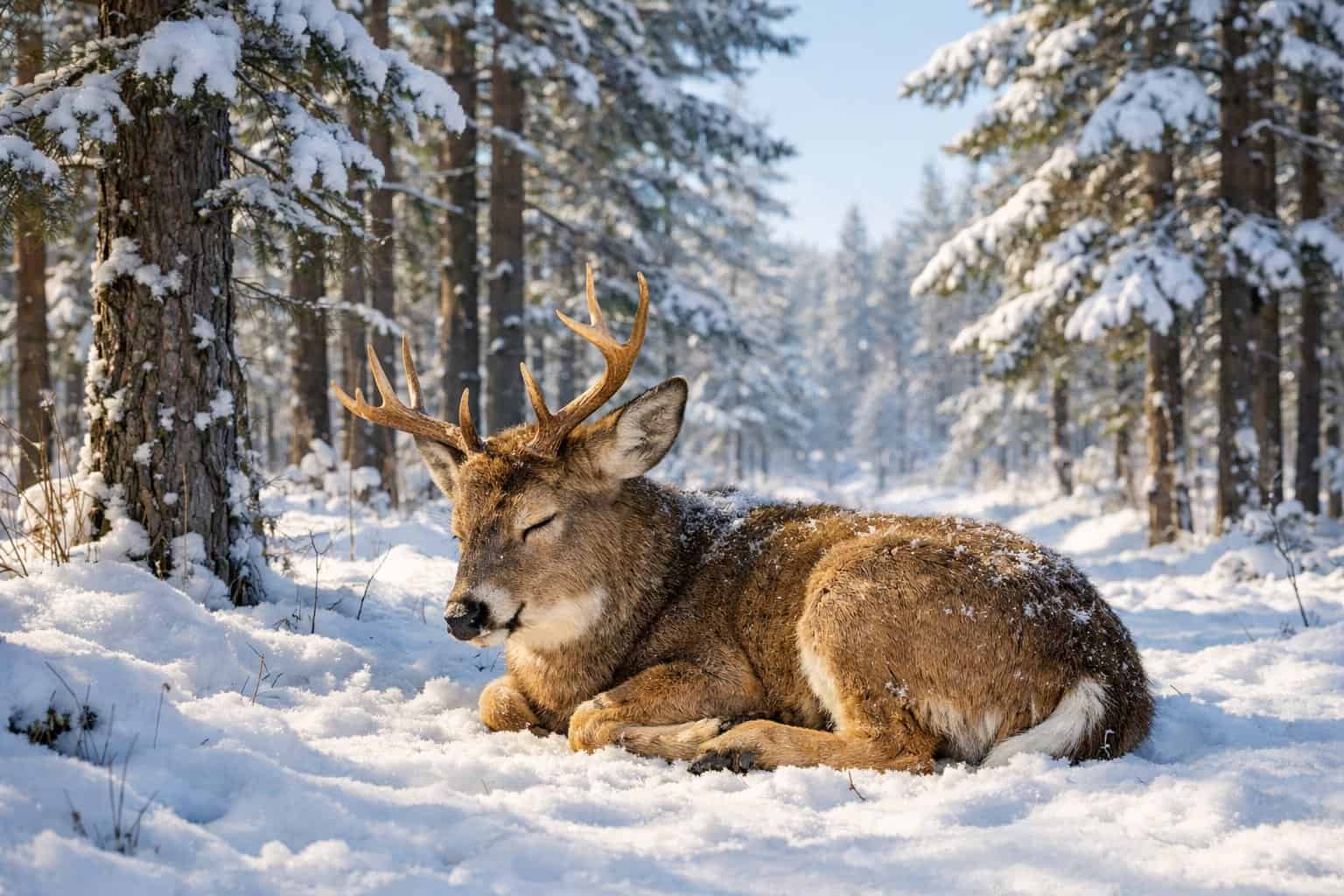
Picture a deer curled up, sleeping away the whole winter. Sounds cozy, right? But honestly, their winter routine is a bit more complicated than that.
Deer do sleep and rest in winter, but they spend most daylight hours tucked away in sheltered spots. They’re trying to save energy, stay warm, and keep out of sight.
Let’s look at how they pick those places and why it matters for their survival in the cold, snowy months.
If you know what to watch for, you’ll spot bedding signs and avoid stumbling into their resting spots when they really need to save calories.
Up ahead, I’ll talk about how deer change their daily routine, what kinds of places they like for beds, and a few simple ways you can respect their winter habits—whether you’re hiking or managing land.
Do Deer Sleep During the Winter?
Deer rest in sheltered spots to save energy, keep warm, and dodge predators.
They keep eating woody browse and pick bedding areas that block wind and hold in heat.
How Deer Sleep in Winter Conditions
You’ll usually spot deer bedded down in dense cover—conifer stands, thick brush, or behind the lee of a hill. These places block wind and feel a bit warmer, even on cold days.
Deer tuck their legs under themselves and pull their heads close to their chests to keep warm.
Snow sometimes piles up on their backs and doesn’t melt, thanks to their thick winter coats.
A lot of deer choose beds on south-facing slopes or in low dips that catch sunlight during the day. In deep snow, they follow packed-down trails between beds and feeding spots to save energy.
Sometimes you’ll see groups “yarding” together in heavy snow. That just means they share trails and help each other move around.
If you notice flattened grass, tracks heading out at dawn or dusk, or droppings near thick cover, you’ve probably found a winter bedding spot.
Differences from Hibernation
Deer don’t hibernate. They don’t just sleep away the whole winter like bears or groundhogs.
They stay alert and wake up often to eat, move, and check for danger. Their body temperature and metabolism stay pretty steady—they don’t drop way down the way true hibernators do.
Deer definitely slow down and try to conserve energy, but they still need to get up and forage every day or two. Fawns might bed down more often than adults, but they’re still active when they need to be.
Since deer keep moving, they use staging areas and take short trips to feed. This helps them keep an eye out for predators and react fast if they need to.
If you think deer just sleep all winter, it’s probably because you don’t see them moving much—they’re just laying low, not hibernating.
When Do Deer Sleep in Cold Weather
Deer are crepuscular, so they’re most active at dawn and dusk. They usually rest during the day, especially around midday when the sun’s out and the ground warms up a bit.
After a morning feeding, you’ll see them bed down. Same thing after they eat in the evening. They move at low light, eat, then head back to their beds to digest and save energy.
Deer sleep in short naps, not long stretches. Sometimes they look like they’re sleeping for hours, but really, they’re just conserving calories and staying still.
When it’s really cold, deer barely move and only travel between beds and food when it’s a little warmer.
Watch deer long enough and you’ll see most of their movement at dawn or dusk. They don’t bed too far from food, so if you find browse nearby, you can guess where they’ll rest and when they’ll get up.
Winter Deer Bedding Behavior and Sleeping Areas
Deer pick bedding spots that block wind, save energy, and let them reach food without trekking too far.
They change bedding habits depending on snow depth, cover, and whether they’re a buck, doe, or fawn.
Favorite Bedding Locations in Winter
Deer love bedding where dense cover blocks wind, like under coniferous trees, in thick brush, or in cedar and spruce patches.
These spots trap heat, shed snow, and keep the ground a bit warmer. They’re also easier to move through.
You’ll find beds in ravines, drainages, and on the lee sides of hills, where the terrain breaks up the wind.
Trails to bedding spots are usually narrow and take the shortest route to food like low hardwoods or even old apple trees. When snow gets deep, deer hang out in lower-elevation draws and shelterbelts.
White-tailed deer and mule deer both use dense cover, but mule deer sometimes pick rocky draws or sagebrush in open country. Moose bed down in willow thickets or softwood stands, always close to food.
Role of South-Facing Slopes and Cover
South-facing slopes warm up earlier and don’t hold as much snow. You’ll often find deer beds there because the sun helps cut the chill and makes it easier to find food.
Coniferous trees give year-round shelter and create a little microclimate under their branches.
The canopy blocks wind and keeps snow shallower underneath. Deer often bed right at the edge of thick cover so they can step out and feed without getting blasted by the wind.
When you’re scouting, pay attention to where the sun, slope, and cover line up. That combo predicts bedding spots way better than just looking at random trees or open fields.
Group vs. Solitary Sleeping Habits
Deer sometimes bed alone, sometimes in small groups. It depends on how bad the weather is and how much food there is.
When snow’s deep or it’s really cold, deer form “yards”—lots of animals sharing the same sheltered area to save energy and make travel easier.
In milder weather, does and bucks often bed alone or with just one other deer, so they don’t have to fight over the little bit of browse that’s left.
Grouping up helps with warmth, but it can also mean more disease and more eyes for predators, so deer weigh the risks.
You’ll spot tight clusters of beds and shared trails in established deer yards. Solitary beds pop up more where food is spread out and predators are a bigger worry.
Behavior of Does, Fawns, and Bucks
Does usually pick bedding spots that keep fawns safe and let them reach food quickly. They’re thinking about protection and convenience, honestly.
Fawns hide out in thicker cover. Most of the time, they just stay put while their mother feeds close by. If you spot a fawn, it’s best to leave it alone—moving one can really mess things up.
Bucks like to bed on secluded ridge tops or deep in thick cover. They’re trying to avoid people and save energy after the rut. You’ll notice their beds can be bigger and more spread out, especially when bucks go solo.
Fawns and yearlings stick to dense, low cover until they pick up adult habits. In family groups, you’ll often see does hanging close to fawns, while bucks keep a bit of distance—unless everyone’s crowded together in a deer yard.


