
Ever wonder if deer really break branches, or if those snapped twigs are just from wind or storms? Yep — deer definitely break branches when they feed, move through brush, or rub their antlers. That kind of damage stands out, especially on young trees and low limbs.
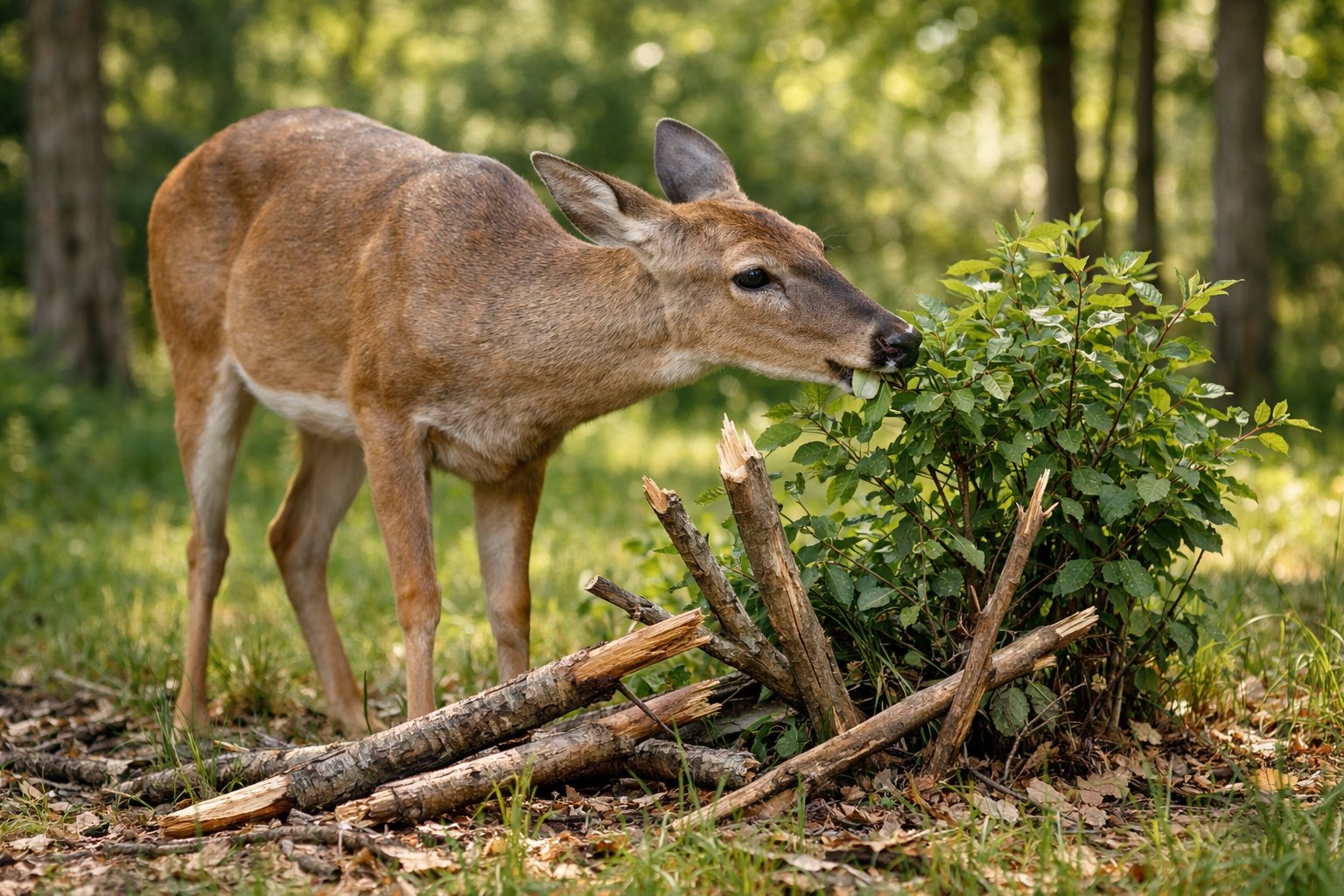
You’ll spot bite marks, bent saplings, or branches snapped at about chest height when deer push through thick cover or reach for buds. Let’s dig into how and why deer cause this kind of mess, and what you can actually do to protect your trees.
How and Why Deer Break Branches

Deer break branches to get food, mark their territory with scent, and sometimes just to show off a bit. You’ll notice chewed tips on shrubs, scraped bark on small trunks, and bent limbs where they travel. These clues reveal why deer hang around and which plants seem to attract the most trouble.
Deer Browsing and Its Effects on Branches
When deer browse, they clip off tender shoot tips and leaves they can reach — usually up to 5 or 6 feet high. You’ll see jagged, torn ends on plants like boxwood, holly, and Japanese maple.
Deer pull down lower branches on spruce and other conifers to get at the needles, leaving broken stubs and open wounds. That’s not great for the tree’s health.
If you’ve got a lot of deer around, browsing pressure goes up. When winter hits and food gets scarce, deer strip even more branches and start eating bark, not just leaves.
Repeated browsing weakens plants and stunts their growth. Sometimes, it even kills young trees over a few years. You might spot piles of leafy twigs and fresh droppings nearby — that’s usually a sign deer feed there often.
Deer Rubbing Behavior and Broken Branches
Bucks rub trees to mark territory and leave scent from their forehead and pre-orbital glands. You’ll find broken branches and stripped bark where bucks have pushed, twisted, or snapped small trunks and limbs.
The cambium layer often shows gouges and fresh wood under loose bark. Rubbing really picks up in the fall during the rut. Bucks want to leave strong visual and scent cues for does and rivals.
Broken vertical shoots and bent branches at about chest height for a buck usually mark a rubbing site. Damage from rubbing tends to hit small trees and understory plants that can’t heal well, which raises the risk of long-term decline.
Seasonal Patterns That Increase Branch Damage
Branch damage jumps in late fall and winter. Cold weather means less plant food, so deer munch on woody twigs and bark more often.
Deep snow pushes deer to browse lower branches and even reach higher up trunks, breaking branches you might not expect. Spring and summer bring more selective browsing on tender new growth.
Young Japanese maple leaves and fresh boxwood shoots get clipped over and over. Before the rut, bucks spend more time licking branches and making scrapes — they’ll break and twist limbs to spread scent and leave a mark.
If you manage a yard or preserve, keep an eye on these seasonal patterns. They’ll help you protect vulnerable species and figure out when to put up deterrents.
Protecting Trees From Broken Branches

If you want to protect young or mature trees, you’ll need to stop deer from rubbing, chewing, or snapping limbs. Try physical shields, repellents, or even picking plants that deer don’t like as much.
Physical Barriers: Fencing, Tree Guards, and Tubes
Put up a barrier around trees you care about. A woven-wire deer fence, about 6 to 8 feet tall, usually keeps them from jumping over. If you’ve got the space, angle the top outward for extra protection.
For single trees, wrap the trunk with wire mesh or tree guards that go at least 4 to 6 feet high to block rubbing and low browsing.
Plastic tree tubes or shelters work well for saplings. Tubes keep trunks safe from chewing and antler scraping, but still let in light and air.
Secure tubes with a stake, but don’t tie them directly to the trunk. Check tubes every year and take them off once the trunk outgrows the opening.
If your area allows it, try an electric fence. One hot wire at 18 to 24 inches can stop browsing, and adding more wires higher up will help deter jumping. Electric fencing works best for bigger areas, but it needs regular checks and you need to keep the path clear so nothing shorts out the charge.
Using Deer Repellents and Area Repellent Methods
Spray taste-based repellents on bark and lower branches to make chewing less appealing. Reapply after rain and follow the label for timing and coverage.
Focus the spray up to 6 feet on trunks and on new shoots — those are the spots deer go for first. Switch up your products — egg-based sprays, capsaicin, or commercial bitter repellents — so deer don’t get used to one.
Try area repellents to keep deer away from the whole yard. Hang soap bars in trees, set out lantern-style scent emitters, or use ammonia-soaked rags to create a smell barrier.
Put repellents near groups of trees and swap them out monthly or after heavy rain. Test anything new on a small patch first, just in case it’s too harsh for your plants.
Honestly, combining repellents with physical barriers gives you the best results. Sometimes, it’s just trial and error to see what works in your yard.
Choosing Deer Resistant and Less Vulnerable Plants
Pick plant species that deer typically avoid, especially near important trees. Try shrubs or perennials with strong scents, tough leaves, or a bitter flavor as a living buffer.
Lavender, boxwood, and yarrow work for many regions, but honestly, local deer can be picky. It’s best to check what your area’s deer avoid before you start planting.
Don’t plant highly palatable species close to young trees. If you really want to use less resistant plants, go ahead and protect them with tubes or guards until they’re too tall for deer to bother.
Space out your protective plants and barriers. This way, deer have to get through several deterrents before they can even reach your tree trunks.
Need more ideas for deer-resistant options? Check out this guide on how to protect trees from deer.


