
Boxer dogs are known for their playful and affectionate nature, but many owners wonder how well they can handle being left alone. Boxers generally do not cope well with isolation and should ideally not be left alone for more than 4-5 hours at a time. Their strong need for companionship can lead to separation anxiety, which might cause them to engage in destructive behaviors when left alone.
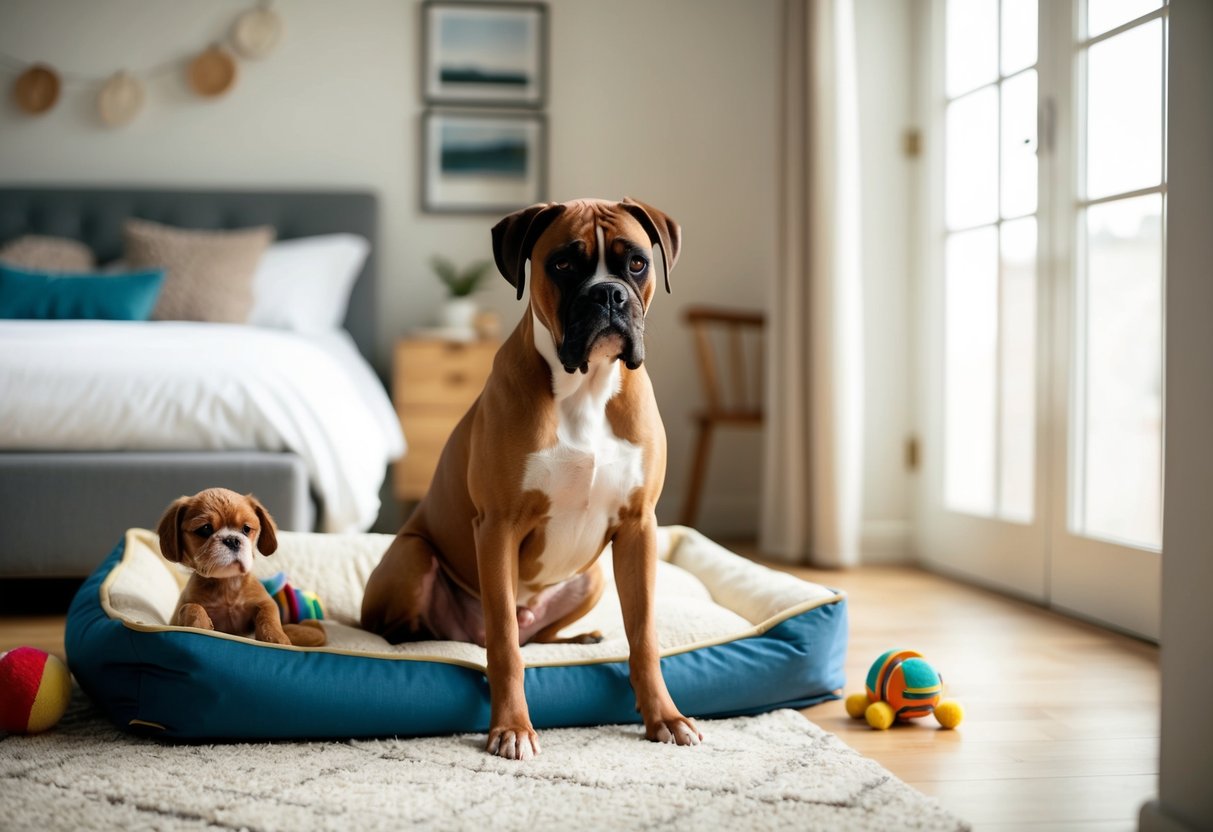
If you’re thinking about getting a Boxer or already have one, it’s important to understand their social needs. They thrive on interaction and can become anxious if they are left by themselves for too long.
By learning the best practices for helping your Boxer feel secure, you can ensure they stay happy and well-adjusted, even when you have to leave the house.
In this article, we’ll explore tips and strategies to make your Boxer’s alone time more manageable and to keep them calm and content while you’re away.
Understanding the Boxer Breed

Boxers are known for their unique personality and strong connections with their families. They thrive on companionship and have specific exercise needs that are vital for their well-being.
Temperament and Social Characteristics
Boxers are playful dogs with a friendly demeanor. They are known for their affectionate nature and tend to form strong bonds with their families. This breed loves to be around people and can be wary of strangers, which makes them good guard dogs.
Socialization is important for Boxers. Regular interaction with different people and pets can help them become well-adjusted. Without proper socialization, they may become anxious or behave unpredictably.
Boxers enjoy playtime and activities that stimulate their minds, making them great family dogs. Their loyalty and protective instincts add to their charm as companions.
Exercise and Activity Needs
Boxers are incredibly energetic and require a lot of exercise. Daily walks and active playtime are essential to keep them happy and healthy. Regular activity helps prevent boredom, which can lead to undesirable behaviors.
You should plan for at least an hour of exercise each day. Activities like fetching or agility training not only burn off energy but also strengthen your bond with your Boxer.
They thrive in environments where they can run and play freely, so having a yard or access to a park can be beneficial. Ensuring your Boxer gets the right amount of activity is key to a happy, fulfilled dog.
Managing Alone Time for Boxers
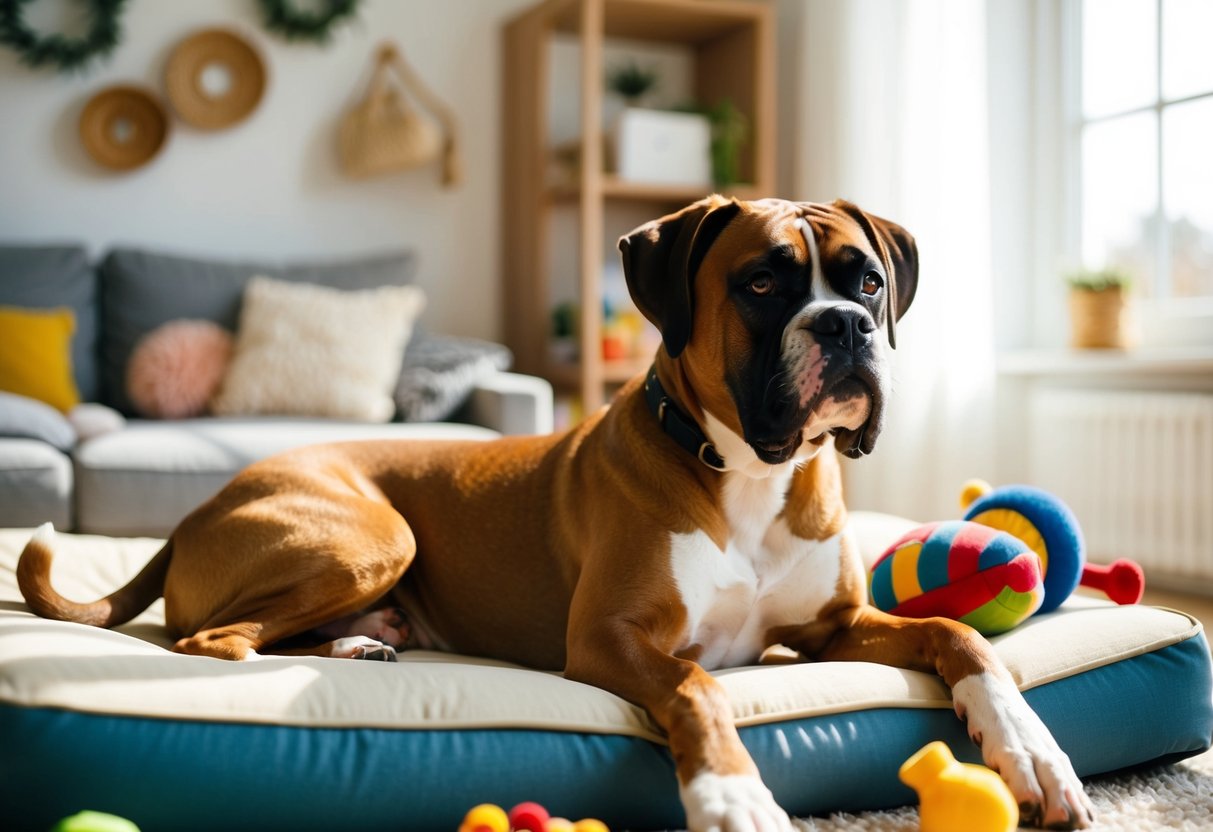
To help your Boxer feel comfortable alone, focus on training techniques and creating a safe environment. Both approaches can reduce anxiety and make alone time more manageable for your dog.
Training and Mental Stimulation
Start training your Boxer to be alone gradually. Use positive reinforcement to reward them for calm behavior when you leave. Over time, increase the duration of your absence.
Incorporate mental stimulation through interactive toys. These toys can keep your Boxer engaged and distracted. Puzzle feeders are a great option as they challenge your dog’s mind.
You might also consider playing calming music while you’re away. Research suggests that certain types of music can soothe dogs and reduce anxiety levels.
Creating a Routine and Safe Space
Establish a consistent routine for your Boxer. This will help them know when to expect you to leave and return. Include regular exercise and playtime to tire them out before you go.
Designate a safe space for your Boxer when they are alone. This could be a cozy crate or a secure room. Make it inviting with their favorite blanket and a few toys.
Try crate training, but ensure it’s a positive experience. Never use the crate as a punishment. Start by letting them explore the crate with the door open and reward them with treats.
Addressing Separation Anxiety in Boxers
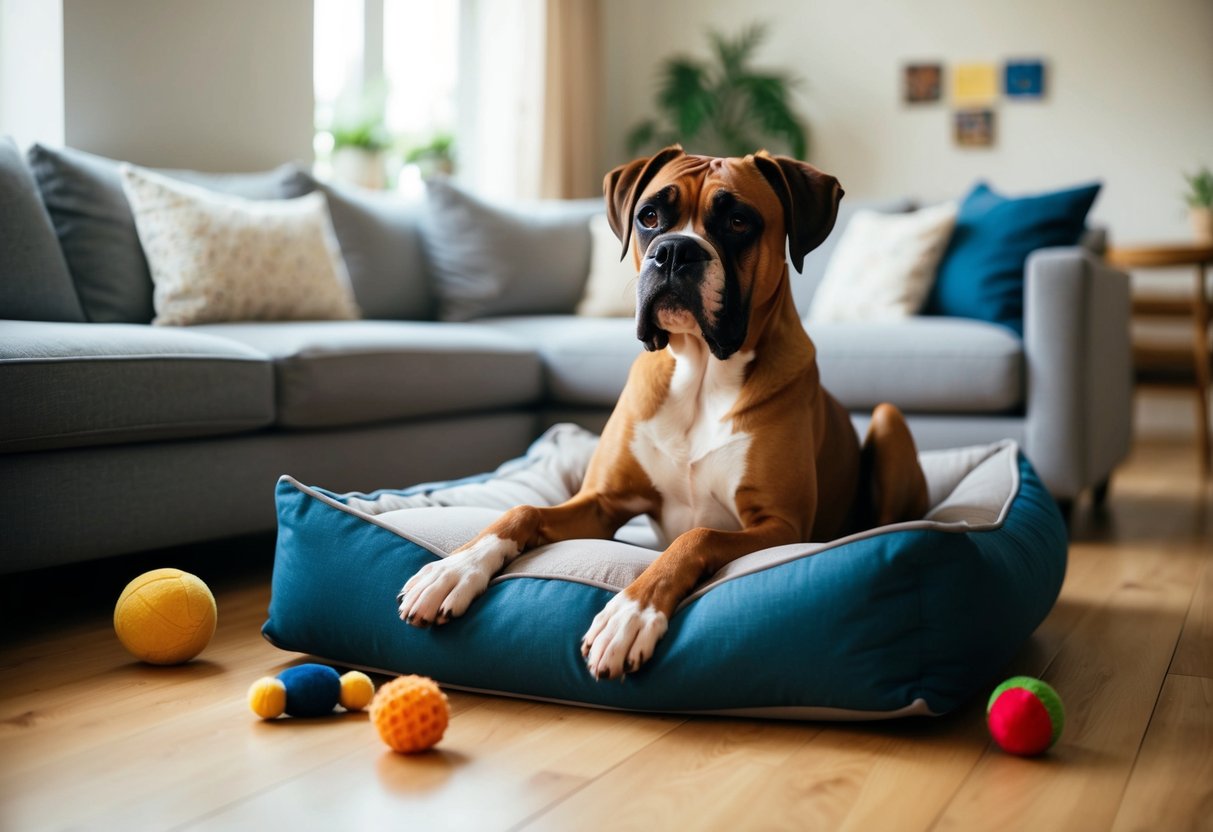
Separation anxiety is a common issue for Boxers, and it’s essential to understand how to identify it and help your dog cope. Taking steps to address this challenge can lead to a happier and healthier situation for both you and your Boxer.
Identifying Signs and Preventive Measures
Watch for signs of anxiety in your Boxer when left alone. Common behaviors include excessive barking, destructive chewing, and house soiling. Your dog may also seem restless or overly clingy when you’re home.
To prevent separation anxiety, start with short absences to help your Boxer adjust. Gradually increase the time you’re away, allowing your dog to feel secure.
You can also introduce items like calming music to create a soothing environment. Make sure your dog has plenty of toys to keep them occupied while you’re out.
Consider a dog sitter or daycare if you need to be away for longer periods. These options provide companionship and reduce stress for your Boxer.
Solutions and Support Strategies
When your Boxer shows signs of separation anxiety, various strategies can help. Begin with gradual desensitization. Practice leaving your dog alone for short bursts, increasing the duration gradually. This approach helps your Boxer build confidence.
You might also want to invest in interactive toys that challenge your dog’s mind and keep them busy. Pair these toys with calming music to help create a relaxing atmosphere.
If the anxiety persists, consult a veterinarian or professional trainer for guidance. They can recommend specific training techniques or suggest calming supplements to ease your dog’s stress. Finding the right support can make a big difference in managing separation anxiety in Boxers.
Maintaining a Healthy Lifestyle for Boxers
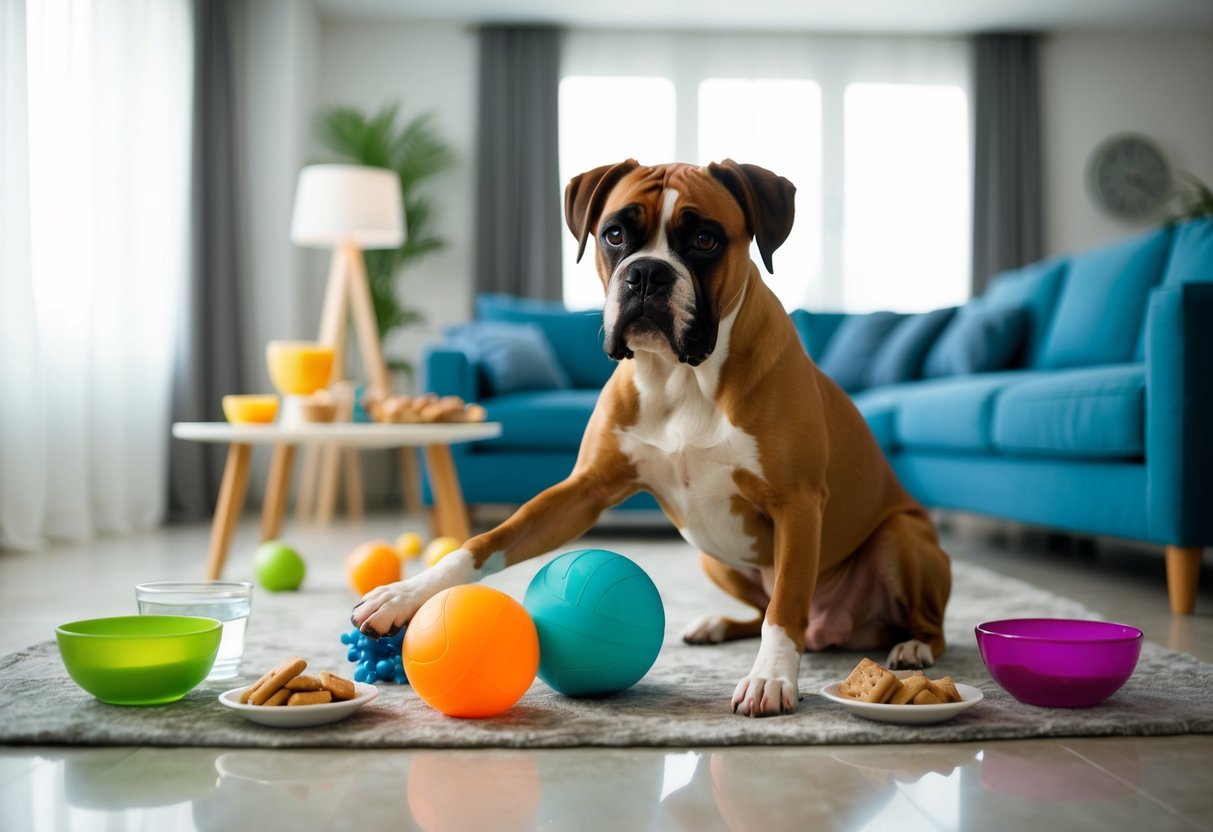
Keeping your boxer healthy is essential for their happiness and well-being. By focusing on diet and nutrition, as well as healthcare and grooming, you can ensure a long and healthy life for your furry friend.
Diet and Nutrition
A balanced diet is crucial for your boxer, whether they are a playful boxer pup or a strong adult boxer.
Their diet should be high in protein to support their muscles. Look for high-quality dog food that includes real meat, vegetables, and healthy fats.
Feed your boxer twice a day to maintain their energy levels and prevent obesity. Be mindful of treats; limit them to avoid overfeeding.
Fresh water should always be available. Regularly check with your vet for specific dietary needs, especially if you notice any weight changes.
Healthcare and Grooming
Routine healthcare is vital. You should schedule regular vet visits to keep an eye on your boxer’s health and catch any issues early. Boxers are prone to certain health problems, so you need to make sure to provide preventative care.
Regarding grooming, boxers have short coats, but they still need regular brushing to reduce shedding. Make sure to check their ears, teeth, and nails regularly to keep them healthy. You also need to incorporate bathing as needed; too much can dry out their skin.
Don’t forget that maintaining a healthy lifestyle also reflects their loving nature. Engaging in play, exercise, and affection strengthens your bond and keeps them happy!


