
Walking your boxer dog can be a joyful experience, but pulling on the lead can quickly turn a stroll into a challenge. To stop your boxer from pulling on the lead, you need to focus on using positive reinforcement techniques and making leash training a fun activity.
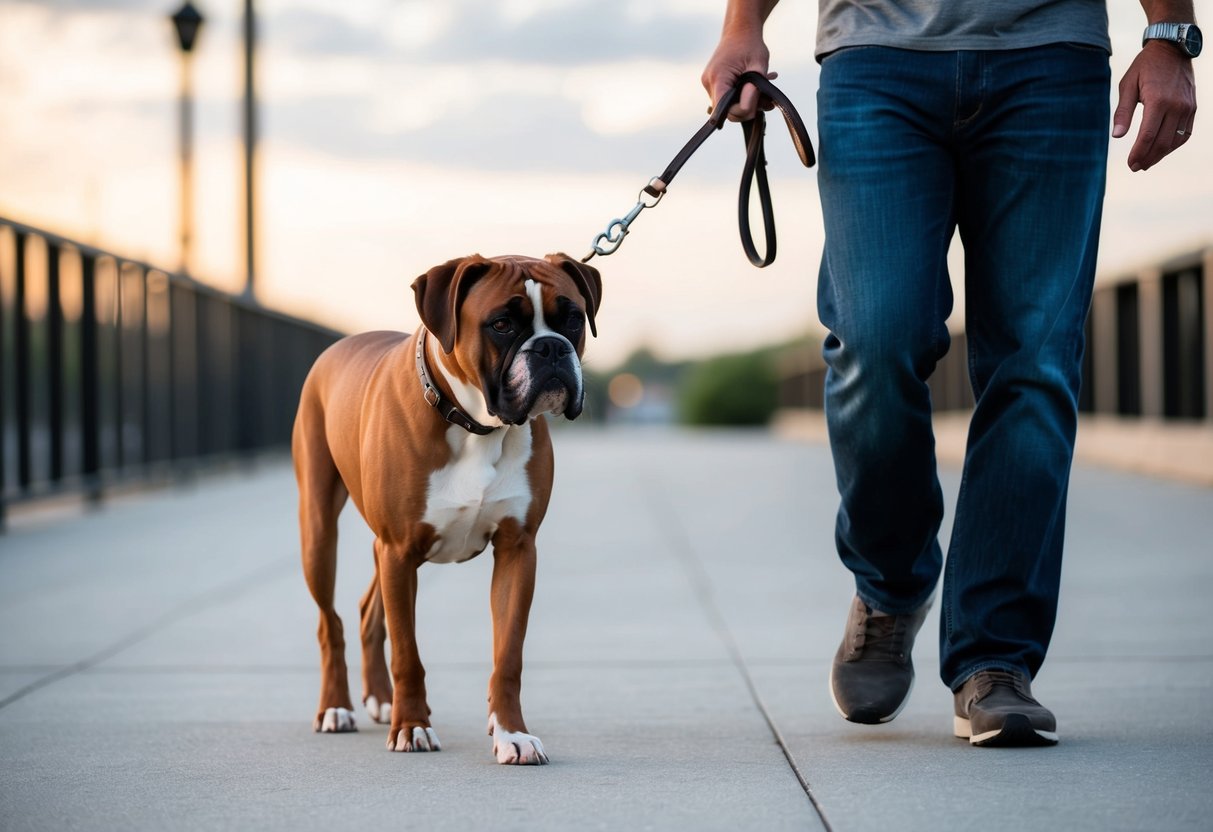
One effective method is to teach your dog to walk on a loose leash. This means rewarding your boxer when they stay close to you and only moving forward when they are calm.
You might also find that using a front-clip harness can help, as it discourages pulling without causing discomfort.
Understanding Why Your Boxer Pulls on the Leash
Leash pulling can be frustrating for you and your Boxer. Understanding the reasons behind this behavior is essential for effective training. Boxers are energetic dogs, and their natural instincts often drive them to pull.
Common Reasons for Leash Pulling
One main reason your Boxer pulls is excitement. They love to explore and be active, which can make walks highly stimulating. When they see other dogs, people, or interesting scents, they’ll often pull toward them.
Another factor is the lack of training. If your Boxer has not learned leash manners, they may not understand that pulling is not acceptable.
Start young with training. Using positive reinforcement when they walk beside you can create better habits.
Additionally, some Boxers may pull out of anxiety. New environments or sounds can overwhelm them. It’s important to create a calm atmosphere during walks to help them feel secure.
The Boxer Breed and Exercise Needs
Boxers are known for their high energy levels and strong builds. As a breed, they require regular exercise to stay happy and healthy.
If their energy is not released through play or walks, they are more likely to pull.
Make sure to provide daily activities. This could be brisk walks, fetch, or playtime in a secure area.
When your Boxer gets the exercise they need, they may be less inclined to pull on the leash.
Proper training is also vital. Teaching them commands such as “heel” can help manage their pulling. Combining exercise with training will make walks more enjoyable for both you and your furry friend.
Essential Equipment for Training
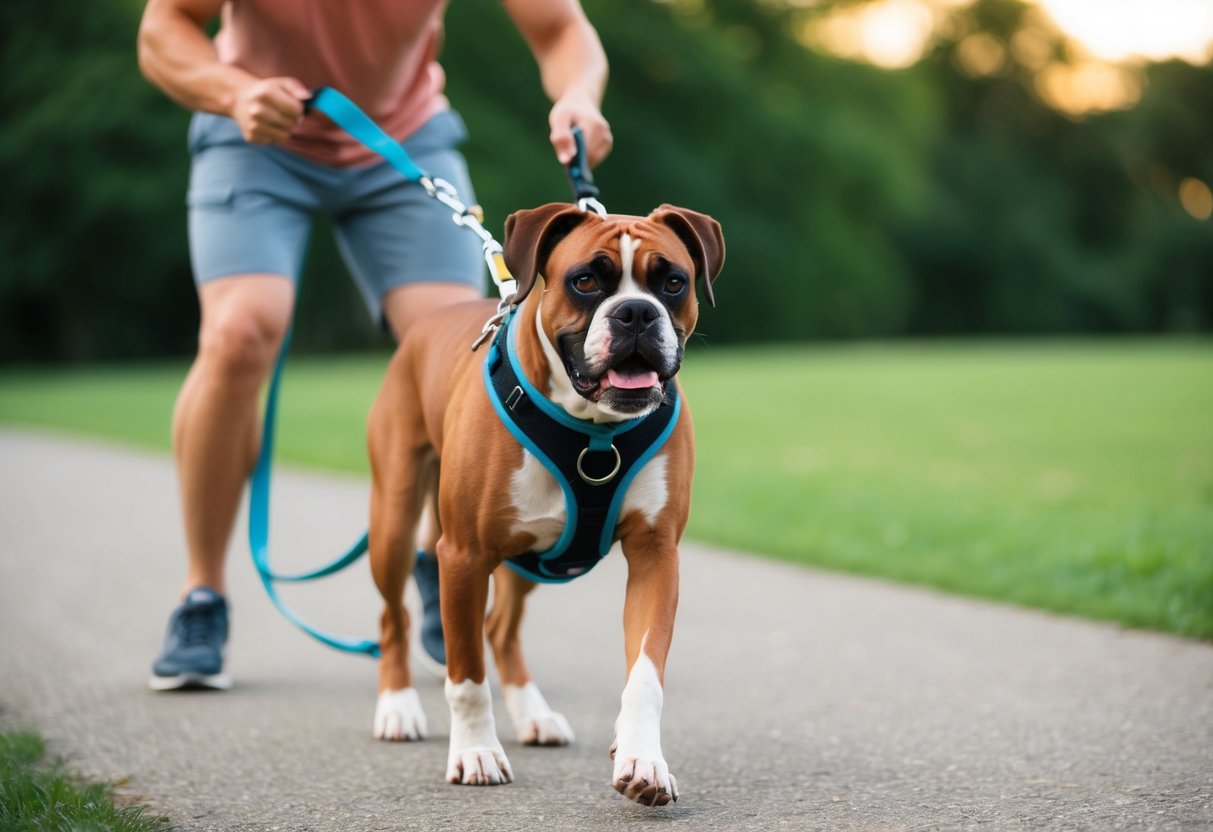
Having the right equipment makes a big difference in leash training. Using a suitable harness and leash can help you teach your Boxer not to pull. Here’s what to look for to make your walks more enjoyable.
Selecting the Right Harness
Choosing a no-pull harness is key for training your Boxer. This type of harness discourages pulling by shifting the pressure to the dog’s chest instead of the neck. It makes it easier for you to control your dog without causing harm.
Look for a harness that is well-padded and adjustable for a comfortable fit. Ensure it’s easy to put on and take off.
A front-clip harness can help redirect your dog’s attention back to you when they start to pull. Check the size guide carefully to get the right fit for your Boxer.
Choosing a Suitable Leash
When it comes to leashes, opt for a sturdy one that allows you to maintain control over your dog. A standard 6-foot leash is ideal for training as it gives enough freedom while keeping your Boxer close.
Avoid using a retractable leash when training. These leashes can encourage pulling and make it hard to manage your dog’s behavior.
Look for a leash made from durable materials that won’t fray easily. Also, a padded handle can add comfort for your hand during long walks.
Training Techniques to Reduce Leash Pulling
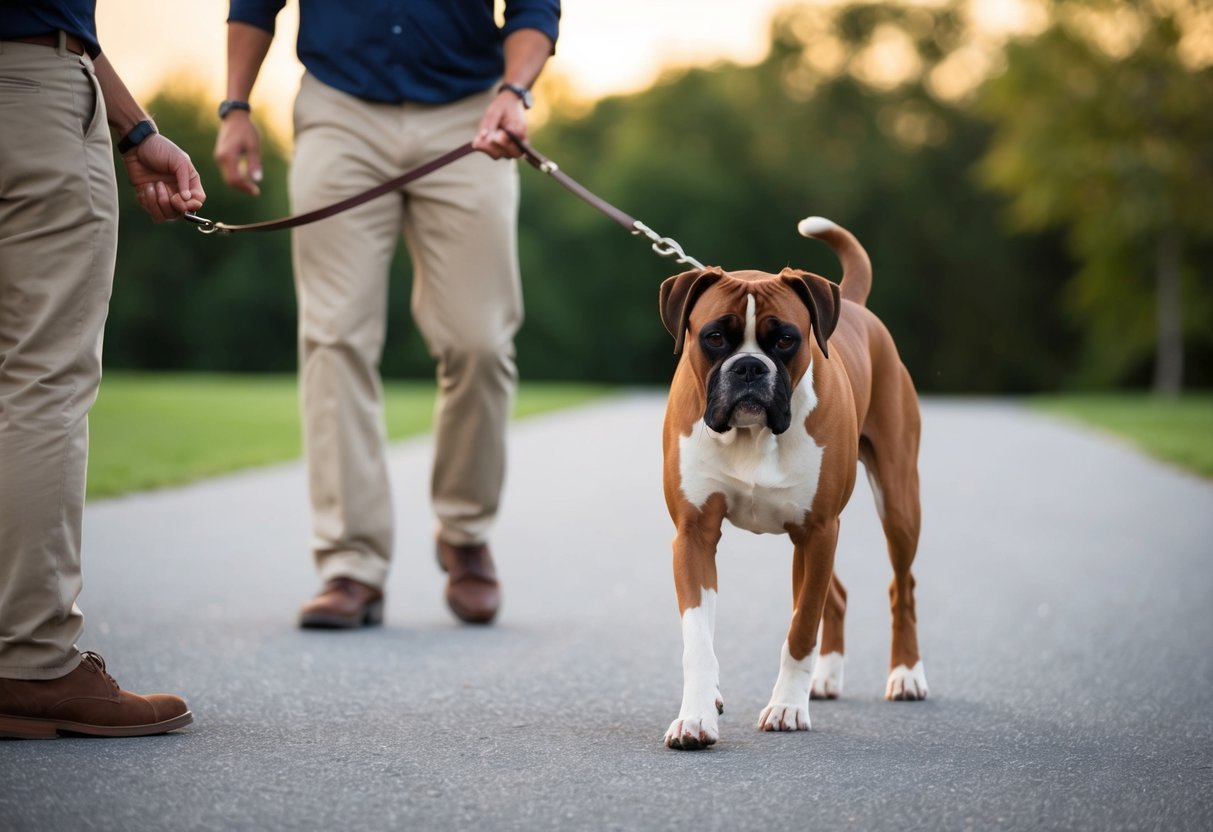
To help your Boxer stop pulling on the lead, you can use effective training techniques. These methods focus on teaching your dog how to walk nicely beside you while building good habits through positive reinforcement.
Positive Reinforcement Methods
Using positive reinforcement is one of the best ways to train your Boxer. Reward your dog with treats, praise, or play when they walk nicely on a loose lead. This encourages them to repeat the behavior.
When your dog starts to pull, calmly stop walking. Wait until they return to your side or release tension on the lead. Once they do, reward them immediately. This teaches your dog that being close to you brings good things.
Stay consistent with your rewards to help your Boxer learn faster. The focus should be on what they do right, making the training a fun experience for both of you.
Loose Leash Walking Basics
Loose leash walking is important for a relaxed stroll with your dog. Start in a quiet area free from distractions.
Hold the lead with a loose grip, allowing your dog some freedom to explore.
If your Boxer begins to pull, stop walking immediately. Wait for them to look at you or return to your side. Once they do, say “yes” or “good” before starting to walk again.
Practice this repeatedly to reinforce the behavior. Over time, your dog will learn that pulling leads to stopping, while walking nicely keeps you moving. This method can make walks enjoyable again.
Tips for Consistent Training
Consistency is key in training. Always use the same commands and techniques so your Boxer understands what you expect from them.
For example, choose a cue such as “easy” when they start to pull. Repeat it each time.
Practice attention by calling your dog’s name frequently and rewarding them for looking at you. This builds their focus.
Encourage self-control by having them sit before you start walking.
Lastly, keep training sessions short and fun. Aim for 5 to 10 minutes to prevent your dog from losing interest. With patience and practice, your Boxer will learn to walk nicely on the lead.
Working with a Professional Dog Trainer
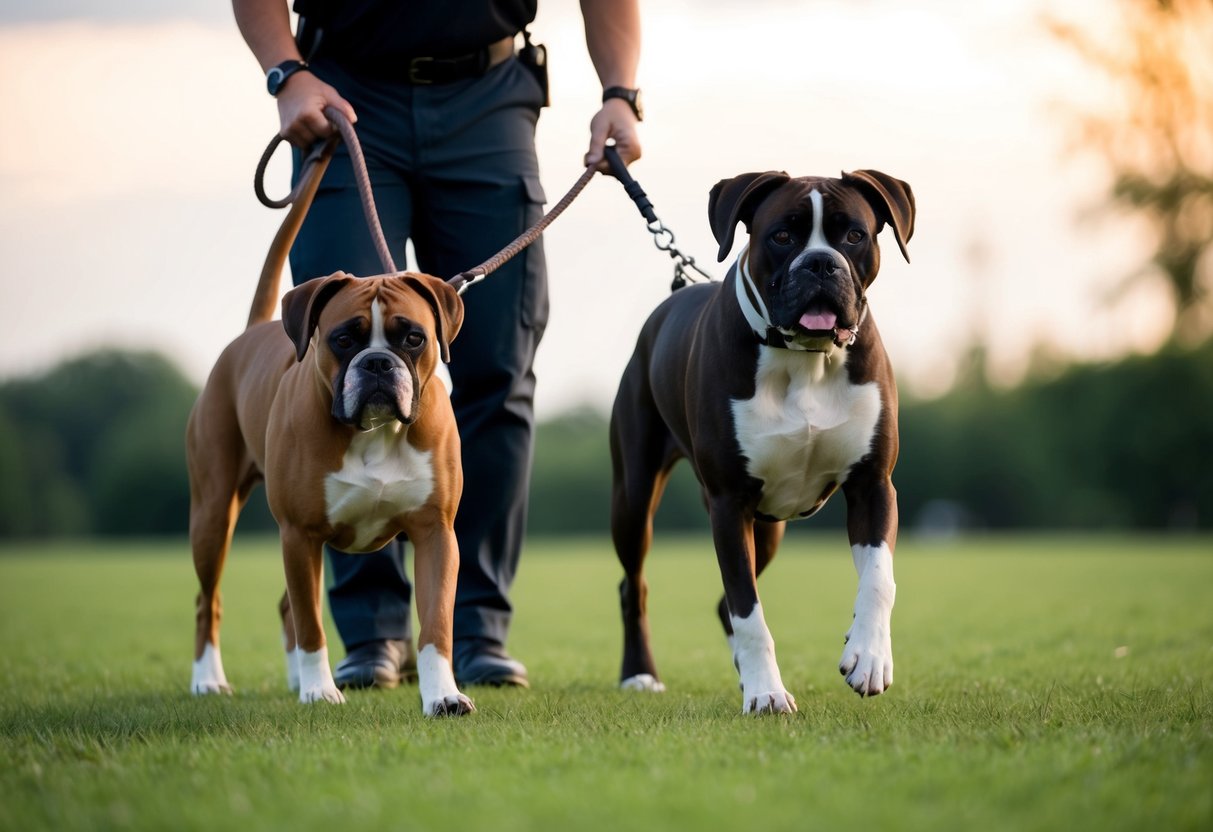
Getting help from a professional dog trainer can make a big difference in teaching your Boxer not to pull on the leash. A trainer can offer tailored advice and support to fit your dog’s specific needs.
When to Consider Professional Help
If your Boxer continues to pull on the leash despite your efforts, it may be time to seek a professional. This is especially true if you feel frustrated or overwhelmed.
A trainer can assess your dog’s behavior and provide the right training tips.
Look for signs that your dog may need extra help. These include frequent pulling, being easily distracted, or showing signs of anxiety during walks.
Additionally, if you’re not seeing progress with your training methods, a trainer can introduce new approaches that may work better for you and your dog.
What to Expect from a Training Session
During a training session, you can expect to learn various techniques to stop your Boxer from pulling on the leash. The trainer will likely start by assessing your dog’s behavior and showing you how to handle the leash correctly. They may recommend using specific gear, like a no-pull harness.
Training sessions often include hands-on practice. You will practice commands with your dog, such as “heel” or “come.” A good trainer will also emphasize rewarding your dog with treats and praise when they walk calmly beside you. This positive reinforcement builds good habits over time.


