
As winter comes, you might wonder if your Boxer dog needs a coat to stay warm. Boxers, with their short coats, can feel chilly in cold weather, so it’s important to consider the right clothing.
Understanding your dog’s needs during these months can help keep them comfortable and happy.
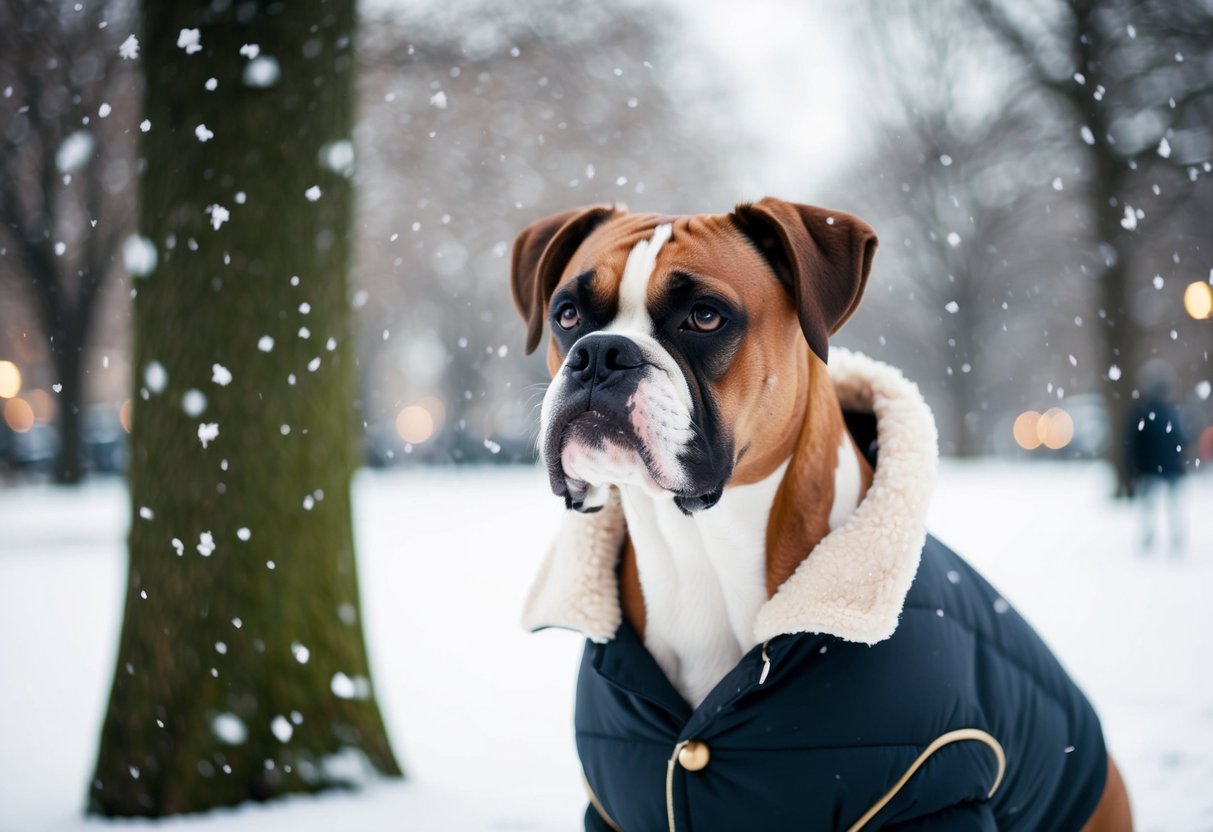
When temperatures drop, it’s not just humans who need extra warmth. Your Boxer may enjoy playing in the snow, but that doesn’t mean they are immune to the cold.
Choosing appropriate clothing for your furry friend can make a big difference in their winter enjoyment and health.
In this blog post, we’ll explore the factors to consider when deciding if your Boxer needs a coat for winter adventures. You’ll learn tips on keeping your dog cozy, safe, and ready for fun outdoors.
Understanding Boxers’ Winter Needs
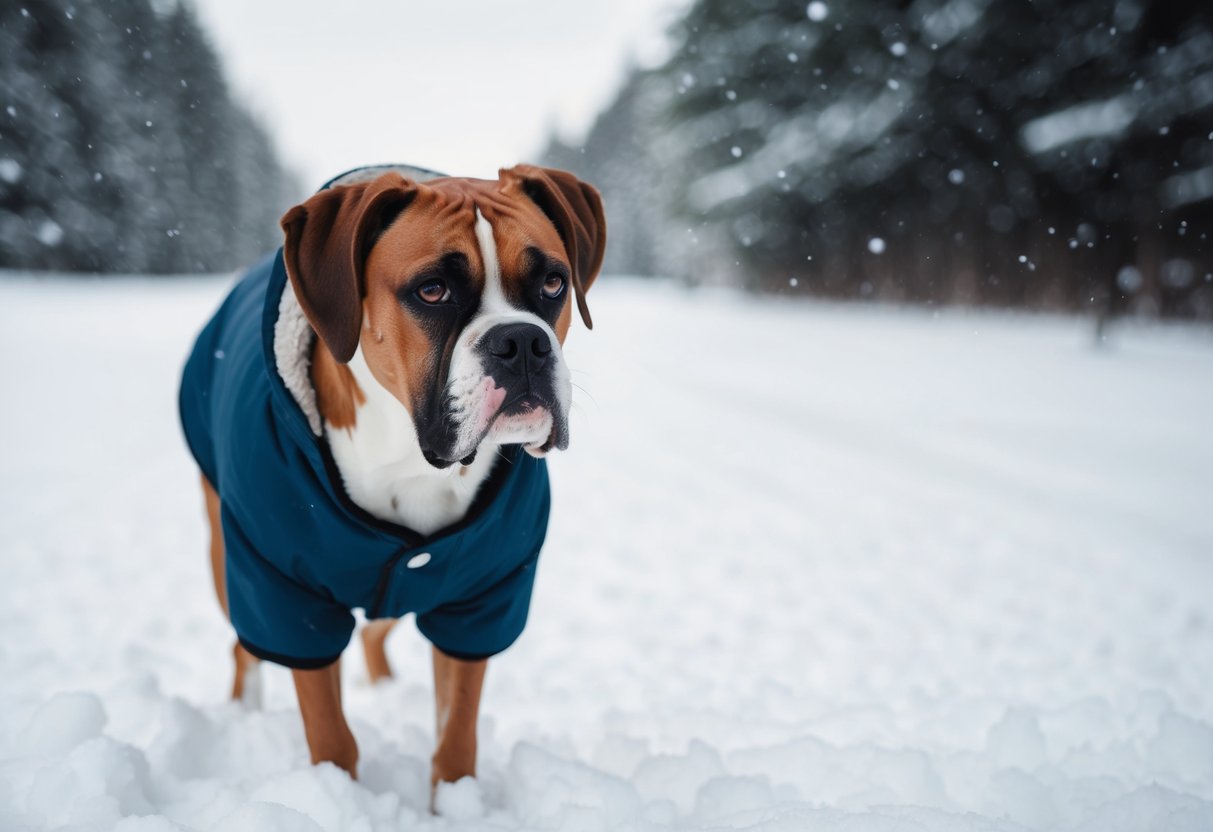
When winter arrives, it’s essential to know how to keep your Boxer comfortable. Their unique physiology makes them more vulnerable to cold. Knowing the risk factors for winter weather is important to protect your furry friend.
Physiology of Boxer Dogs
Boxers have a short, thin coat that offers little insulation against the cold. Unlike some dogs with thick fur, your Boxer may feel chilly much faster. Their short coat means they rely on you for warmth during winter months.
Additionally, Boxers are known for their energetic nature. When they are outdoors playing in the cold, their bodies can heat up. However, once they stop moving, they can quickly become cold, leading to potential health risks.
Boxers can experience shivering, which is their body’s way of trying to generate warmth. If your dog is shivering, it’s a sign they need warmth, like a cozy coat.
Risk Factors for Cold Weather
In cold weather, Boxers face several risks, including hypothermia and frostbite. Hypothermia occurs when their body temperature drops too low. Signs include excessive shivering, lethargy, and weakness.
It’s also important to check their paw pads for any signs of frostbite. Cold surfaces can affect their paws, especially when they are outside for too long.
Make sure to keep your Boxer’s walks shorter during extreme cold. Constant monitoring will help you spot any issues early. Providing a coat can help maintain their body temperature and keep them safe from the harsh winter elements.
Essential Winter Gear for Boxers
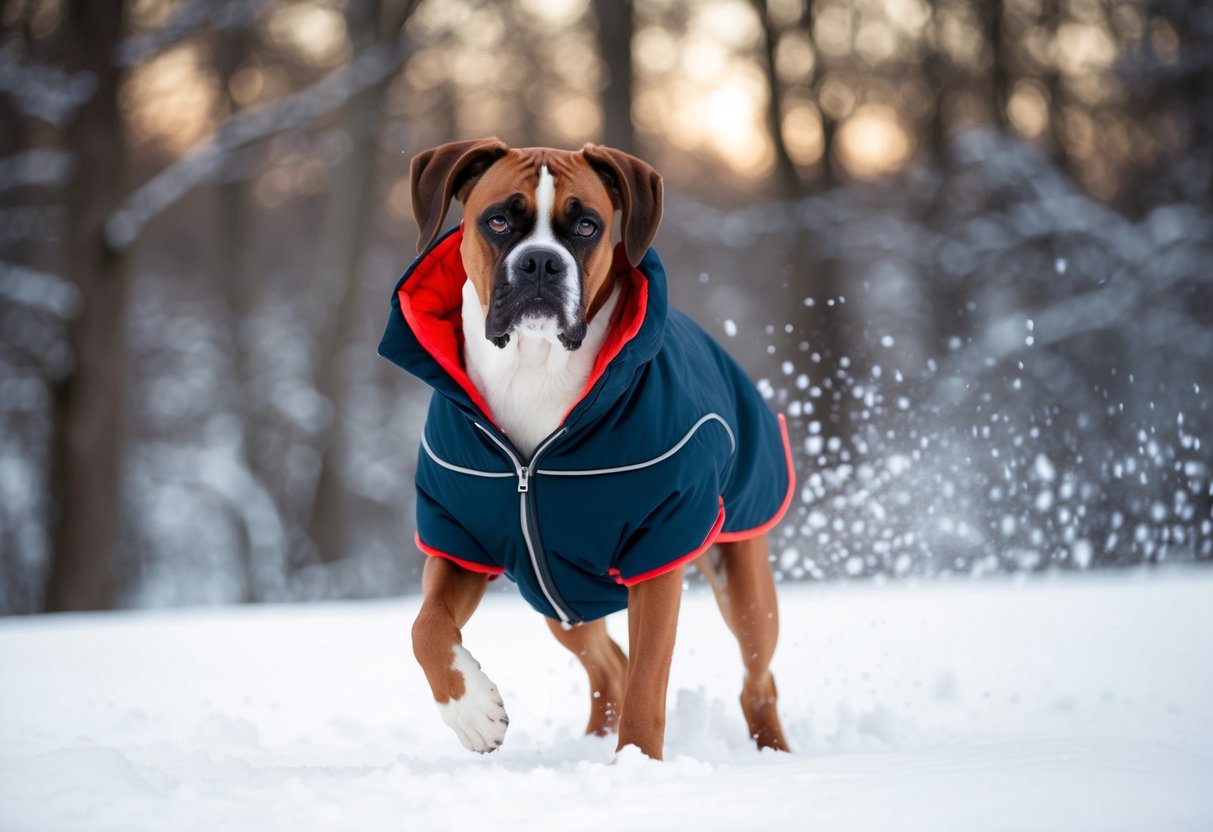
Keeping your Boxer comfortable and safe during winter includes choosing the right gear. Proper clothing, paw protection, and visibility features are crucial to ensure your furry friend enjoys the colder months.
Selecting the Right Dog Coats
When it comes to dog coats, fit is everything. Make sure the coat is snug but not too tight. You want your Boxer to move freely without feeling restricted.
Look for coats made of warm materials like fleece or wool. A jacket with insulation helps retain body heat. Some coats come with waterproof features, which are great if your Boxer gets caught in rain or snow.
Always check for options with reflective trim for added visibility during dark winter evenings.
Benefits of Insulation and Waterproofing
Insulation in dog coats provides essential warmth. It traps heat close to your Boxer’s body, which is especially important since Boxers have short fur.
A waterproof coat is vital for keeping your dog dry. Dampness can lead to chilling quickly, affecting your dog’s comfort and health.
Coats that combine insulation and waterproof materials are ideal. Look for coats made from breathable fabrics to allow moisture to escape while keeping your Boxer warm and cozy.
Paw Protection 101
Your Boxer’s paws are sensitive to cold and harsh conditions. Consider using paw wax to protect against ice and snow. Wax creates a barrier that prevents the cold from penetrating the skin.
Boots can be a helpful option too. They keep your dog’s paws warm and shield them from salt and other chemicals often used on roads. Make sure the boots fit correctly and allow your Boxer to walk naturally.
Visibility and Safety Features
Winter months often mean shorter days. With this in mind, visibility is essential.
Choose coats that include reflective trim or bright colors. This makes your Boxer more noticeable during walks at dusk or dawn.
Some jackets come with built-in safety features like harness attachments. These are helpful for keeping your dog secure while out. Look for gear that combines comfort with safety, ensuring your Boxer is confident and visible even in low-light conditions.
Caring for Your Boxer in Cold Conditions
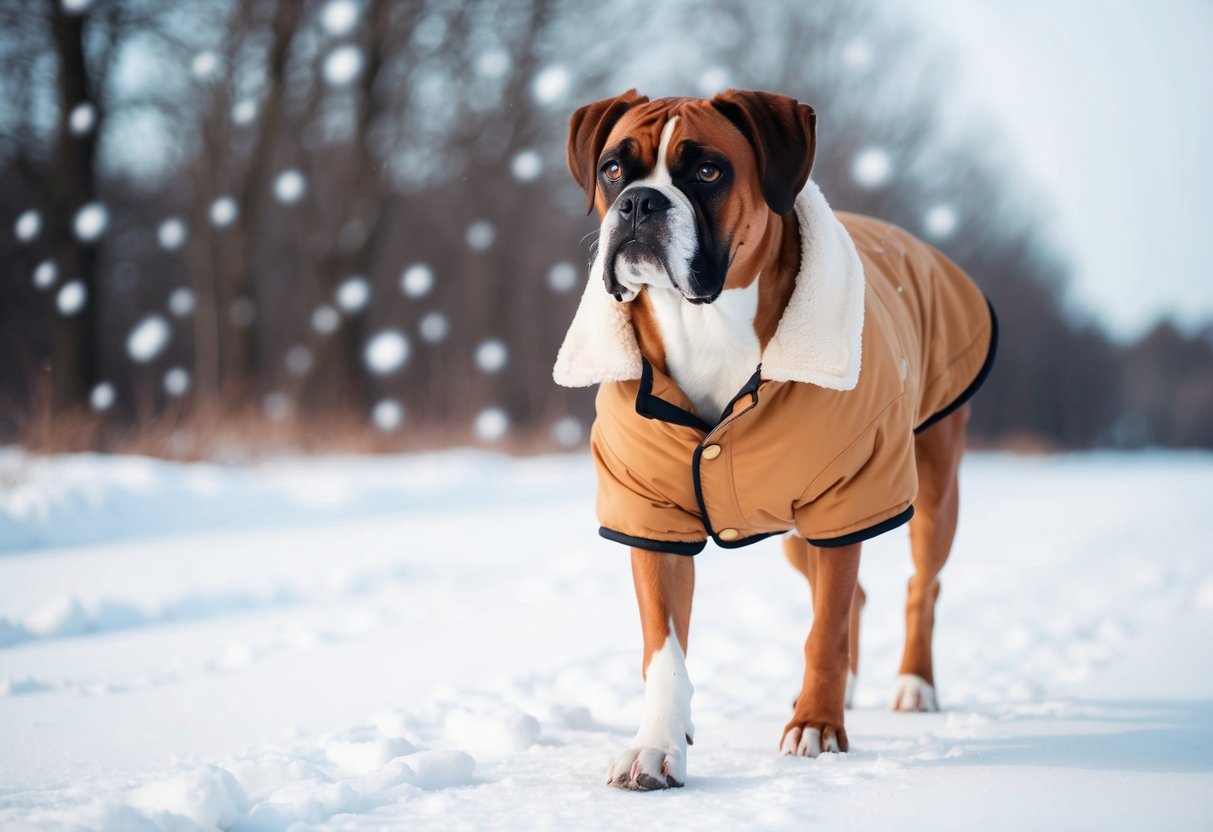
Keeping your Boxer comfortable in cold weather involves several key areas. You need to focus on creating a warm shelter, ensuring proper nutrition, and monitoring their behavior to ensure they remain happy and healthy.
Creating a Warm Shelter
A warm shelter is essential for your Boxer during winter. Make sure they have a cozy, dry space to retreat to when it gets cold.
If they spend time outdoors, use an insulated dog house with a raised floor to keep them off the ground. Add blankets or straw inside for added warmth.
Ensure the entrance is shielded from wind and snow. If it gets really cold, consider bringing them inside, even for part of the day. You might also set up a designated area indoors that feels safe for them during colder months.
Nutritional Considerations in Winter
Proper nutrition is important in winter. Cold weather can increase your Boxer’s energy requirements.
It’s a good idea to slightly increase their food portions to help maintain body heat. Opt for high-quality dog food that provides balanced nutrition.
Look for options that contain healthy fats, as these can offer extra calories needed in cold conditions. Always have fresh water available, as hydration is important even when the weather is chilly.
Monitoring Winter Behavior and Comfort
Keep an eye on your Boxer’s behavior during winter. If you notice them cowering or staying inactive, it could mean they are too cold.
Regularly check their paws for signs of frostbite or irritation from ice and salt.
Limit outdoor activities during extreme cold. Short, brisk walks are better than long romps in freezing temperatures.
Pay attention to how your dog reacts to the cold. If they seem uncomfortable, it might be time to bring them inside or consider using winterwear like coats or booties to help keep them warm and safe.


