
If you’re thinking about bringing a Boxer into your home, you might wonder about their training needs. Boxers are known for their energy and playfulness, which can pose challenges during training. But with proper methods and consistent leadership, training a Boxer can be very rewarding.

Many owners find that these dogs respond well to structured training sessions that keep them engaged. Establishing a routine can help you connect with your Boxer and ensure they learn essential commands.
Your experience will vary based on your Boxer’s age and personality, but staying patient and positive will go a long way.
While Boxers may not be the easiest breed to train due to their high energy, they have a strong desire to please. This means that, with the right approach, you can guide your Boxer to become a well-behaved companion. Understanding their unique traits will set you up for success in your dog training journey.
Understanding Boxer Behavior and Traits

Boxers are known for their lively nature and unique personality traits. They are intelligent dogs but can present some training challenges due to their energetic behavior. Knowing these characteristics can help you connect better with your Boxer and improve your training experience.
The Energetic Personality of Boxers
Boxers are high-energy dogs that thrive on activity. They love to play and be engaged, making them excellent companions for active families.
Regular exercise is crucial for their well-being. Taking them on daily walks or engaging in playtime will not only help release their pent-up energy but also keep them happy.
Being aware of their energetic nature helps you set a routine. Incorporating interactive toys or games like fetch can keep them entertained. Boxers enjoy physical activities that challenge them mentally, too. Activities such as agility training can be great for channeling their energy in a positive way.
Intelligence and Training Challenges
Boxers are also recognized as intelligent dogs, which means they can learn quickly. However, this intelligence can sometimes lead to training challenges. They might use their smarts to outthink you, showing stubbornness at times.
This independent thinking makes consistency in training essential.
Using positive reinforcement is the best method for training your Boxer. Reward them for good behavior to encourage learning.
Establishing a daily training routine can help your dog understand what is expected. Remember that patience and understanding are key factors in overcoming any challenges when training your Boxer.
Fundamentals of Training Techniques

Training a boxer requires a mix of effective techniques and strategies. Focusing on positive reinforcement and teaching essential commands will make the training process more enjoyable for both you and your furry friend.
Positive Reinforcement and Boxer Dogs
Positive reinforcement training is one of the best ways to teach your boxer. This method uses rewards to encourage desired behaviors.
Whenever your dog follows a command or behaves well, you can use tasty treats or praise them.
For example, if your boxer sits on command, give them a treat right away. This helps your dog make the connection between the action and the reward.
Clicker training is another effective tool. It uses a click sound to mark the exact moment your dog does something right, followed by a reward. This method is simple and helps your boxer learn quickly.
Always keep training sessions short and fun to maintain their interest and excitement.
Essential Obedience Commands
Teaching basic obedience commands is crucial for any boxer. Start with commands like “sit,” “stay,” and “come.” These commands provide structure and help keep your dog safe.
For instance, the “sit” command is a great foundation for other commands. Begin by holding a treat above your dog’s nose and moving it back. As they follow the treat, their butt should lower to the ground. Once they sit, praise them and give the treat.
Incorporate training sessions into daily routines. This helps reinforce the commands in various environments.
Remember, patience and consistency are key. Regular practice makes these commands second nature for your boxer.
Training Boxers Throughout Their Life Stages
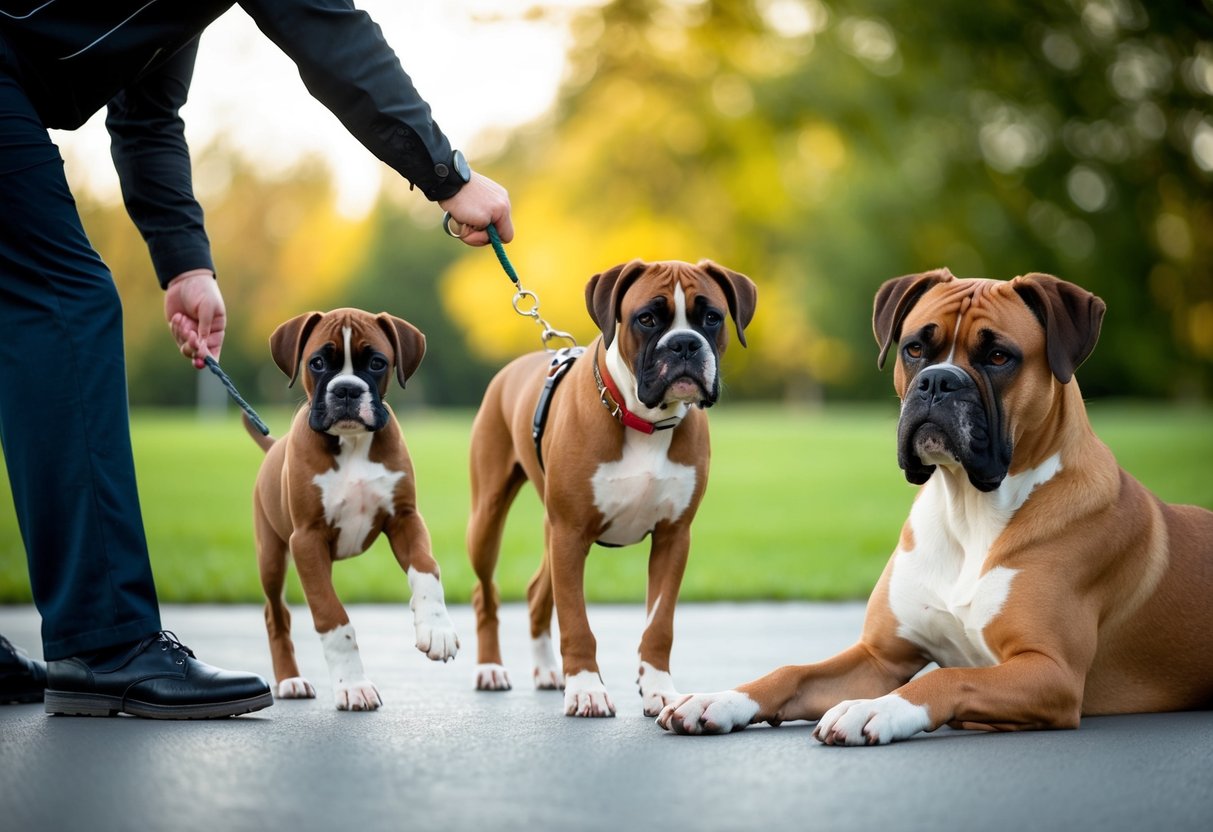
Training your Boxer is a journey that changes throughout their life stages. Understanding the essential training elements during puppyhood and adulthood can help you shape a well-behaved companion.
Puppy Training Essentials
When your Boxer is a puppy, starting early is crucial.
Focus on housebreaking first. Take your puppy outside frequently, especially after meals and naps. This helps prevent accidents inside.
Basic training should start right away. Teach commands like “sit,” “stay,” and “come” using positive reinforcement. Keep training sessions short and fun, around 5-10 minutes.
Don’t forget about socialization! Expose your puppy to different people, dogs, and environments. This builds confidence. Regular playdates are great for this.
Establish an exercise routine to keep your puppy active. Daily walks and playtime help them release energy. Incorporate leash training early so your Boxer learns to walk nicely beside you.
Adult Boxer Training
As your Boxer matures, training should evolve. Focus on reinforcing commands learned during puppyhood. Consistency is key. Regular practice keeps skills sharp.
Exercise needs increase as your Boxer grows. Engage in daily activities like running or fetch. This not only keeps them fit but also supports good behavior.
Consider crate training for your adult Boxer, especially during transitions. A crate can provide a safe space.
Remember to keep training sessions positive and rewarding, even for older dogs.
While Boxers are eager learners, patience and understanding are vital. Your bond with them will strengthen through consistent and loving training.
Health and Daily Care for Training Success

Your dog’s health and daily care are vital for successful training. Meeting their exercise and mental stimulation needs helps foster good behavior. Additionally, managing any health issues is crucial for an effective training routine.
Role of Exercise and Mental Stimulation
Exercise is essential for boxers. They need regular activity to stay healthy and happy. Aim for 1-2 hours of exercise daily. This can include walks, runs, or playtime.
Mental stimulation is just as important. Boxers are intelligent dogs that thrive on challenges.
Engage them with interactive toys or training games. This keeps their minds sharp and reduces boredom.
Without enough exercise and mental challenges, your boxer may develop bad habits. Excessive barking or jumping up on people can be signs of boredom.
Establishing a consistent exercise routine is key to preventing these behaviors.
Managing Health Issues and Behavior
Your boxer’s behavior and training success can be affected by health issues. Regular vet check-ups help identify any potential problems early.
Keep an eye out for signs of separation anxiety. These may show through excessive barking or destructive actions when left alone.
If your boxer has health concerns, work closely with your vet. They can help create a tailored exercise plan.
Remember, using positive reinforcement methods during training is more effective than negative reinforcement. Focus on rewarding good behavior rather than punishing bad ones.
By addressing both exercise needs and health concerns, you set your boxer up for success in training.


