
If you’re a Boxer dog owner, you may wonder about the common question: do Boxer dogs smell? Boxers can have a distinct odor due to their unique physiology and habits. Their flat muzzles often lead to increased flatulence, which can contribute to their smell. Understanding why they might emit odors can help you manage it better.

Many dog breeds have their own characteristic scents, and Boxers are no exception. Regular grooming and maintaining a healthy diet are essential for keeping your furry friend fresh.
By exploring the reasons behind Boxer odors, you can learn how to keep your dog smelling clean and pleasant.
Finding the right practices for your Boxer can make a big difference. From diet to grooming, there are effective ways to minimize any unwanted dog odor. Your Boxer can be a delightful companion without any lingering smells.
Understanding Boxer’s Natural Smell Tendencies

Boxer dogs can have a distinct odor due to various factors like their skin health and diet. Understanding these aspects can help you maintain a fresh-smelling pet.
Glandular Secretions and Skin Health
Your Boxer’s skin produces natural oils that help keep their coat healthy. These oils can mix with dirt and bacteria, leading to odor.
Anal glands near your dog’s rear can also contribute to smell. If they don’t empty properly, the result can be unpleasant. Regular grooming can help prevent issues with skin infections and keep the coat clean.
Make sure you check for signs of yeast infections. They often develop in warm, humid areas of the skin. If your Boxer frequently scratches or smells musty, a trip to the vet is a good idea.
The Impact of Diet on Odor
Diet plays a major role in how your Boxer smells. A well-balanced diet helps keep their coat shiny and their skin healthy.
Feeding your dog high-quality food can reduce the buildup of odors. Foods rich in essential fatty acids support the production of natural oils, which keep your dog’s skin moist.
Avoiding fillers and low-quality ingredients will also help. These can lead to allergies and digestive issues, which may cause odor.
Monitor your Boxer’s treats, too. Some snacks may cause bad breath or body odor. Consider fresh fruits and veggies as healthier options that can help with both smell and overall health.
Common Causes of Unpleasant Odors in Boxers

Boxers can develop unpleasant odors due to a variety of health issues and grooming practices. By understanding these causes, you can take steps to minimize any bad smells and keep your dog smelling fresh.
Identifying Common Health Issues
Health problems can lead to odors that are hard to ignore. Some common issues include:
- Skin Infections: Bacteria or yeast infections can cause a strong smell. Look for redness or itching on your dog’s skin.
- Allergies: Environmental factors like pollen or dust mites can lead to skin irritation and odors. Allergies need proper management to reduce itching and smell.
- Bad Breath: Poor dental hygiene leads to bad breath, which can also affect the whole dog’s odor. Regular dental check-ups can help prevent these issues.
Regular vet visits are key. They can catch health problems early and keep your Boxer thriving.
Effects of Improper Grooming
Your grooming routine plays a major role in your dog’s smell. Neglecting it can lead to several issues:
- Infrequent Bathing: Bathing too seldom allows dirt and grime to build up. Depending on your Boxer’s activity level, aim for a bath every few weeks.
- Shedding and Dander: Boxers shed, so brushing them regularly helps remove loose hair and dander. This can reduce odors significantly.
- Ear Cleaning: Boxers can have wax buildup in their ears, leading to smells. Clean their ears regularly to avoid complications.
Following a proper grooming routine will help keep your Boxer fresh and clean. Regularly checking for signs of health issues will also help keep odors at bay.
Effective Grooming and Care Practices
To keep your Boxer fresh and minimize odors, proper grooming and hygiene are essential. Paying attention to the right tools and bathing routines can make a big difference in your dog’s scent and overall health.
Choosing the Right Grooming Tools and Products
Using the correct grooming tools can help reduce dog odors and keep your Boxer’s skin and coat healthy.
Start with a good quality brush designed for short-haired dogs. This helps remove loose hair and dirt while distributing natural oils in their coat.
Consider adding a rubber grooming mitt for massaging your dog while you brush. It can make grooming a fun experience for both of you.
For skin folds, like those found on Boxers, you’ll want gentle, hypoallergenic wipes or a soft cloth to clean them regularly. This simple practice prevents moisture and dirt from building up, which can cause odors or infection.
Bathing Routines and the Role of Dog Shampoo
Bathing is an important part of your Boxer’s grooming routine. Aim to bathe your dog every 4 to 6 weeks, or more often if they get particularly dirty.
Use a dog shampoo that contains oatmeal and aloe. These ingredients help moisturize the skin and coat without stripping natural oils.
Make sure to rinse thoroughly to avoid any buildup that could cause irritation or odors. Pay extra attention to skin folds, as residue can linger there.
After bathing, dry your Boxer well to prevent any dampness that can lead to unpleasant smells. Regular grooming and bathing will help keep your furry friend smelling fresh and clean.
Health Maintenance and Vet Visits
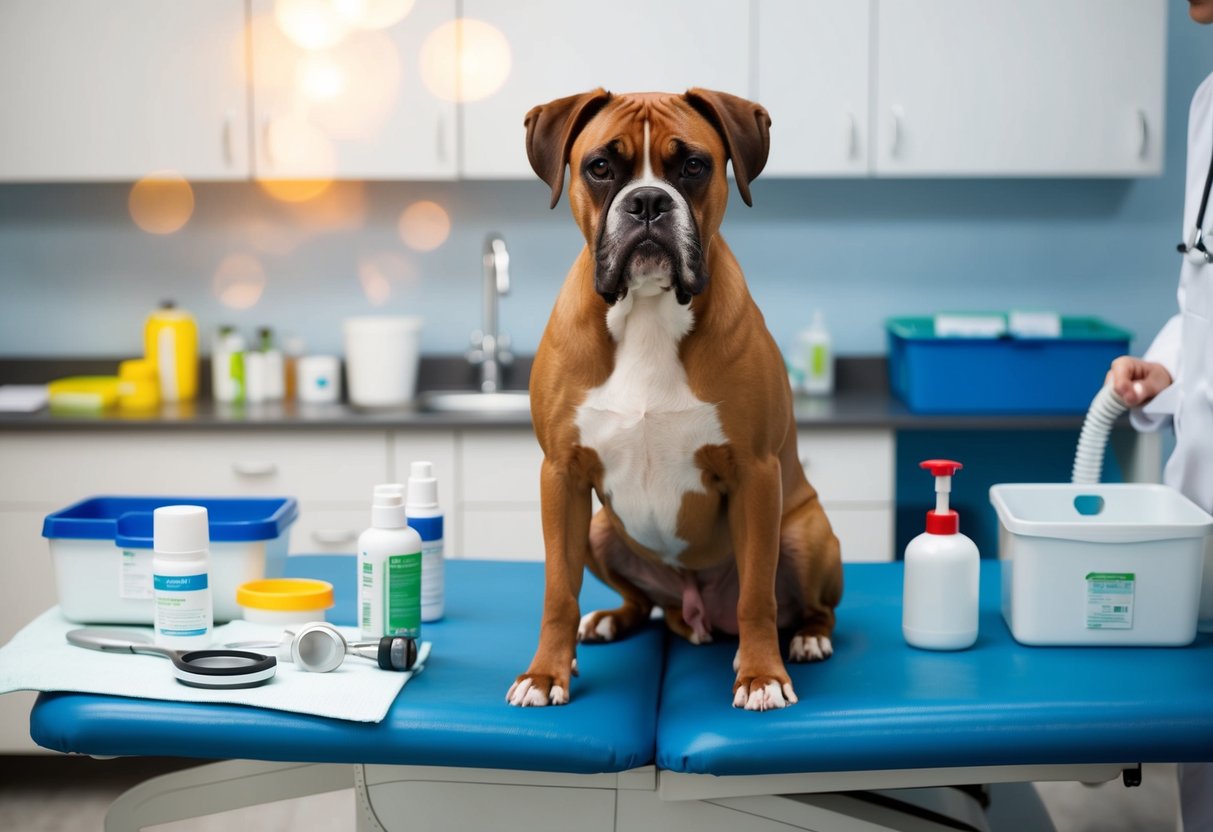
Maintaining your Boxer’s health is crucial for preventing odors and other issues. Regular vet visits and proper dental care can keep your dog happy and smelling fresh. Let’s explore how you can ensure your Boxer stays healthy.
Preventive Healthcare and Regular Check-ups
Regular veterinary check-ups are essential for keeping your Boxer in good health. These visits allow your vet to monitor any changes and catch potential issues early.
Aim for at least one check-up per year, but more frequent visits may be necessary for older dogs.
During these visits, your vet will check for any skin infections, allergies, or other health conditions that can cause unpleasant odors. Feeding your Boxer a high-quality diet can also play a role in their health, reducing the risk of gastrointestinal issues. Low-quality food can lead to problems like flatulence and bad breath.
Dealing with Dental Care and Gastrointestinal Issues
Your Boxer’s overall health depends on dental care. Dental problems, such as gum disease or tooth decay, may be signaled by bad breath. Regularly brush your dog’s teeth. You can also consider dental treats designed to promote oral hygiene.
Odors can also be caused by gastrointestinal issues. Signs to watch for include an upset stomach, bloating, or irregular bowel movements. If you notice any of these symptoms, consult your vet to rule out food allergies or infections.


