
Boxers are known for their affectionate and social nature. However, they can develop separation anxiety if you leave them alone for more than 4-5 hours at a time. This can lead to issues like destructive behavior and stress if they feel abandoned.

Your Boxer thrives on companionship and needs mental stimulation to stay happy. Regular exercise and interactive toys can help keep them occupied when you are away. Understanding your dog’s personality is key to managing their alone time effectively, ensuring they remain content and healthy at home.
Understanding Boxer Behavior and Needs

Boxers are known for their strong personalities and unique needs. Understanding their social nature and the right kind of stimulation can help you provide a happy environment for your dog.
Social Nature and Companionship
Boxers are highly social dogs. They thrive on companionship and love to be part of the family. If left alone for long periods, they can feel lonely and anxious.
These dogs often form strong bonds with their owners and even with other pets. Spending quality time with your Boxer is crucial for their happiness.
Sometimes, a Boxer may show signs of separation anxiety, which can lead to destructive behavior. This is why it’s essential to create a routine that includes interaction and playtime. You might want to consider getting another pet or providing toys to keep them company when you’re away.
Mental and Physical Stimulation Requirements
Boxers are intelligent and energetic dogs. They require both mental and physical stimulation to stay happy.
Daily exercise is essential; aim for at least an hour of activity. This can include walks, playtime, or games like fetch. They love to run and play, which helps burn off excess energy.
Mental stimulation is just as important. Use toys that challenge them, such as puzzle toys or treat dispensers. Training sessions also provide great mental exercises. Regular engagement will keep your Boxer content and less likely to develop behavioral issues.
Training and Preparation for Time Alone
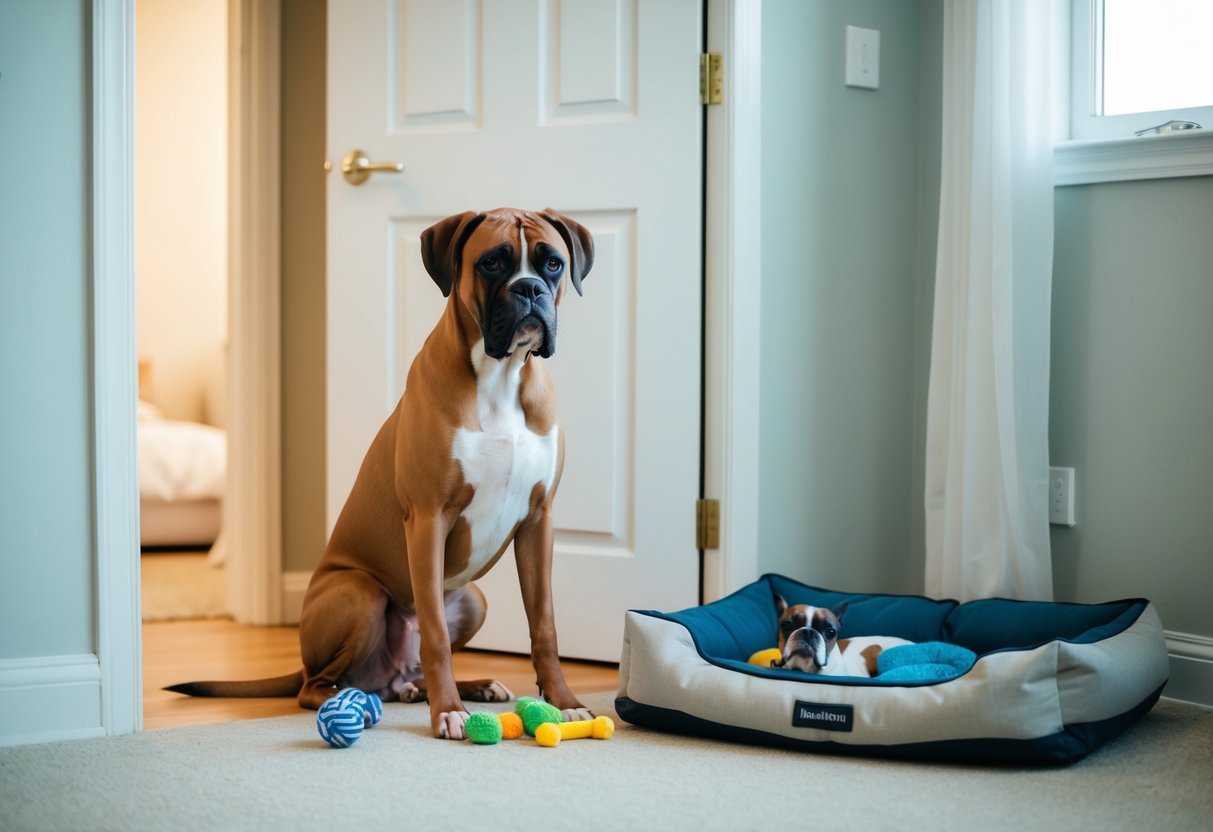
Preparing your Boxer for being alone starts with proper training and creating a comfortable environment. This helps minimize feelings of anxiety when you are not at home. Key aspects include crate training, using gradual techniques, and ensuring your dog is well-socialized.
Crate Training Basics
Crate training is essential for teaching your Boxer to feel safe when left alone. Start by selecting a crate that’s big enough for your dog to stand, turn around, and lie down comfortably. Place the crate in a location where your Boxer feels secure, away from loud noises or distractions.
Introduce your dog to the crate slowly. Use treats and toys to make the crate a positive space. Practice short absences to help your Boxer associate the crate with good experiences. Over time, gradually increase the duration you leave your dog in the crate while ensuring they are calm and settled.
Gradual Training Techniques for Separation
Begin with short periods away from your Boxer. Leave for just a few minutes, then return. Repeat this process daily, slowly increasing the time you are gone. This helps your dog understand that you will come back, reducing chances of separation anxiety.
You can also keep your dog engaged during your absence. Consider puzzles or chew toys to provide mental stimulation. This can keep your Boxer busy and distracted when you are not around. Make sure to avoid making a big fuss when leaving or returning home, as this can heighten anxiety.
Essential Socialization for a Well-Adjusted Boxer
Socialization plays a crucial role in helping your Boxer cope with being alone. Expose your dog to various people, environments, and other dogs from a young age. This helps build confidence and makes them less prone to anxiety.
Regularly visit new places, like parks or pet-friendly stores, to introduce different sounds and sights. Arrange playdates with other dogs. A well-socialized Boxer will feel more secure and less anxious when left alone, making it easier for both of you during those times apart.
Dealing with Separation Anxiety

Separation anxiety can be a common issue for Boxers. Understanding how to identify the signs, seek professional help, and implement helpful strategies can ease their stress when left alone.
Identifying Signs of Anxiety in Boxers
Spotting signs of anxiety is the first step in helping your Boxer. Look for behaviors like excessive barking, whining, or howling when you leave. Destructive behaviors, such as chewing furniture or digging at doors, often indicate distress.
Some dogs may also pace or appear restless. Others might avoid their food or try to escape the area where they’re left. Being aware of these signals will help you address their anxiety more effectively.
Professional Assistance from a Dog Behaviorist
If your Boxer shows severe signs of anxiety, consider consulting a dog behaviorist. These professionals specialize in understanding dog behavior and can provide tailored advice. They can help you identify specific triggers for your dog’s anxiety and recommend training techniques.
Training may include desensitization methods that gradually accustom your dog to being alone. A behaviorist can also work with you on creating a comfortable space for your Boxer, which can help reduce their stress levels.
Strategies to Reduce Stress When Left Alone
There are several strategies you can use to make your Boxer feel more at ease when alone. Soothing background noise like soft music or white noise machines can help mask outside sounds and promote relaxation.
Creating a safe space with their bed and favorite toys can also comfort them. Consider interactive toys or puzzle feeders that keep your dog occupied while you’re away. These distractions can help lessen anxiety by providing your dog with something engaging to focus on.
Establishing a consistent routine can also make a significant difference. Regular exercise and scheduled feeding times help your Boxer feel secure and reduce anxiety when they are left alone.
Alternatives and Solutions for a Lone Boxer
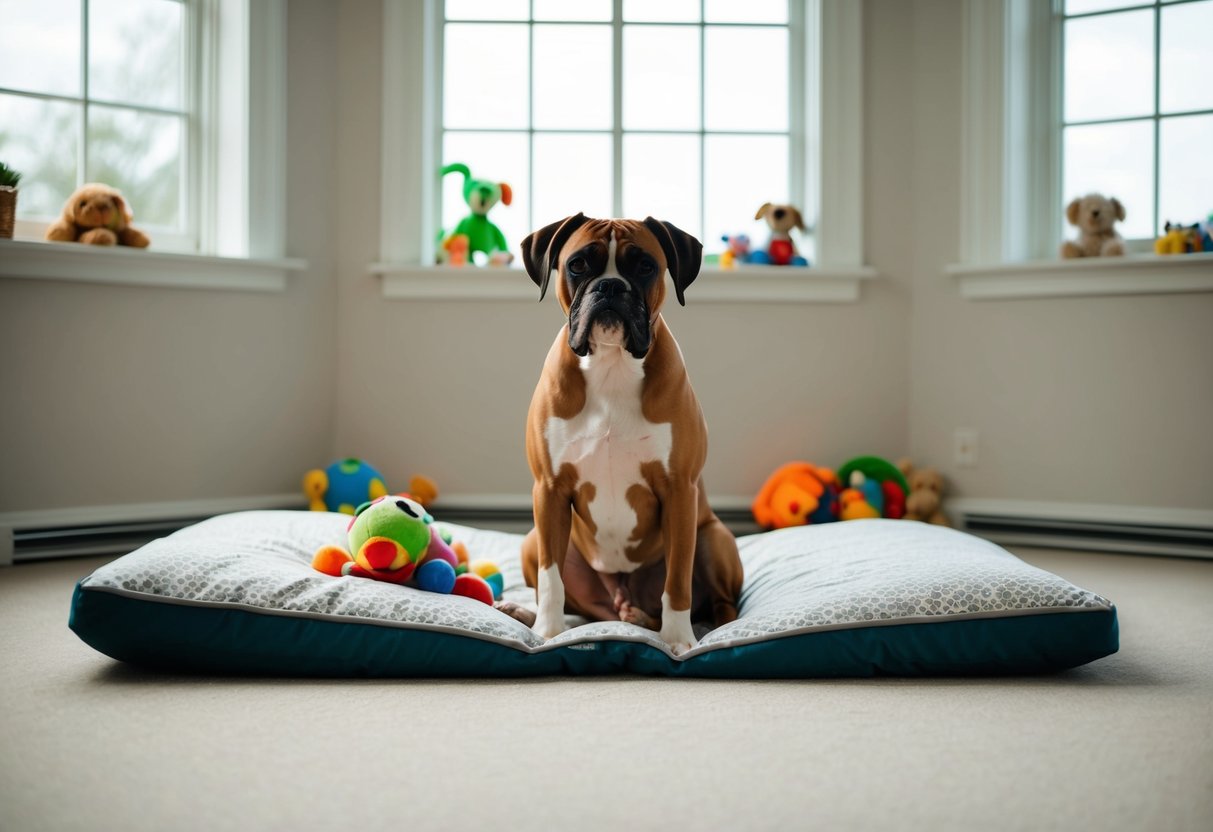
When leaving your boxer alone, there are effective alternatives to help keep them engaged and reduce anxiety. These options can also ensure your dog remains happy and healthy while you are away.
Interactive Toys and Treat Puzzles
Interactive toys and treat puzzles are great for keeping your boxer mentally stimulated. These toys usually require your dog to figure out how to get treats out, which can keep them occupied for a while. Look for durable options that suit your dog’s chewing habits.
You can also try using puzzle feeders, where you place their meal inside a toy. This makes mealtime more exciting and slows down their eating. Dogs love the challenge, and it can help prevent boredom while they wait for your return.
Enlisting Help from Dog Walkers and Sitters
Hiring a dog walker or sitter can be a great way to break up the time your boxer spends alone. A professional can take your dog for a walk, provide playtime, and give them companionship. This not only helps reduce separation anxiety but also meets their exercise needs.
Look for walkers or sitters who understand boxers’ energetic nature. They will need to engage your dog in activities that are both fun and safe. You can find local services online or ask friends for recommendations.
The Benefits of Doggy Daycare
Doggy daycare can be an excellent option for your boxer if you are gone for long hours. These facilities allow dogs to socialize and play in a secure environment.
It can be a fun way for your boxer to interact with other dogs and people.
Most daycare centers provide structured activities to keep your dog busy and happy. This setup helps prevent boredom, which can lead to destructive behavior at home.
If you are considering this option, visit a few facilities to find the right fit for your pet.


