
As you welcome a Boxer puppy into your home, you may wonder about their behavior. Boxer puppies are not inherently aggressive, but factors such as socialization and training can influence their behavior. These playful and energetic dogs are known for their affectionate nature, making them wonderful companions.

Understanding the temperament of your Boxer puppy is key to nurturing a loving pet. Early socialization and positive reinforcement during training can help shape their behavior. By fostering good habits, you can ensure your Boxer grows up to be a well-adjusted dog.
If you’re curious about what can trigger aggressive behavior in Boxers and how to address it, this article will provide you with valuable insights. Engaging with your Boxer puppy not only strengthens your bond but also sets the foundation for a happy life together.
Understanding Boxer Temperament

Boxers are known for their unique personalities and playful nature. Knowing their temperament can help you appreciate their behavior and avoid misunderstandings.
Boxer Breed Characteristics
Boxers are intelligent and highly energetic dogs. They have a strong desire to be around people and are known for their loyalty to their families. These dogs make excellent companions due to their friendly disposition.
Their playful nature often makes them seem boisterous, especially as puppies. Boxers are also known to be protective, which can sometimes be mistaken for aggression. When well-trained and socialized, they are often calm and well-behaved while enjoying their playtime.
Regular exercise is essential for a Boxer. This not only keeps them physically fit but also helps manage their energy levels. A tired Boxer is a happy Boxer!
Distinguishing Playfulness from Aggression
With Boxers, their playful behavior might be confused with aggression, especially if they are not familiar with their environment. They often exhibit exuberant jumping and playful nipping, which can seem intimidating to those who don’t know them.
To tell if your Boxer is simply being playful, observe their body language. A relaxed posture, wagging tail, and playful barking indicate fun. In contrast, a stiff body, growling, or showing teeth can signal discomfort or aggression.
Proper socialization is crucial from a young age. Exposing your Boxer to various situations and people can help them learn how to behave appropriately rather than react out of fear or excitement.
Factors Influencing Aggressive Behavior

Understanding the factors that influence aggressive behavior in Boxer puppies can help you raise a well-adjusted dog. Key elements include socialization, training, and the right amount of exercise. Each plays an important role in your puppy’s development.
The Role of Socialization
Socialization is crucial for your Boxer puppy. If your pup does not meet various people, pets, and environments early, it may become fearful or defensive. Lack of socialization can lead to anxiety, which often results in aggressive behavior.
You should start socializing your puppy as soon as you bring them home. Take them on walks, introduce them to friendly dogs, and let them interact with people. Positive experiences build confidence and reduce fear. Remember, the more well-rounded your puppy becomes, the less likely they are to act aggressively.
Importance of Early Training
Early training sets the foundation for good behavior in your Boxer puppy. Teaching commands like “sit,” “stay,” and “come” helps your pup learn boundaries. Without proper training, a lack of structure can make your puppy feel insecure.
Using positive reinforcement during training is key. Rewards such as treats or praise encourage good behavior. Address any signs of aggression as soon as they appear. Consistent training helps your puppy feel secure, reducing the chances of aggressive outbursts.
Investing time in training can make a significant difference in managing any aggressive tendencies.
Exercise and Mental Stimulation
Boxers are energetic dogs that require plenty of exercise and mental stimulation. If your puppy does not get enough activity, they may become restless and frustrated. This pent-up energy can lead to unwanted behaviors, including aggression.
Incorporate daily walks, playtime, and engaging toys into your puppy’s routine. Activities like fetch or puzzle toys can keep their mind sharp and help burn off excess energy. A well-exercised puppy is generally more balanced.
Maintain a consistent routine to help your Boxer puppy thrive. A happy, physically active dog is less likely to show aggressive behavior.
Preventing and Managing Aggression in Boxers
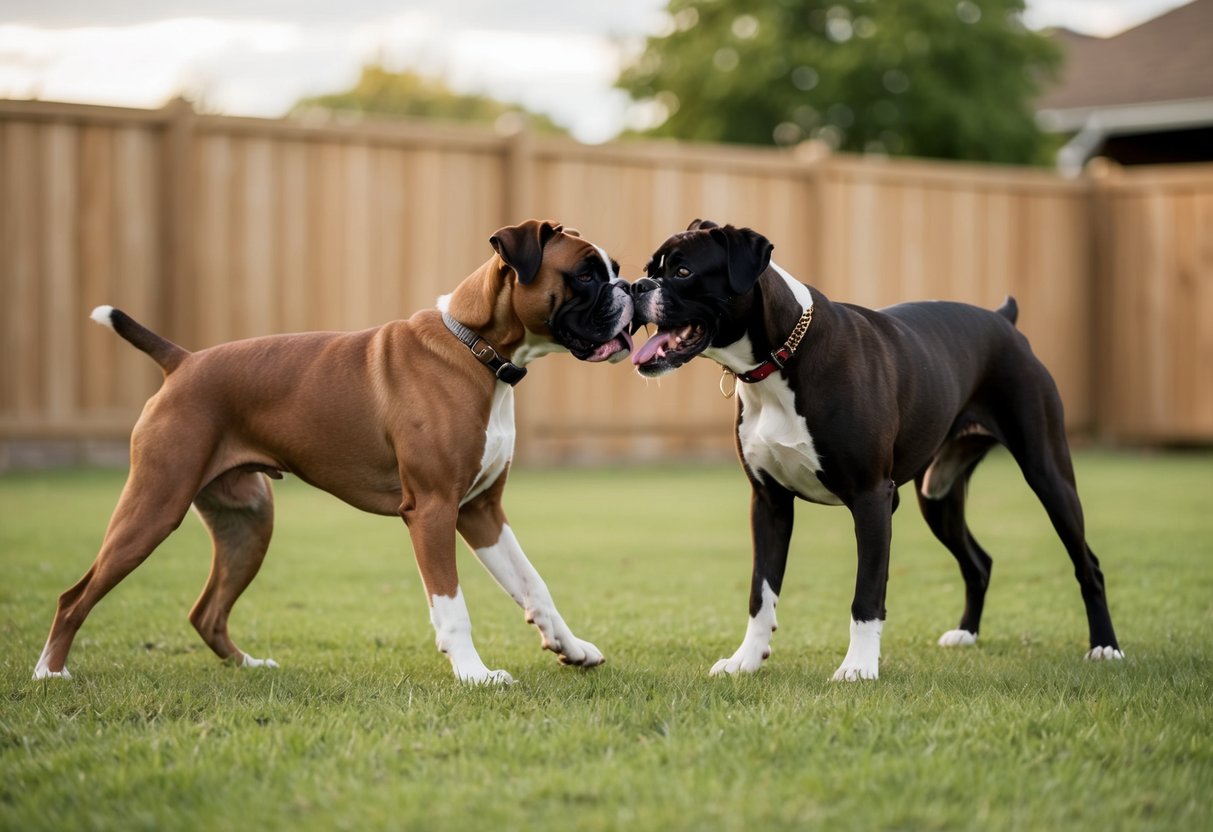
Managing aggression in Boxers starts with understanding their behavior. Using positive training methods can help shape their responses. It’s also essential to address any dominance or territorial issues early on. If problems persist, seeking professional help can provide the guidance you need.
Positive Reinforcement Techniques
Using positive reinforcement is effective for training your Boxer. Reward your puppy with treats, praise, or play when they display good behavior. This reinforces what you want them to do.
For example, when your puppy sits calmly around other dogs, give them a treat. Consistency is key. Use a clicker to mark the desired behavior, which makes your training clear and effective.
Make sure to reward immediately after the behavior occurs. This helps your puppy associate their action with the positive outcome. Avoid punishment, as it can lead to fear, making aggression worse.
Addressing Dominance and Territorial Issues
Boxers can display dominance or territorial behavior if not managed properly. To prevent this, start training early. Teach basic obedience commands such as “sit,” “stay,” and “leave it.” This establishes you as the leader in a positive way.
If your Boxer shows aggression toward visitors, prepare them ahead of time. Use a leash and introduce them slowly to new people. Reinforce calm behavior with treats. You can also teach them a designated place to go when someone arrives.
Avoid letting your puppy decide who can enter your home. Set boundaries early to reduce territorial aggression. Training helps them feel more secure and less likely to react with aggression.
When to Seek Professional Help
Sometimes, managing aggression on your own can be challenging. If you notice persistent aggressive behavior, it may be time to seek professional help. A dog trainer who specializes in aggression can provide tailored guidance.
Look for trainers who use reward-based techniques. They’re more likely to help you build a positive relationship with your Boxer. Ask about their experience with the breed.
Remember, early intervention can prevent more serious issues. Consulting a professional can help you understand your dog’s behavior better. It’s a proactive step to ensure safety for both your puppy and others.
Boxers as Family Pets and Protectors

Boxers are known for their loyalty and protective nature, making them excellent family pets. They form strong bonds with their families and are often seen as both loving companions and diligent protectors. Understanding these traits can help you create a safe and nurturing environment.
The Protective Nature of Boxers
Boxers have a natural instinct to protect their families. This breed is recognized by the American Kennel Club for their loyalty and courage. When well-socialized, they are generally non-aggressive but become alert when they sense a threat.
Here are some key points about their protective traits:
- Strong Guardian Instinct: Boxers will guard your home and family.
- Alert Behavior: They tend to bark to warn you of strangers or unusual activities.
- Affectionate Yet Cautious: They love their family but may be wary of unfamiliar people.
This balance of friendly behavior and protectiveness makes Boxers great guardians for children and adults alike. Proper training and socialization are vital to ensure they remain well-adjusted and confident.
Boxers in Multi-Pet Households
If you have other pets, Boxers can adapt well, particularly when raised together. Their playful temperament allows them to interact positively with dogs and even cats.
Here are some tips for keeping Boxers in multi-pet households:
- Introduce Slowly: Allow ample time for them to get used to each other.
- Supervise Interactions: Monitor their behavior to prevent any rough play.
- Canine Companion: Boxers can thrive with another dog, especially if they have similar energy levels.
By being attentive to your Boxer’s interactions with other pets, you can foster a harmonious home environment. Their social nature, when nurtured, allows them to be a loving part of a multi-pet family.


